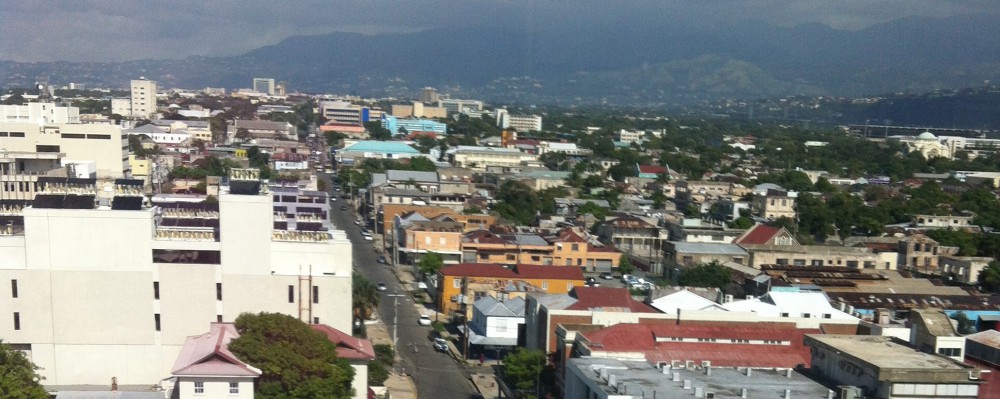
The third annual International Reggae Conference is being held from Feb. 14 to 16 here in Kingston, hosted by the University of West Indies’ Institute of Caribbean Studies. The topics are fascinating (check the listing here); everything from the role of women in dancehall music to Vybz Kartel’s book.
Today I attended the opening ceremony, for which Minister of Youth and Culture Minister Lisa Hanna spoke. (First, though, Informative Historyman performed. He did a brilliant dub poetry performance about the history of reggae music).
Hanna’s comments were mostly banal and lacking in substance, but she did say a couple of interesting things about preserving reggae and tackling some of Jamaica’s social ills. Hanna opened by characterizing reggae as a “culture of crossing rivers.” Nice turn of phrase, which she followed with the warning that Jamaica is at a critical crossing. A lot of people seem to be saying that lately, what with the financial malaise plaguing the country.
Hanna is also concerned by the emerging tone of reggae lyrics. A lot of people (elders, not surprisingly) also say this. Reggae has gone from Jimmy Cliff’s Harder They Come mentality to a yearning portrayed in Better Mus Come (a movie made several years ago about Jamaica’s youth). Nevertheless, Hanna insisted that “reggae music can help us to reach into our past and extract values and systems,” and that it remains a source of black philosophy and religion. “The role of reggae is as a catalyst for change,” she stated. Hanna also lamented a loss of “African values”, which place a premium on the family and community.
Getting more technical, Hanna discussed the role of individual artists in the culture economy, which brings billions of Jamaican dollars in every year. The problem, however, is that these independent artists and their earnings are not enumerated. They will be now, Hanna said. In addition, a directive straight from the Prime Minister’s office has created a “one-stop-shop” policy to discuss all things reggae and its relation to culture and the economy. So in other words, a proposal or project will not have to meander through every relevant Ministry before it is approved. Hopefully, this will streamline the process for getting new projects underway and will help to capitalize on Jamaica’s rich cultural industry.
 Jamaican Journal