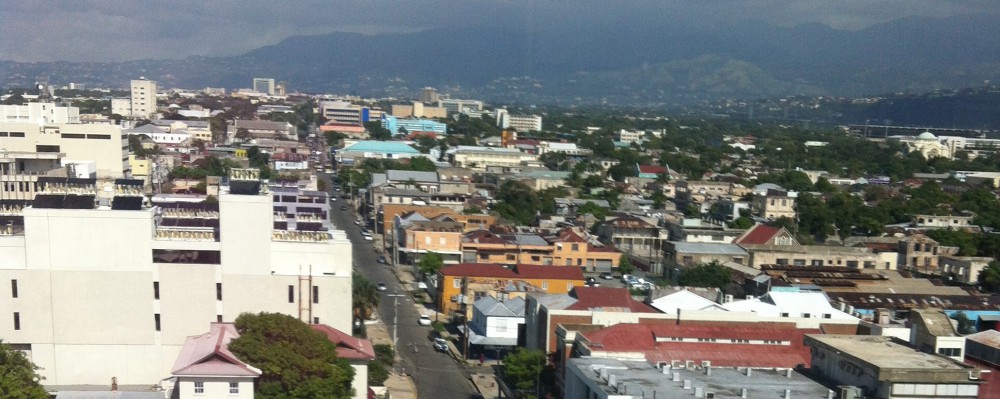
Between passionate, opinionated conversations, sensational headlines and sanitized tourism campaigns, it can be downright confusing in Jamaica to get a handle on reality. Especially as a foreigner inhabiting the strange twilight world of voluntarism. A couple of conversations over the past few days, combined with these irresponsible headlines, and Volkswagon telling me “Erryting gonna be alright man,” I am confused. But everyday, I strive to try to understand this place in which I have lived for close to a year now.
On a daily basis, the media, citizens, politicians, and tourist boards prompt us to buy a certain package of Jamaica. What is the reality? Is it a stable nation with improving fiscal health and a strong social safety net on an upward trend? Is it on the brink of anarchy and bankruptcy? Is it a cultural capital of the world and a paradise of blissed-out Rastas, and gorgeous beaches? Or is it something in between? A heart-breakingly beautiful country whose people are so rich in creativity and resilience but poor in monetary wealth, relative safety and robust social services?
I’m tending towards the latter, but first, some facts:
-
Jamaica’s debt is 140 per cent of its GDP.
-
Jamaica is about to sign a deal with the IMF which will grant it a multi-billion dollar loan aimed at staving off a financial crisis. Here is a good synopsis, and here is the IMF’s latest word on the deal: The main objective of Jamaica’s economic reform program is to contain the country’s rising economic and external vulnerabilities and address economic imbalances, while putting Jamaica on a path of sustainable growth. The program also aims to promote macroeconomic and financial stability, including through achieving and sustaining higher primary fiscal surpluses that can help underpin debt sustainability, pave the way for private-sector led growth through the implementation of a comprehensive set of structural reforms, and promote social stability through enhanced social protection for the most vulnerable.
- The unemployment rate is roughly 14 per cent.
- The murder rate, while declining, is still the third highest in the world. Check below the most recent statistics from the Jamaica Constabulary Force.
So there’s that, on a decidedly negative note. But here now, courtesy of Martin Henry (I am quoting him directly), some more optimistic facts:
- “The UNDP human development index for Jamaica has steadily grown from 0.6 to 0.7 (out of a maximum score of 1) from 1980 to 2012, well ahead of the world average and paralleling, although trailing, the growth line for high human development.
- …life expectancy has progressively increased over the last 36 years, indeed, since Independence, from 70.5 years in 1980 to 73.1 years in 2012 – up there with the developed countries.Jamaica has had nothing short of a spectacular track record in reducing and eliminating infectious diseases. The killer diseases profile now is the non-communicable lifestyle diseases of affluence! Infant mortality and maternal mortality have gone down. The fertility rate has gone down – dramatically. The level of childhood immunisation matches the the developed world’s. Access to primary and secondary health care has greatly increased and is free.
-
Access to potable water has increased dramatically over the last 36 years, although the Government has set up a major water crisis for the future by its failure to develop supplies to match growing demand. Demand for water is a significant index of development.
-
Rural electrification has brought power to most Jamaican households over the last 36 years. In 1977, the wait time – without inside links or priority ranking – for a landline phone from a monopoly provider could stretch from years to forever. The phone density today is greater than the adult population, which means many people have two or more phones! And ‘poverty’ and taxes have not stopped Jamaica from being a world leader in cellphone-per-capita call minutes!”
The media paints another portrait, that of an anarchic country on the brink of financial ruin and at the mercy of post-colonial era global superpowers like the IMF. Forty-year-old men acquire 16-year-old girls to serve at their pleasure. Mothers kill their infants. Gunmen shoot and kill with impunity on a daily basis. Pregnant girls are kicked out of school. Children live in poverty and squalor. Men rape eight-year-old girls.”Vicious gays” target and harass innocent citizens. “Killer Dad; Farmer slaughters daughters, hangs himself,” from today’s Jamaica Observer is an example.
Unfortunately, all these events have occurred in the past year. And we know about them because newspapers, television and radio are relentless in screaming at us. In an attempt to shore up suffering bottom lines, editors and publishers sensationalize these stories by treating those involved as characters in a horrific movie rather than real, multi-faceted human beings enduring a tragedy.
Then there are the opinions. Yesterday alone, I had two separate conversations in which people lamented Jamaica’s trajectory. “The country is going to hell,” one man said. Another prominent business-owner revealed that their company is facing tough times and is searching for places to slash its budget.
And if we pay attention to what tourists experience, and what multi-national advertising companies want us to believe, Jamaica is an idyllic playground of tantalizing food and music, hospitable beaches and kind, laid-back people.
So where do we find ourselves amidst all this? What is the real Jamaica? It is probably a complex combination of all the portraits supplied so far. There is no doubt of the work to be done to ease the suffering of Jamaica’s people, to fortify the health of its financial situation, to reduce crime and violence and to achieve social justice and equality.
One thing I know for sure, however, is that Jamaicans do not lack energy and passion and creativity. The country itself is rich in beauty and natural resources and its culture is envied globally. With these resources in hand, it is clear to see that a positive trajectory is absolutely possible.
 Jamaican Journal