The threat of apples


I was just trying to be honest. I was in Toronto, clearing customs on my way back to Kingston via Miami. Fueled by a little paranoia and a healthy respect for immigration regulations, I answered honestly when the U.S. customs agent asked if I had any food.

“Yes,” I said, “my lunch, some bread and an apple,” I managed to say. “You will have to have the apple inspected,” she said sternly. I have had food confiscated before because of security requirements (yoghurt is apparently a risk over three ounces), but never because of NAFTA or some obscure trade regulation.

So I ventured off to the inspection area (behind some double doors), where three male agents were standing behind different stations. A Spanish-speaking woman was being questioned while a man in a grey suit attempted to steer a luggage cart with several suitcases to another agent.

I waited awhile and no one acknowledged my presence. So I walked up to a free agent and asked if he could inspect my apple. He did and promptly told me I would have to throw it out because it didn’t have a sticker indicating that it is either from Canada or the U.S. My poor apple was then dumped in a cardboard box with a lot of other sad-looking food. I was surprisingly upset: it looked like a delicious apple!

Then I got to thinking: these arcane, obscure and complex rules are drafted by international trade lawyers and bureaucrats in some office or at a summit with the best of intentions. Perhaps to protect local farmers or encourage trade, and here is how they are manifested. Good food literally becomes garbage, doing no good to no one except the vendors.

Is this how the politicians and bureaucrats envision success when these trade deals are signed at press conferences? I tried to do a bit of research and have come up short. Some web sites tell me you are allowed to bring in fruit from November to April, while other say it is prohibited at all times. Who knew there were so many rules? I ended up buying another apple on the other side, which was rotten in the middle, by the way, and sure enough, it bore a sticker saying it was the product of the U.S.

In any case, this incident served to remind me of the disconnect between the bureaucracy and the human beings who are ensnared in it, despite all good intentions.


Parsing Vybz Kartel’s Sentence


Vybz Kartel has received a life sentence. This is big news in JA. Read a great account here.

ap's avatarActive Voice

Often in the course of his prolonged trial I found myself wondering if the rollercoaster life of Adidja Palmer aka Vybz Kartel was scripted by someone inspired by Breaking Bad, the wildly popular American TV series about the rise and fall of a chemistry teacher turned meth dealer.  By the time the trial ended I knew it was nothing of the sort, just another wildly original Jamaican libretto. Described by some as the country’s pre-eminent lyricist, for more than a decade Kartel ruled the roost in Jamaica as its reigning dancehall deejay (”a genre that is to the roots reggae of Bob Marley as hip-hop is to R&B”), his street cred extending far beyond Kingston, into the nooks and crannies of ghettoes all over the Caribbean, into urban America and as far away as Africa where his Gaza Empire has spawned copycats.

By late 2013 Vybz Kartel, 38, was being…

View original post 2,956 more words

Happy 100!


My beautiful grandmother turned 100 today. Grace is her name and she was born in 1914.

Triple P for Canada and Jamaica?


Interesting timing for this story. Jamaica and Canada (and the rest of the Caribbean nations that are part of CARICOM) are currently negotiating a free trade agreement. According to my sources, negotiations are not going well. Canadian High Commissioner to Jamaica Robert Ready is the lead negotiator at this time.

But the Gleaner today runs this story that while Canada is cautious about doing business with Jamaica, the potential is there for more PPPs. That is to say, public/private partnerships. Triple Ps have been popular lately as the public sector attempts to finance large-scale projects with a minimum of up-front investment. That is where the private sector comes in- as a partner to carry the initial investments. In return, the private sector gets to own and/or operate the project or asset (there are many different configurations) and the public gets their new bridge/hospital, what-have-you.

Reactions to PPPs are mixed and usually fall along partisan lines. In any case, it is interesting indeed that Canada appears keen on PPPs with Jamaica whilst some tough negotiations with CARICOM are ongoing. Perhaps Canada is more bullish on Jamaica’s future but reluctant to sign onto the new CARICOM agreement. I am not familiar with the details, this is just speculation.

In any case, this Gleaner story illustrates Canada’s approach to doing business with Jamaica. The initiative is being led by Canada’s Export Development Corporation. From the story:

Export Development Canada (EDC) was formed more than 65 years ago to help Canadian companies export products and services and invest internationally.

The agency has already funded large businesses in Jamaica. In 2012, EDC helped finance a Digicel telecommunications equipment project with up to US$250 million and a smaller Jamaica Public Service project involving the sale of various Canadian goods and services for up to US$25 million.

There are some countries that the EDC “will not lend to”, due to the level of risk, said Rick McElrea, senior trade commissioner at the Canadian High Commission.

“Jamaica isn’t one of those,” McElrea said at a workshop hosted by the high commission in Kingston last Thursday.

However, “EDC would be cautious in dealing with Jamaica at this stage,” the trade commissioner said, but would mitigate that risk by partnering with local banks, including Canadian banks in Jamaica, he told the workshop.

Slightly dry topic, but it is important. Enjoy your day.

April 1 raid


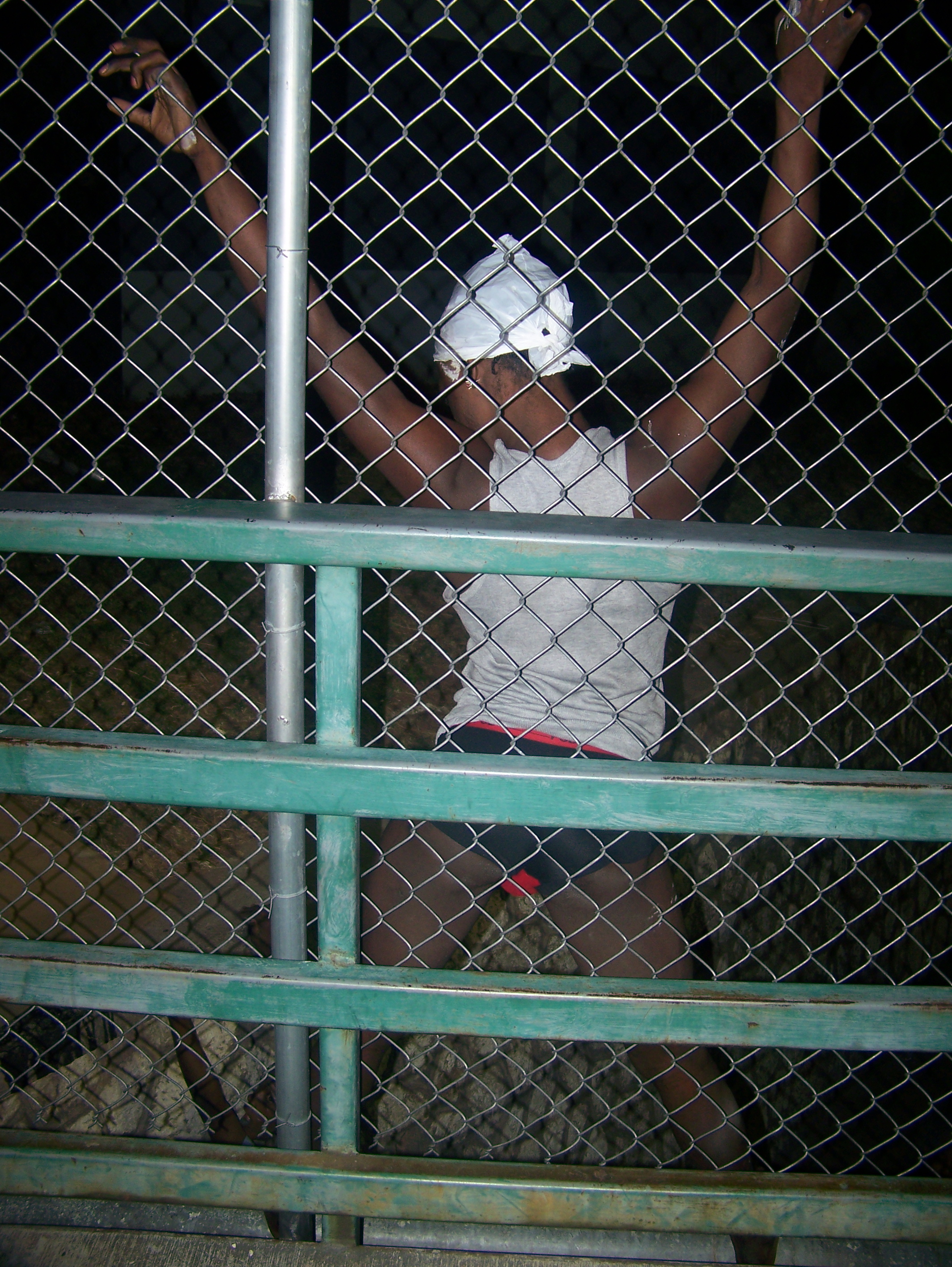
April 1 is apparently the deadline for the police, headed by Inspector Murdock, to perform a “raid” and force the young men out of the gully. This is where they live as they are disenfranchised from society and rejected by their families.

A judge recently ruled against an order to have them evicted, as it is a public place, but the police insist that their occupation is a health hazard.

On Saturday night, the final night of high school athletic competition Champs, the police chose this time to warn the guys that they will be forced to leave. (Read another account of this evening here.)

In terms of avoiding the further inflammation of the situation, this could not have been a worse time. I was driving by and witnessed throngs of young men and women walking by, some of them clumped around the gully. I heard several calls of “batty man” (a derogatory term for a homosexual) and a lot of yelling and excitement. The blue lights from the police cars were flashing all over the place. Apparently this visit by the police was to warn the guys that they will be evicted. However, they have absolutely nowhere to go. Shelters are unsafe, their families have generally disowned them and they have difficulty securing employment to support themselves.

A group called Dwayne’s House is trying to raise money to house these young men and the Colour Pink Group is trying to fund some employment training. In the meantime, however, the situation seems to be escalating in the wrong direction. Where do the police and authorities think these young men will go? Why are they not concerned with protecting society’s most vulnerable citizens? (It must be pointed out that some of them engage in antisocial behaviour and criminal activity to support themselves, but they have had little or no opportunity to be “socialized” properly so that they can operate in the normal channels that you and I engage in to support ourselves).

I ran by the gully this morning and the guys were still there. Apparently a couple of them have been taken into custody and the raid will happen sometime today. The international media has also taken note. Channel 4 from the U.K. was filming a scene when I passed by.

Let’s hope that no one is injured today and that the police and/or other authorities have a plan to protect these vulnerable members of society.