Unknown's avatar

About Kate Chappell

"And all I offer here is the distilled poetry of my existence..." Claude McKay, Poet Laureate of Jamaica, 1890-1848 I have been a reporter since 1998, covering mainly business and politics. I have also capitalized on the many skills journalism requires to become an all-around communications specialist. In addition to being a professional curious person and communicator, I have a bad case of the travel bug and can't seem to stay put. Finally, I have put my skills to work as a volunteer in the community wherever I have lived. Now, follow me as I combine these compartments of my life in Kingston, Jamaica, where I am a writer, reporter, journalist and lecturer.

Crowdfunding can save Jamaica?


I don’t know what this Foreign Policy journalist was thinking. Maybe he was having a rough day, or maybe he was up against deadline and just desperate for a lead. Because he led a story with the fact that the “good news” that the Jamaican bobsled team received funding to go to the Olympics via an Internet campaign is somehow a balm for the fact that ONE THOUSAND, TWO HUNDRED people were murdered in 2013 in Jamaica.

Consequently, it’s refreshing to hear some good news about the country. After Jamaica’s two-man bobsled team announced that it had qualified to compete in the 2014 Winter Olympics but could not afford to travel to Sochi, Russia, thousands of people contributed to an Internet crowdfunding campaign. In just three days, the campaign raised $129,587 — more than 12 times the amount needed to fund the team’s travel.

And here is the lead paragraph, by the journalist, who is called Robert Looney, and whom I wonder about: has he ever spent any time in Jamaica?:

It’s easy to be pessimistic about Jamaica. The country has the world’s highest debt burden, and its economic growth has been at a near standstill over the past several decades. It has been plagued by rising levels of violence and crime, with one of the highest murder rates in the world — 1,200 murders or 44.2 per 100,000 inhabitants in 2013, a 9.4 percent increase over 2012.

As evidence of Jamaica’s turnaround and a plethora of good news, Looney also points to the fact the the country is on track to meet the conditions of the financial agreement with the International Monetary Fund. In essence, the IMF is lending Jamaica a whole bunch of money so that it can tackle its staggering debt-to-GDP ratio, among other financial ills.

On paper, there may indeed be good things happening. On the ground, I am not so sure. Crime levels remain high. Roads remain unfixed. Inflation and poverty levels are rising. Jamaica’s children are not being educated properly. And as the IMF exerts its influence, conspiracy theories abound and trust in international institutions and the U.S. is weak.

Case in point, the massive rally against the “gay agenda” a couple of weeks ago, which was organized by a coalition of churches. From columnist Ian Boyne’s article:

The Church must maintain its right to teach that homosexuality is sinful, abominable, morally degrading and hell-certifying. I know gay people resent my saying that. They do want to have that categorised as hate speech and censored. They do want it to be seen in the same category as racist speech. And I know that my libertarian view on free speech will increasingly be resented and rejected. That’s why I know Christians are fighting an uphill battle against “principalities and powers”. The US, Europe and their multilaterals will soon demand that gay rights be subsumed under human rights, the denial of which will make us ineligible for financial support.

People are also pointing to the mysterious resignation of former Police Commissioner Owen Ellington, claiming that U.S. officials pressured National Security Minister Peter Bunting to force him out early as a result of the high instances of extrajudicial killings.

But back to the article. The bulk of it is a solid portrayal of Jamaica’s recent economic history and relationship with the IMF. But then the conclusion takes a solid turn for the worse. Looney returns to Internet crowd funding as a potential source of hope for Jamaica.

Fortunately for Jamaica, the world economy, finance, and transport are all shifting in ways favorable to the island nation. As the bobsled team demonstrated, crowdfunding is a new force that could significantly offset the austerity program by enabling cash-strapped Jamaican entrepreneurs to develop new small- and medium-sized enterprises.

And then Looney points to a large-scale industrial Chinese development initiative, as well as access to international supply chain markets, as opportunities for this nation:

In addition, Jamaica is also very favorably placed to take advantage of the opportunities opening up with the shift of many American company supply chains from Asia to locations closer to the United States. Finally, with the expansion of the Panama Canal to be completed in 2015, Jamaica is ideally positioned to develop into a major logistics hub. If undertaken, the project would be a major attraction to follow-on investment and production.

If Looney were to ask those on the ground, environmentalists, ordinary Jamaicans, entrepreneurs, he might find them not so optimistic. The lack of context, and reality, is breath-taking. This article is an irresponsible and skewed portrayal of Jamaica.


Water shortage impending?


The air in Kingston is scorched and dry. We haven’t had substantial rain for what seems like weeks. Lawns are brown and the dust is drifting and swirling above the ground all the time. I saw evidence of this lack of water on my run this morning at the Mona Reservoir. (As well as a curious lack of cars; usually there are about a dozen belonging to people who work there, today there were two). It is at the lowest level I have ever seen in more than two years of running there. According to the National Water Commission, it is at 37 per cent (the other major dam that services Kingston is at 21 per cent.)

The National Water Commission is warning business owners and homeowners that they mustn’t use water for plants or car washes etc. Apparently, demand for water on a daily basis is about 14 million gallons, and the water processing plant is able lately only to process about 6 million per day. As I ran past a car wash run by some Rastas who also sell fruit and jerk, I wondered how they will fare. One businessman has already vowed not to respect the restrictions, instead he will pay the $1,000 daily fine that is being threatened. From a Gleaner story:

“I guess my guys will have to go rob and steal to feed their families when they lock off the water,” said one car wash operator, adding that the business was the main source of income for his 14-member workforce.

In any case, let’s hope it rains. It seems every afternoon that it might: it gets hazy and a little bit more humid, but the rain never comes.

The Gleaner today is arguing for the privatization of the National Water Commission based on the fact that it is insolvent and inefficient and fundamentally unable to regard the provision of water as a “critically strategic asset.” If true, this is a good point, as is the point that residents can do a better job of preserving water and restricting its usage.

@GK_Foundation Education Run


The Grace Kennedy Education Run was held early this morning in downtown Kingston. All proceeds of the race go towards funding inner-city youth and their educational goals. It was the sixth annual race and it seems to be attracting more and more participants.

There was a slight cloud cover which kept the heat away for awhile and the course was flat and lead us by the downtown waterfront and through the streets of downtown. Residents came out to watch us pass through and a high school marching band encouraged us with their music and cheerleaders. As a fellow participant was saying, there should be more runs and activities in the downtown area.

Many people are afraid of venturing downtown, as my friend put it, and more races would help to sensitize people to the fact that it is a safe and beautiful place to visit. (True, crime happens there, but this is just like anywhere else in Kingston.) We also got to mingle with the dozens of downtown residents who swim early every Sunday morning in the harbour. Whole families, including their dogs leashed on metal chains, come out to swim together.

As for my performance, I wasn’t feeling 100% and have not raced in awhile but still managed to come 30th out of 1,011 females and 10th in my age group.

Thank you Grace Kennedy and Running Events Jamaica for another great race.

Cleaning windshields is more lucrative than minimum wage in JA


This morning, as I was finishing my run and trying to find some bananas to buy, I saw Ian walking up Hope Road. Ian is one of the young men on the corner of Hope Road and Trafalgar, a main intersection in Kingston.

Ian washes windshields for a living. He is 20 years old, he tells me. He is tall and skinny and it looks like he has engaged in the trend of “bleaching” that is popular among some people here in Jamaica. In essence, people use chemicals to make their skin (usually their face) lighter. Ian’s eyes are glassy and bloodshot, no wonder, as every time I talk to him he tells me he has been enjoying a drink the night before.

Today he told me that he was coming from his family home, a three house complex, “it nice,” he said. Other days I have seen him walking to “work” in nice clothes. On the way, he changes into what he has worn the previous days, usually an old, torn t-shirt and shorts. As we walked, he collected his bucket from behind a concrete wall, where he hides it every evening.

Today I asked him how much he makes per day. He said that from about 6am to 10:00am, he makes around $1,500. This is about $15 US. Considering the fact that these guys are hustlers and will say or do whatever it takes to get ahead, and the fact that he tells me it is his birthday every couple of months in an effort to get some money or something out of me, let’s speculate on the side of caution and estimate that he actually makes more than that per day. Let’s say around $3,000 a day.

This is more than minimum wage here in Jamaica. Minimum wage is about $5,600 per week. This is about $550 US per week. So even if Ian is telling the truth, he makes more than minimum wage cleaning windshields- about $7,500 per week. He tells me he prefers that kind of work as opposed to a regular job because he doesn’t like anyone to tell him what to do. After he finishes at 10:00am, he says he goes to HalfWay Tree to hang out and try to hustle more money.

The exchange between motorists and these guys (they are all men) is a delicate exchange, every single time. If you are too aggressive in waving them away, they can retaliate and strike your car or worse. If you have no money and they have already decided to go ahead and clean your glass, same thing. Or, you have to surrender whatever small bills you have in the car. I know many people here keep coins handy to give to these guys.

I always wonder if Ian and his peers would get off the streets and out of Jamaica’s informal economy if they had the chance. I don’t think so.

North coast calling


Busy day today. Kingston is HOT, scorching hot, to the point that simple, small activities are a challenge. Here are some pictures from awhile ago that were taken up on the north coast in Portland, one of the greenest, most peaceful places on the island. Hope you are enjoying your day.

Homophobia: Towards A Definition


This is a wonderful portrayal of the hysteria currently raging in Jamaica about homophobia, the buggery law, Christianity, etc. Please take a read.

keimiller's avatarUnder the Saltire Flag

Jamaica is presently going through a moment of hysteria. We cannot call it anything but that. The buggery law, and questions about whether to keep it or not, has got every tongue wagging and every foot marching. Everyone is shouting, and women are on the front pages of the Gleaner bawling their eyes out as if they have had some very personal experience catching their husbands being buggered by a well-hung neighbour.

ChurchMarchG20140629NG Picture from the Jamaica Gleaner of the Mass March against repealing the Buggery Law

Everyone is clearly feeling very passionate and very desperate about the things they are feeling. It has become hard to even hear yourself think in all the hysterics. But incredibly, some of the loudest things that are being said, are being said without a sound being made. For consider those protestors marching magnificently with duct tape over their mouths, their banners proclaiming: SPEAKING TRUTH…

View original post 2,544 more words

Happy Canada Day!


It is Canada’s birthday today, the country is 147 years old. Having lived in several countries now, including the U.S. for a few years, I can say that one thing that defines Canada is how it is NOT the U.S. This is inevitable, living in the shadow of a cultural superpower, and it partially shapes the identity of our beautiful nation.

Check out this piece from the Huffington Post, which quintessentially sums up this aspect of Canada’s identity- how it is NOT like the U.S. If you are so inclined, you can also check out our Prime Minister Stephen Harper addressing the nation on this special occasion in this YouTube clip.

And Happy Canada Day!

“Backlash on Buggery”


Photo courtesy of Jamaica Gleaner

Photo courtesy of Jamaica Gleaner


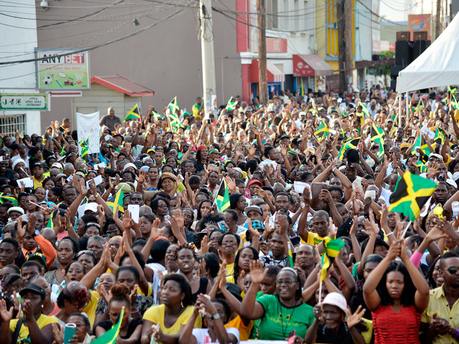
No matter what nation, rousing people from the comfort of their own homes and routines takes a lot of incentive. Apparently, many Jamaicans thought it important enough to disrupt their Sunday to gather in one of Kingston’s main hubs, HalfWay Tree.

They gathered to protest the repeal of the buggery law, an archaic piece of legislation that criminalizes some sex acts.

Check out the story here.

I feel deep sadness. I wish that people, not just here in Jamaica, but everywhere, would mobilize themselves to this extent in relation to the epidemic of child abuse and the protection of our most vulnerable citizens.

Here is the lead of the story:

The church will not be tricked or coerced into making impulsive or emotive pronouncements in the ongoing public debate that has been sparked by the dismissal of Brendan Bain, the retired University of the West Indies professor who lost his job as the director of the Caribbean HIV/AIDS Regional Training Network (CHART).

This sentiment was conveyed to a massive throng of flag-waving Jamaicans, clad, for the most part, in the national colours, which assembled in Half-Way Tree, St Andrew, by pastor of the Calvary Gospel Assembly, Donovan Cole, last evening.

“We will not be silent when we should speak boldly, nor will we be drawn in premature speaking through clever attempts to put the Church on the defensive,” asserted Cole.

Jet-skiing Kingston’s streets


A scene from Kingston’s streets yesterday: it is difficult to see, but I had to get a shot of this young man riding on the back of a POLICE jet-ski in transit on the back of a flatbed truck. I hope he made it to his destination safety. He was definitely enjoying the ride.

The beast within?


As I alluded to in this post earlier in the week, the rhetoric surrounding the issue of homosexuality in Jamaica is heightened as of late. In equal parts, this can be blamed on many factors, including the media and the pending case of the repeal of the buggery law, which makes some sex acts illegal.

Needless to say, the atmosphere is tense and conspiracy theories on both sides are floating about. Today’s Jamaica Observer editorial is a strange reflection of the current situation. On the one hand, it seems to step towards urging tolerance and suggests a referendum on the repeal of the buggery law (which Prime Minister Portia Simpson Miller promised prior to the last election.) On the other hand, the editorial could have been written decades ago, so full of fear-mongering and ignorance it is.

Take a read as it seems to be an accurate reflection of the attitudes of many Jamaicans. Let’s just hope that the conversation continues in a more positive and tolerant fashion. Let’s also hope that people forgo conversation for action on the epidemic of child abuse in Jamaica.