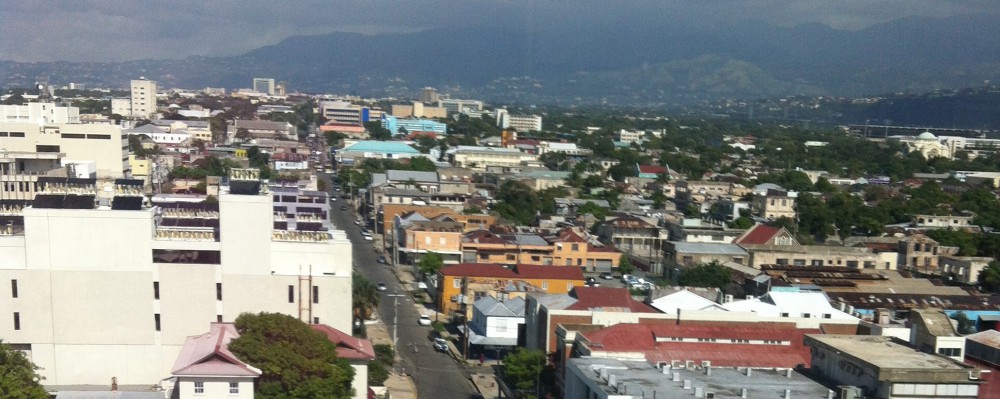
I have a new piece up on http://www.policyplay.com today, click the link above to read. It is about a new multilateral economic development initiative here in the Caribbean. There is never a shortage of such projects, however, I was prompted to write about it after hearing the reaction of a Jamaican who could be a beneficiary of the project. I thought the reaction was interesting because it illustrates the sometimes divergent approaches that donor and beneficiaries take to these kinds of initiatives. On the ground and policy creation sometimes align, sometimes they do not, even if intentions are good. It will be instructive to see how this program rolls out. Take a read and enjoy your Wednesday.
Author Archives: Kate Chappell

KRIATIV AKTIVIS, @randymclarenRM talks about how YOU helped him
Video
7
At the age of just 25, Randy McLaren has styled himself as a “Kriativ Aktivis”, a persona meant to encourage social change and empower young people. McLaren has already brought his passionate dub poetry performances all over Jamaica and is branching out internationally, from Zimbabwe to the U.K.
“I view my creative talents as a way of activism, a creative way of empowering, inspiring, educating, motivating,” he says of his rapid, lyrical and dramatic delivery style. “Young people don’t have the greatest attention span.”
So McLaren, who graduated from the University of the West Indies with a degree in sociology, reads all the time, mostly current affairs. He is most passionate about rectifying what he calls “reverse urbanization” or rural neglect, which he explains as the phenomenon of people migrating from the country to Kingston and back to the country again. “A lot of people are going back home and taking their inner city values. It’s almost as if the rural communities are being turned into ghettos,” he says.
McLaren grew up in the tiny rural community of Gardenfield in the parish of St. Thomas, where it took an hour to walk to school every day. He has three brothers and a sister, and as the middle child, assumed a busy life, becoming involved in academics and track and field, cricket and football. The best day, he remembers, was the day he came third in the spelling bee and then scored two goals for his football team to take the win.
However, the family struggled to support McLaren and his brothers and sister. “Things were always rough, challenging financially.”
So the community stepped in, recognizing McLaren’s talents. As a result, the concept of community and family were engrained in McLaren at an early age. “The concept of family was not just biological, and the concept of mentorship started to form.”
McLaren excelled academically and was the only boy in his rural community to qualify to attend a city school, which is a big deal. He was accepted at Excelsior College, where he was exposed to Youth Opportunities Unlimited, which was running peer counselling programs in the school. YOU is the largest mentoring agency in the region, having been founded in 1991.
It has since touched the lives of tens of thousands of youth and by extension, their communities. Thanks to YOU, which provides a range of programming, from parenting courses to employability and social skills training to peer counseling, McLaren was able to develop the ability to listen to his peers.
“The program gave me a strong platform to help people, to help others and share with others,” he says of YOU.
“I learned that we can make suggestions, but to this day, I never tell anyone what to do. It always boils down to the individual.”
McLaren is sensitive to the challenges youth face and has found that his peers look up to him and rely on him. As a result, he is always available to them and his phone is always buzzing with someone seeking advice or help.
McLaren will always remain accessible, but he has his sights set on larger goals. He continues to write new dub poetry pieces and recently completed a heart-wrenchingly beautiful piece for Unicef Jamaica on the victims of a horrific fire at the Armadale Correctional Facility. Seven girls were burned to death there, in state care.
“To me, talent must be used for good. The underlying principle is that you present it in a way that people want to take it to the highest level,” he says of inspiring his peers to be socially aware and active.
Media coverage of yesterday’s project in Mountain View
Yesterday, a lot of my attention was devoted to co-ordinating media coverage of our project in Mountain View. We had four media houses (as Jamaicans say) show up: the Jamaica Gleaner, Jamaica Observer, CVM Television and Nationwide News (radio).
That is fun for me, co-ordinating the reporters with the interviewees. I have been on both sides, and there is nothing a reporter appreciates more than an efficient, non-annoying PR person. I hope I was that. I linked the reporters with the Canadian High Commissioner, Cuso International’s rep, Navy reps, YOU’s Executive Director and the Mountain View community members.
The reporters all showed up around the same time and were patient and interested, which made for a relatively seamless round of interviews. One of the reporters, a young woman, had a digital recorder, however, and after conducting a lengthy interview with the High Commissioner, realized she had not turned it on. Oops! I have done that before, so embarrassing!
In any case, we got some great coverage in today’s Gleaner and Observer, check the stories out here, and they even used my photos!
Day of Service in Mountain View- PICTURES!
By this time, two buildings and a yard in the community of Mountain View are unrecognizable in comparison to prior to 8 a.m. today. The Canadian Navy arrived this morning with a busload of supplies and over three dozen workers for this day of service, which included refurbishing and retrofitting a container for a computer centre and a homework centre. In addition, they dug up the backyard to facilitate a garden, from a pile of rubbish to a beautifully landscaped plot of dirt.
Fresh paint, new shutters, windows, electrical wiring, plaster, shelving and general cleaning were just some of the activities. In addition to the Navy, we were also joined by the Canadian High Commissioner Robert Ready and his wife Joanne Ready, the ship’s captain, Commander Gregory Adamthwaite, Youth Opportunities Unlimited’s Executive Director Georgia Lewis Scott and Deputy Executive Director Cush Sewell Lewis, Mountain View’s Parenting Group president Annmarie Lynch, the Jamaica Defence Force, Community Service Police and Cuso volunteers. Some of the children who weren’t at church pitched in, too, and many members of the community gathered to watch. The media came out in full force as well to cover the event.
We worked up until 1:00 pm, when we were served a delicious meal of jerk chicken, pork, fish and vegetables and salad. The afternoon was left to wrap up various tasks. We will visit later this week to get a sense of just how much work is done, but it is unbelievable. I think everyone was overwhelmed by just how hard the Navy personnel worked and how much was accomplished. These improvements will help to capitalize on the wonderful progress the community has made in increasing safety and decreasing conflict in the previously crime and violence-ridden area. In fact, several of the police officers I spoke to acknowledged the improvement in the area, including the head of the area’s police force.
Special thank you to the Canadian High Commissioner Robert Ready and Joanne Ready for spearheading this initiative, the Navy for all their hard work and the residents of Mountain View, especially Annmarie Lynch and Francina.
From the HMCS Preserver to Mountain View and back
























Last night, I was looking out at the harbour of Kingston from an angle few have ever seen. I was standing on the dock of the HCMS Preserver, a 43-year-old Canadian “Protecteur-class auxiliary oiler replenishment” (from Wikipedia).
So why was I on this ship, surrounded by Canadian Navy, with the High Commissioner of Canada in Jamaica, Mr. Robert Ready? The story begins a few weeks ago. I had suggested the community of Mountain View (where Youth Opportunities Unlimited, the NGO I work for, has been since 2003) as a possible venue for a service club I work with to host an activity for the children there. The people of Mountain View have made great strides in eradicating violence. It now has a homework centre, active parenting club, and has not had a shooting in several years. However, logistically, it was deemed that this would not be an area suitable for the service club to work in.
Fast forward a couple weeks and a plethora of logistics, and the Canadian High Commission (who had been asking around for possible projects for the ship’s crew to work on when it docked for a weekend), along with the crew of the Preserver, are now set to work in Mountain View tomorrow to refurbish a computer centre and the homework centre and various other projects. A crew of 40 from the ship will descend on the community, along with Cuso volunteers, for this project.
The ship is in Kingston for the weekend as it is usually out at sea during hurricane season. It is the largest ship of its kind in Canada, and has the ability to refuel other ships. It is completely self-sufficient, including the ability to make its own water.
We were invited on board last night for a reception. The ship was docked on the port, a place few people ever get to go. However, the port is an omnipresent part of Kingston’s skyline, with its beautiful, majestic cranes (used to transport containers). It was magical to be there, to say the least.
But backing up a step again, yesterday morning the High Commissioner and I went to the port to collect some of the crew to do a site preparation visit prior to tomorrow. We drove right up to the ship, which is a stately, grey vessel, complete with a helicopter on the deck. It was somehow otherworldly to drive onto the port, with these Star Trek like vehicles driving around and the cranes looming above us, hundreds of feet in the air. And the containers. Thousands of trailer-sized containers, stacked like dominoes on the massive, barren concrete yard.
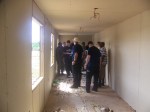
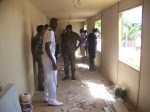
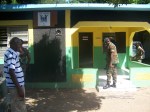
We then visited Mountain View to get a sense of the work we will do tomorrow. The Navy’s engineer’s spent a couple of hours determining what is needed to put in place electrical wiring for the computer centre, among scoping out information for various other tasks. As a result of protocol and safety concerns, we were accompanied by about 20 Jamaica Defence Force officers and regular police officers. The community also started to gather in curiosity.
Tomorrow should be a great day. We will get started early and will hopefully complete our tasks.
Life in Jamaica as a gay, HIV-positive male

Picture courtesy of Suzanna Birchwood.
Growing up in the country with three sisters and six brothers was amazing, says 25-year-old Javon (not his real name). His feminine behavior and gay lifestyle, as he calls it, were not an issue in the tiny rural community.
“It was extraordinary, meaning that my lifestyle was more acceptable,” he says while eating a soy patti at Devon House.
The threats, attacks and discrimination began invading his life after he moved to Kingston at 15 years old to live with his mother.
“I’m scared because I can’t express myself comfortably. There is nowhere safe in Jamaica,” he says. Javon wants to live abroad, where he will be accepted and there will be less stigma, less discrimination, less attacks and less judgment. Where a perfect day would consist of wearing his heels, doing his nails and “looking fabulous.”
Javon has left Jamaica before. He travelled to Europe for a conference, but the prospects of moving somewhere permanently are bleak, since there are often severe restrictions on migration from Jamaica. Claiming refugee status is also a complicated process, as one must not make such a claim from one’s own country. Migration is expensive, so low-income Jamaicans often do not have the option.
For Javon, the negative experiences that have prompted his yearning to move abroad started to happen only when he left childhood, in high school.
With his small, athletic frame, Javon excelled at track and field. The 400 and 800 metre races, to be specific. “The issues started there,” he said. At school, kids called him he/she, deuce, fish. “It bothered me a lot, but I didn’t understand who I was. I really and truly didn’t know what I accept myself to be then,” he says.
Pressure from the community to change his behavior eventually escalated into an attack. A group of boys threw stones at him. He’s since been attacked two more times, and must be on guard at all times. One of the worst incidents occurred in high school, when he was beaten by fellow members of the track team. The coach instigated it, Javon alleges, and did nothing to discipline the perpetrators.
Around this time, Javon began to experience digestive problems and severe pain. He was diagnosed as a teenager with HIV and remains on medication. “I was vulnerable. I didn’t know anything about HIV or STIs and I had no time to think about what I was doing.”
Javon graduated high school with two CSECs and went on to tertiary education, where he specialized in hospitality and food preparation. He worked as a retail clerk downtown, until the store burned down. In order to support himself, Javon has, over the years, been a hairstylist, sold phone cards and tried to raise chickens.
“I have to fight. I am self-motivated. I have this personality where I’m different. I want to do something that impacts somebody, and if a life opportunity comes, I take it. I’m not waiting for it.”
He has tried to settle down in a long-term relationship, but it never worked, although one partnership resulted in him getting back into tertiary education.
His relationship with his mother, who lives in Spanish Town, is not good, while it is strong with his father.
Javon’s well-being deteriorated this summer after he participated in a Youtube advocacy campaign. He appeared dressed in women’s clothes. This caused a ripple in his community, and he had to leave home. For a few months now, he has been without a permanent place to live. “There were rumours in the community, and troubles,” he says. He has found temporary refuge with a community member.
Javon continues to strive to move abroad, where he can feel safe and experience freedom, and where he can pursue a dream of being a counselor for his peers.
In the meantime, “I feel blessed,” he says, “because of the fact that I see another day. I take it one day at a time.”
He would like to tell his fellow Jamaicans, those who are uncomfortable with people who lead lives that differ from them, that “we are human. I recommend that they accept and understand differences. Then we can be a better country.”
Link
My first “real” job, at the age of 21, was with the Ottawa Business Journal. Fresh out of school, I was immediately launched into the serious world of reporting on business and politics. The weekly paper had been around for a few years and the staff were young and innovative.
It was an exciting time. I was learning on the job, pumping out several stories a week for the print edition. We were also just getting started with that whole Internet thing. In fact, Google was still a curiosity, and had yet to become an involuntary impulse, a verb. So in addition to putting out a print newspaper, this young team and I embarked on putting the OBJ on the Web, under the capable supervision of Mark Sutcliffe and Michael Curran.
We broke stories and won awards and capitalized on Ottawa’s status as Canada’s tech capital and Silicon Valley North. It was a good time. I will remain forever touched and shaped by both Mark and Michael’s kindness and patience with me as I gained experience as a young reporter.
I write about this because I have been reminded of this time by tragic, horrific circumstances.
OBJ Publisher Michael Curran’s 20-year-old son Emerson was recently killed while working in the Yukon for the summer. The philosophy student was at a party and a confrontation turned deadly. At the link above, you can read Michael’s heart-wrenching account of losing his first-born son (there are three other siblings) and making the decision to donate his organs.
It is a simple, beautiful piece that must have taken so much courage to write. I commend the Curran family for their bravery and willingness to set an example during a time when they could have retreated from the world. The pain they must feel is unimaginable and must be unbearable, yet they chose to speak to their community. This is leadership and love in action.
The Voice
Last night, I think most of Jamaica was tuned in to NBC’s The Voice. 
Tessanne Chin performed on the show’s audition rounds. She killed it and all four judges wanted her on their team. One even said she could win the season.
Jamaica’s Twitter feed was exploding over the performance and still is, actually. Enjoy your day, and check out the truly talented Tessanne at the link above.
Murder rate “soars”
What is going on? Some days it is difficult to maintain a positive attitude, especially when one reads headlines like “Murders soar“.
According to statistics from the Jamaica Constabulary Force, there have been 40 more murders in 2013 compared to the same period last year. This translates to 860 murders so far this year. Think about it this way: as you have gone about your daily life, every day so far this year, the equivalent of three of the people you have encountered on the street lost their lives.
Here is an official statement from the Police High Command:
“We appeal to our main stakeholders to provide us with valuable support, and to our vibrant media to continue in partnering with us in educating the public on our efforts, while holding us accountable. Through this demonstration of partnership a clear signal will be sent to those who make the murdering of our citizens their business. This will not be tolerated and our resolve in pursuing and bringing them to justice will not be deterred.”
I must note that these figures and statements are obtained from the Jamaica Observer. As we speak, I am trying to source the original statistics, which the Jamaica Constabulary Force reliably posts on their web site. However, for some reason, they have only released the stats so far to the media. I am engaged in a confusing phone tag maze right now trying to locate the figures, and they seem reluctant to send them to me, despite the fact that they are public information. Will keep you posted.
International Right to Know Day
Sept. 28 is International Right to Know Day. Why is this important? Fluidity between government and the information it holds and citizens is an essential component of a healthy democracy. Information empowers people. From the web site:
The right of access to information is an important human right, necessary for the enjoyment of other human rights.
The right to information is essential for transparent and accountable government. The right of access to information makes possible the public involvement in formulating social policies and in the decision-making processes of governance.
The right to information can only be effectively exercised and implemented on the basis of laws, regulating this right in accordance with international standards.
As a reporter, I have now filed Access to Information requests in three countries: Canada, the U.S. and Jamaica. I have yet to receive answers from the U.S. I made almost three years ago (no reason given) and Canada (information was deemed too sensitive because it was related to financial transactions). By far, Jamaica was the most responsive and professional. In fact, Jamaica ranks 13th in terms of press freedom. I must give credit to the excellent Access to Information office here in Jamaica, which was so helpful in speeding up the process and telling me how to go about making such a request.
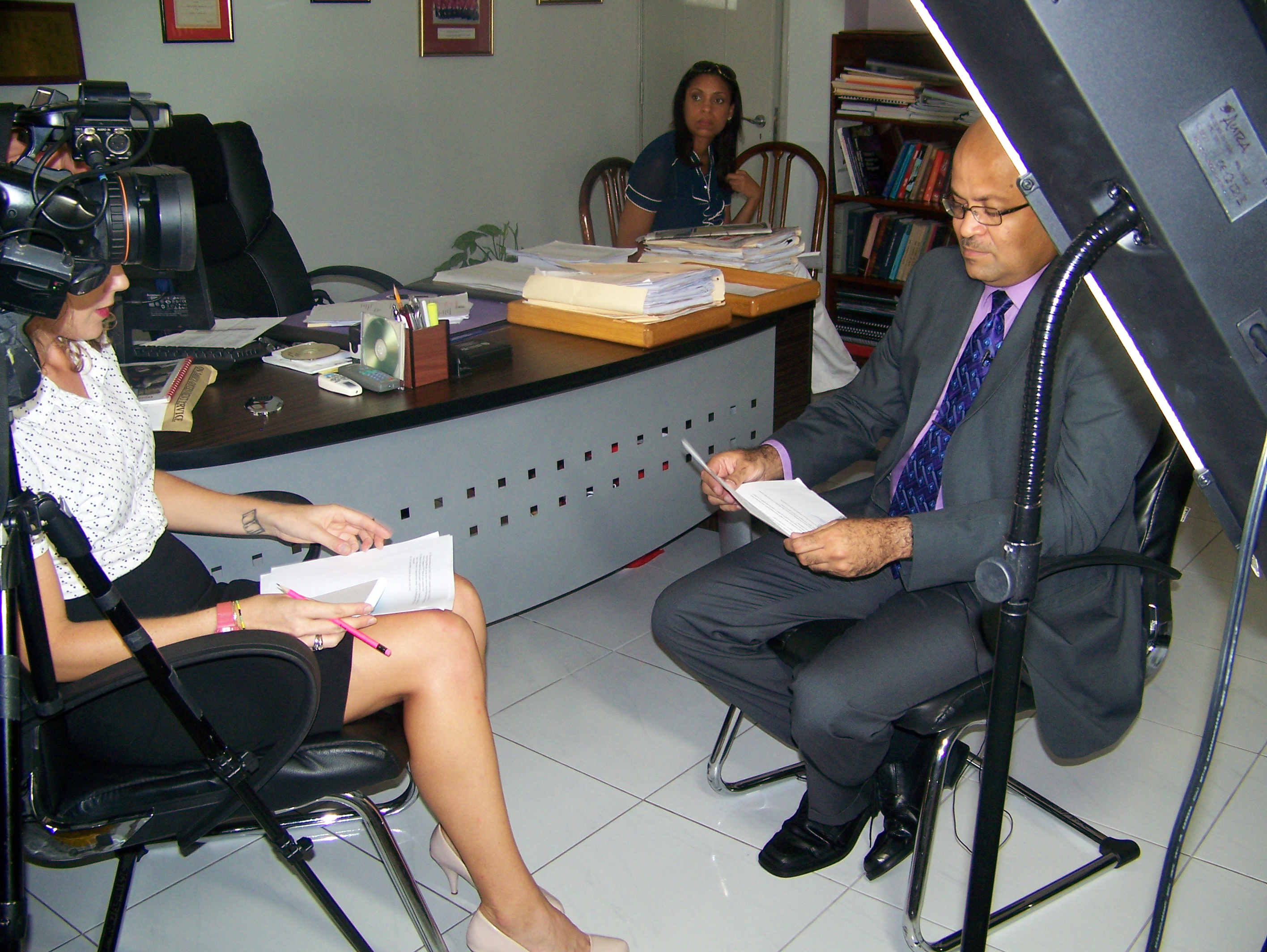
In Jamaica, I recently interviewed a federal official for the television report I did for Global Reporters of the Caribbean. Here’s a rundown of the experience:
I interviewed (former) Lt. Col. Sean Prendergast on June 12. To his credit, he was extremely open with his time and access (I got his cellphone number and was not afraid to use it), although the Ministry of National Security stonewalled us when it came to touring the prisons. We filed an Access to Information request the same day we interviewed him (both by email and paper copy). Lt. Col. Prendergast promised us a 24-hour turnaround. In fact, it was 37 DAYS.
In Jamaica, government departments and officials are given 30 days to respond to ATI requests. My request was related to juveniles placed in adult prisons (a phenomenon in Jamaica that contravenes international protocol but has now been rectified, or so they claim), as well as suicide attempts in prison. Sensitive information, to be sure, and information the public deserves to know.
I received an almost complete answer on Jul. 18, which is just over 30 days. This was after four follow up emails and many calls. The ATI office got involved at some point because I was not getting any response from the Department.
I filed a follow-up request August 15, sent three follow up emails and made many calls and received the response on Sept. 15, with almost no helpful information. To be fair, by this time Lt. Col. Prendergast had left his post and the new commissioner had assumed the role.
So while the process was difficult in terms of following up and pursuing the request (I don’t think we would have received a response so quickly had we not pushed it), in comparison to other countries, it was relatively quick and easy. The ATI office itself seems to me to be helpful and assumes a relatively independent role in terms of advocating for the public.
Accessing information in Jamaica is a curious activity. Many documents and much information you might now take for granted as being online (like government meeting minutes or financial documents) are simply not there. It seems Jamaica is slow in getting information onto the Internet, which makes for a challenging research experience. As a result, research is more old-fashioned, as in you much pick up the telephone or literally go and visit someone who has the institutional memory, or you must go and physically read archived documents. Which, in my mind, is not necessarily a bad thing.
In any case, I would characterize Jamaica’s Access to Information process as healthy. One caveat: I experienced it as a foreigner and I have heard from local non-governmental organizations that they have had a more challenging experience. Enjoy your Monday and go file an Access to Information request!

