Preparing for presentation today. Here’s a pic from today’s run with the theme of funky sox! Enjoy your Friday! 
Funky sax!
Reply
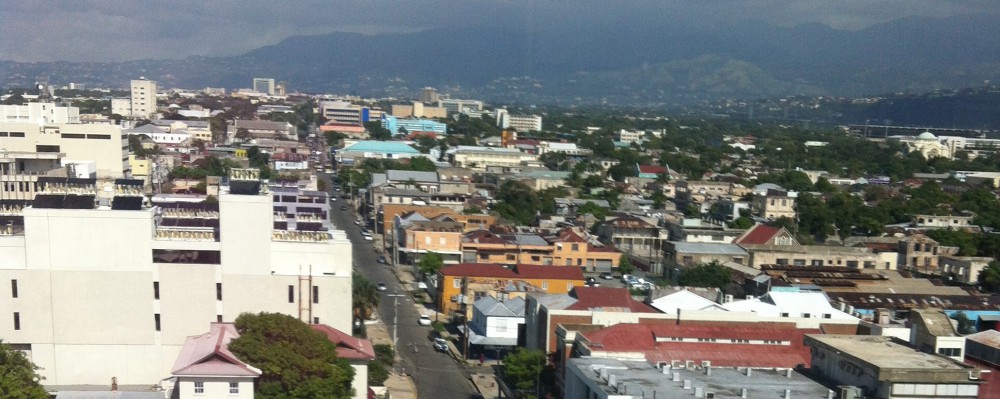

Preparing for presentation today. Here’s a pic from today’s run with the theme of funky sox! Enjoy your Friday!

Meetings all day today, plus a trip downtown, plus JPS having fun with cutting the power in and out, means no substantial post. But this is the poster for the symposium I will be presenting at tomorrow. I visited the YMCA today and got lots of great stories and pictures, expect a report tomorrow.
This Friday, I will be presenting at the Larry Chang Human Rights Symposium on Homelessness and Forced Migration in the Jamaican LGBT Community. I was asked to do so after recently posting a piece about the media’s treatment of this community.
As soon as I moved here over a year ago, I was immediately struck by the difference in the way the Jamaican media cover this community as compared to North America. I did not want to write about it, however, because I am a foreigner, an outsider unfamiliar with the landscape. But I was finally spurred to write a post after the media essentially pinned the blame for a violent confrontation at a carnival event on a group of perceived homosexuals . Read it here if you wish. It was unfair, disrespectful and inflammatory. The post was very popular and well-received.
I must add that the media here does not restrict this type of disrespectful coverage to the LGBT community. It regularly exploits other marginalized, vulnerable people, such as the poor and uneducated, as well as people who have just experienced horrible tragedies. (Of course, this practice is not exclusive to Jamaican media). I am struck, here, though, by the tone of this coverage. It can often read as sensational and voyeuristic. Part of the reason for this is that in general, the way in which Jamaican people express themselves is colourful, exciting, flowery, animated and beautiful. This, of course, is not a bad thing. However, it doesn’t seem to translate well to media. To me, while the writing is often a pleasure to read, its flowery nature can come off as flippant or less than sober, so when serious stories about life and death issues run, they can be perceived as disrespectful. I learned old-school practices of using the simplest and fewest words you can when writing “hard” news stories, and I don’t see this practice employed here so much.
There is no doubt that the Jamaican media is professional, respectful and well-intentioned. I think it is just a case of trying to get the story and trying to adhere to a well-established style. In general, it is not an easy job to be a reporter. You are often forced to ask people awkward and invasive questions at sensitive times. But there is a line you must not cross when portraying these people. You must not scrub away their humanity and render them a caricature or a character in a movie plot. You must remember they are human beings, above all else. And this is the problem I have with media in general. Because of the nature of the medium (scarce resources in terms of space and time), the risk with journalism is such that human beings become one-dimensional. There is little room for nuance and shading, contingencies and context. This is unfortunate, but in the hands of a skilled writer and reporter, most of these risks can be mitigated.
I hope to address this issue adequately at Friday’s forum. We should all be equal in the eyes of the press.

This is Cush and I at the Conference on Children Who Live and Work on the Streets of Jamaica. I wrote a post about it awhile ago, some of which is now in the excellent report on this conference. It is a good read, check it out below. And enjoy your day.
If one Jamaican social worker has her way, this will be the country’s new mantra. By Monica Dystant’s thinking, only rich people should be having babies. Ok, maybe this is overstating her case, but her commentary yesterday in the Gleaner is just shy of this declaration.
There has been talk lately about people having multiple children with multiple fathers and how they cannot afford to take care of them. These children are then subject to abuse and neglect. There are so many illogical leaps and stereotypes here it makes my head hurt. Such as: poor people are not smart enough to use birth control, or they cannot afford it, so they just keep reproducing. Poor people are more prone to abuse and neglect their children. Poor people are not as able as others to stave off sexual urges.
Why so much poor bashing? Why do people feel it is ok to marginalize this population further and make horrific, illogical and unfair assumptions?
True, there are definitely issues of child abuse and neglect here in Jamaica, but they are absolutely not confined to one socioeconomic group. I think the conversation would be a lot more successful if the dialogue stops creating such a dichotomy between poor and rich, us and them, educated and uneducated. Better to approach it as a societal issue. Ask families why they have so many children. Ask families what their financial plans are. But certainly a Chinese style law regulating the amount of children a family has is not the way to go. If that would be the case, would rich families be allowed to have 10 children? I can’t imagine such a control system working, let alone being respective of basic human rights. (I do acknowledge that abuse and neglect are serious problems here in Jamaica, but addressing those issues takes the hard work of education, counselling and support as well as healing the ailing economy.)
Last week, I had the pleasure of meeting up with a group of Early Childhood Educators from Seneca College and Humber College in Ontario. The reason I met with them is a wonderful coincidence: my sister is in her final year of an ECE program at Algonquin College and as part of this program, she was placed at the daycare centre at Carleton University. Her supervisor, Kate, and her were one day discussing my work here in Jamaican and Kate mentioned that her sister Terry Kelly heads down to Jamaica every year as part of a cultural and educational exchange with the country’s educators. I visited the group last week as they engaged in workshops with up to 200 Jamaican educators.
Called Students Crossing Borders (a non-profit organization), this trip was first made 22 years ago by Lynn Caruso. It has since flourished into an experience that includes knowledge-sharing, service work and cultural exchanges. In addition, SBC aims to facilitate partner schools in Jamaica to shift towards the North American model of focusing on the early years in terms of education. The last couple years, SBC has hosted a professional development symposium. “We have had such a great reaction,” says Seneca College professor Terry Kelly.
Dr. Christine Stennett, a Development Officer with Jamaica’s Early Childhood Commission (a division on the Ministry of Education), says the experience with SBC is a wonderful experience for many reasons. “It is amazing,” she says. “It is a very rich and good cultural exchange, and we have found commonalities. In a lot of ways, we don’t differ, but in terms of expression of (early childhood educating practices) we do differ. People are hungry for knowledge.”
They are also hungry for resources and support. (The following information is based on what I have observed, and does not reflect the opinions of SBC or the Ministry). Jamaica’s teachers receive a salary of about $4,000 per month (or about $50US). In many primary schools, (called basic schools) the facilities are severely lacking. The school is often one room, however, there are usually two or more different teachers with different age groups. So without any kind of divider or wall to block noise from the other groups, the teacher has to compete with the din from the other children. There are often no fans, little in the way of teaching materials, no facilities to cook lunch and the school is often in a remote location, so children have to rise extremely early. But the teachers are dedicated and resilient and often, the community rallies behind them with fundraisers and other forms of support. The teachers are often young women who could have chosen another more lucrative profession.
“We all want the same things for our children,” says Terry Kelly. Workshop topics included Cognitive, Emotional and Social Development, Parenting, Infant Mental Health, Literacy and Writing, the Internet, Physical Disabilities and Autism. In addition to professional development, the group of 25 SBC participants did service work in Riverton (where SBC links with Mr. Junior Rowe, the unofficial mayor) and at the basic school in Jerusalem. Some were brought to tears by the conditions in these communities, where children must contend with things unimaginable for children in Ontario. For example, they must stay away from the known criminals, as well as the crocodiles that live in the community of Riverton (one child said the key to escaping a crocodile is to run around in circles since they cannot make a sharp turn.)
By all accounts, the SBC participants had a fulfilling trip here and a valuable cultural and educational exchange occurred with their Jamaican counterparts. I write about this topic today on Mother’s Day, which makes it especially meaningful. Most Early Childhood Educators are women and mothers, people dedicated to protecting and nurturing a nation’s youth. Happy Mother’s Day!
This news is still breaking and I cannot find anything online other than a Facebook picture that is circulating, but two youths were shot by police this morning in the downtown area. They were allegedly involved in a robbery and had no weapons on them. Their bodies were left uncovered for an unknown amount of time.

Photo Courtesy of Roktowa Facebook page
Another story that struck me today: people cheered in a West Kingston neighbourhood after an alleged criminal was shot by police. Apparently, this fellow had been terrorizing the neighbourhood. From the story:
Apprehensive residents of West Kingston yesterday welcomed news that the community was rid of another thug, after a well-known gunman was killed by police in an alleged gun battle.
An ex-convict, recently released from prison and accused by senior police officers and residents of reigning terror on sections of Western Kingston, was fatally shot by crime-fighters.
The dead man was identified by his aliases, ‘One of Us’ and ‘Geronimo’.
Residents cheered as a team of police transported the body of the suspect to the Kingston Public Hospital (KPH), where he was pronounced dead.
It is one of those days during which I (and a lot of others, I suspect) wonder what is going on here in Jamaica. Why is it so violent? Why do people react as they do to death and violence? What were these three victims like? What kind of characters did they have? What were their names? How will their families react? How did they get involved in such activity? Why do the police shoot so many people dead, so often, here? What can be done to prevent these horrific events from ever happening again? Is that ever possible?
I am pleased to announce I have launched into an exciting new partnership with a development-focused web site http://www.MitchellKutney.com (Twitter @MKutney). See what I did there? That hyperbolic, overly excited PR-speak that I picked up over the years having read way too many government press releases that make something like planting a tree sound like cancer has been cured kicked in. But seriously, this web site is a great source of information and thought-provoking articles and I’m happy to be affiliated with it.
I linked up with Ottawa-based Mitchell Kutney as we share a common acquaintance as well as an interest in development-related issues. Mitchell’s Web site is worth checking out. He not only writes about philanthropy and development, but does so in such a way that he has clearly thought it through. He addresses many implications of “development” work and philanthropy, which is a rarity. Many people enter into this industry willy-nilly with nothing more than a genuine desire to help. Nothing wrong with that, but the industry is set up such that much damage can be done if a project or NGO’s presence is not well-thought out first.
Here’s his bio:
Mitchell has spent over 5 years working within local leading institutions (University of Ottawa and the City of Ottawa) where he spearheaded an innovative immigrant-youth program that is now part of the City’s integrated services. After studying in China at the Nanjing University of Aeronautics and Astronautics, he then served as a consultant with various nonprofits on funding and enterprising.
He is the co-founder of the Ottawa Citizens Academy, an organization designed to educate and empower citizens by giving them the skills, knowledge, and confidence they need to actively participate in their community. In 2012, Mitchell also lead the development of a local fund that supports high-risk startups called JustChange.
He has an honours degree in Psychology from the University of Ottawa and a Masters in Public Policy and Administration from Carleton University.
Mitchell has a link to my blog up on the site, where, as he describes it, he writes about Canadian philanthropy, investing, funding and social policy. Check it out.
Only 14.5 per cent of the world’s residents live in country with a free press. So says Freedom House, which monitors the state of the press on a global basis. Forty-five per cent of residents experience a “partly free” press, while 40.5 per cent live in “not free” environments, according to a 2012 survey of the world’s 197 countries.
Freedom House recently released its Freedom of the Press 2012 report, which conducts extensive surveys of how free journalists are to pursue investigative work. Put another way, Freedom House states that 33.5 per cent of countries are rated “free,” 36.5 per cent “partly free” and 30 per cent “not free.” (Please note that the Freedom House news release is confusing for several reasons, including the fact that it refers to both 2011 and 2012).
I am surprised at the low number of residents living in an environment with a “not free” press, although it makes sense demographically, if one takes into account that proportionally, much of the world’s populations live in “developing” countries or China.
In addition, several disturbing trends emerged amongst countries like Chile, Russia, Iran, Venezuala, Hungary and China, where freedom declined. However, bright spots emerged in countries in which dictators were removed, like Egypt, Libya and Tunisia. Other countries that showed improvement included Burma, Indonesia, Thailand, the Philippines and Zambia.
For its part, Canada scored 25th, while Jamaica scored 23rd. Check out the full report here. I would have thought Canada would score higher, but perhaps Prime Minister Stephen Harper’s strict controls on journalistic access to politicians and bureaucrats is having an effect.
The Jamaica Observer is one of the main daily newspapers here. Perhaps its most popular page is Page 2, which has pictures from social functions. However, these are social functions attended by a certain crowd, seemingly with a certain complexion. That is, lighter skin.
 Hence, this picture I saw on a friend’s Facebook page yesterday. Jamaica’s slogan is “Out of many, one people”, and refers to the diverse backgrounds of its citizens. However, if you were only to read Page 2, you would think that all Jamaicans are of one complexion. When I first moved here, I heard complaints about Page 2 and its exclusivity, but I thought I would monitor it for myself to see if this is fair. Unfortunately, I’ve noticed it to be true over the past year. I’ve also heard a rumour that the Observer photo editors lighten people’s skin if they think it is too dark.
Who knows if that is true, but it is clear that skin colour remains a major issue here. More than skin colour, in fact, the issue is class. Uptown (wealthy) vs. downtown (poverty). I have had several people tell me they simply will not go downtown (one person said she has not been in 20 years), or they are afraid to. These are the same people who aspire to achieve or maintain uptown status and appear on Page 2. When I was working for the Gleaner at the Jamaica Jazz and Blues Fest, I had several people ask me how they can get onto Page 2. I had to tell them a) I work for the other newspaper, and b) I have no control over such things.
I wish I did have control. I might banish Page 2-type features, or at least ensure that I would get a broad, representative population.

