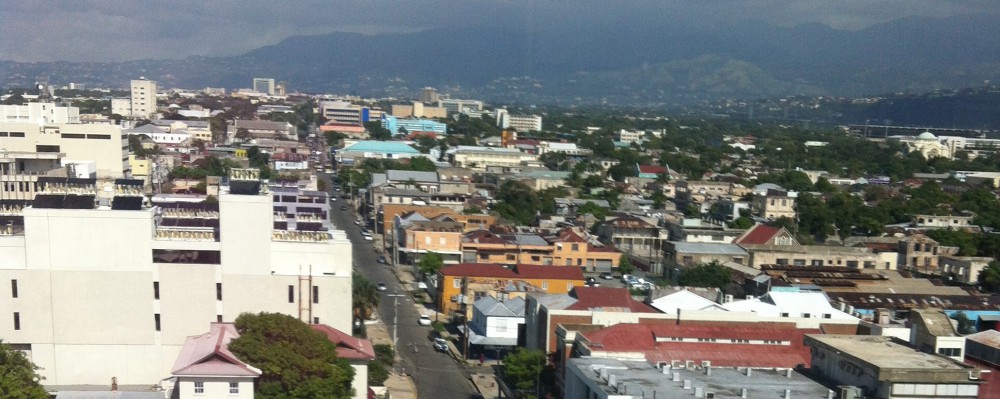
Every day, anywhere from 70 to 120 boys from the ages of 12-16 put on blue shirts emblazoned with the YMCA logo and gather at the headquarters at one of Kingston’s busiest intersections. These boys are part of the YMCA’s high school for those who have been referred to this alternative learning facility. They have exhibited behavioural or social problems and attend this day program to learn the normal things you would learn in high school. “Empowering for Change,” is the slogan and the program receives funding from the government’s HEART Trust/ NTA. The boys receive a $50.00 per day stipend if they attend classes.
Mrs. Sarah Newland-Martin, administrator for the program, says it allows the boys to learn skills that allow them to proceed successfully in the future. “The program has facilitated a lot of our youngsters who come from adverse condition,” she says, adding that one young man (nicknamed Chicken) is now completing his doctorate. When the success stories return to visit, Mrs. Newland-Martin says, they remind her just how much trouble they gave her, then they tell her “‘The Y helped me to be the person I am today because of the program,'” she says.
There are forms 1,2,3 and four and in addition to subjects like math and grammar, they can be trained in welding or barbering. The day I was there, they were engaged in a peer leader’s meeting in which they discussed recycling. Apparently, the recycling project they had undertaken was so far not as successful as they had liked: people were missing the receptacles they had identified. So they came up with a plan to weld open a drum and put signs on it to identify the right place to collect recycling, which is not so popular in Jamaica. A company is now collecting the bottles every week.
The facilities are modest, at best. Almost all the desks we sat at were broken, the roof is tin and the walls need paint. Fans or AC are needed in most rooms. Also on the day I visited, the boys were tallying up a list of repairs needed in each room in advance of Labour Day next week, when Jamaicans typically engage in community-improvement projects. A group will come into the YMCA to paint and do other repairs this coming Labour Day. As Miss Diana Taylor, the co-ordinator of the program told me, “What we really need is a proper building. These containers get hot,” she said.
In addition to Miss Taylor, I met Jason Tan de Bibiana, a young man from Toronto who teaches reproductive health to the boys. Jason has a Master’s degree in public health and was sent to Kingston for five months by the YMCA of Canada for this purpose. Jason says his program creates a safe space for the boys to discuss challenging topics like HIV/AIDS, sexual activity and whatever they don’t feel comfortable sharing elsewhere. “Here, they often have a lot to share,” Jason says, explaining that in comparison to the high schools in Canada he has taught at, people are often to shy to speak up about these difficult topics.
The pictures I took are of a typical day. I attended a peer leader’s meeting at which the boys discussed the recycling project. I also visited the barber shop, where a haircut was taking place. It is a lively place clearly providing a healthy path for some of Kingston’s young men.
 Jamaican Journal
It is a joy to read your blogs. They are so full of hope.