18 Degrees North story

Video


We are putting together my story today on children in adult lock-ups in Jamaica. This story is for new outfit 18 Degrees North. Check this link to watch the first two episodes. My story is slated to air on Sept. 9. Please share, Tweet and Facebook the link below. Have a great day!

http://www.18degreesnorth.tv/the-jamaican-lottery-scam-still-going-strong-full-episode/

Inflaming the media in JA


I wonder if yesterday’s shenanigans will hurt Jamaica’s 13th spot ranking in terms of press freedom. Reporters were initially invited to a meeting about a proposed logistics hub on Goat Island, which is a protected area. They were subsequently kicked out. A politician claimed the invitation was a mistake. This simply does not happen. Government officials, not just in Jamaica, but everywhere, see the press as a strategic tool. If media coverage will be of benefit to whatever message the government is trying to get out there, the press will be invited. If their presence would be detrimental, meetings are kept private.

“Mistakes” like this are rare as they tend to inflame situations and create controversy where there may not have been any.

But once the press is shut out of something, all bets are off. If you want to keep the press happy, you simply do not disinvite them. First of all, it is bad manners. Second of all, the more you tell reporters they cannot have access, the more they will dig their heels in, as their suspicions will be raised. Transparency and accountability, especially in terms of access to government officials, is at a premium for reporters, and anytime this is limited, red flags are raised.

This situations is ratcheted up even further when foreign money and the private sector is involved, and this is the case with Goat Island, which is part of the Portland Bight Protected Area:

Goat Islands fall under the St Catherine Coast Development Order and the Town and Country Planning (Clarendon) Development Order. It is also covered under the Natural Resources Conservation Authority (NRCA) Act 1991, and several other policies, legislation and regulations. (From the Observer).

The problem is, Chinese investor China Harbour Engineering Company has issued an unsolicited $1.5 BILLION proposal to build a “logistics hub”, which would be comprised of a port facility, industrial, office and recreational space. This would include “light” manufacturing and an IT component, and would eventually employ up to 15,000 people. It appears an MOU has already been signed and construction could start in 2014. How is this so given the environmental considerations?

From a development perspective, Goat Island is in a favourable location for this type of project, as it is located just off the coast of Hellshire in St. Catherine Parish. Less so for the environment, of course. From a Gleaner article:

The PBPA is a nesting site for marine birds and endangered turtle species, such as hawksbill and green turtles. This reserve area is said to contain 81 acres of limestone forest, wetlands, seagrass and mangroves. It covers 500 kilometres on land and 1,300 kilometres on the marine side. Little Goat Island falls within the PBPA. The reserve is habitat and home to birds, iguanas, crocodiles, manatees, sea turtles, fish and 50,000 human beings.

The Jamaica Exporters’ Association appears to be in favour of the project. As for the government? It is less clear, even less so after journalists were kicked out of the meeting. The official word from Industry, Investment and Commerce Minister Andre Hylton is that the government has made no decision. So why the secrecy? 

The Chinese are no strangers to investing in Jamaica. In fact, the state-owned company previously mentioned is setting up an office here. And Prime Minister Portia Simpson Miller is wrapping up a trip to China aimed at shoring up tourism and securing more investment dollars.

So there are definitely environmental concerns weighing on the government’s mind, but the scope and scale of the Goat Island project is especially attractive as Jamaica’s economy continues to suffer. As a result, it is a matter of weighing economic growth with protecting the environment. The government appears to be going through this process, but we don’t really know much, and it appears we will know even less if the press keeps being shut out of public meetings.


Close to one in five births in JA are to adolescents


In Jamaica, 18 per cent of live births are to adolescent mothers. Even more remarkably, in rural areas, the birth rate is 74 per 1,000 births as compared to 51 per 1,000 births for the urban Kingston area. (Compare this to Canada at 10.28 or Barbados at 12.23 or the U.S. at 12.70 or Bahamas at 15.95).

Clearly, this is an issue if you regard it from the angle of poverty. Most of these young women do not have the resources, financial nor emotional, to take care of their babies. So the cycle of poverty continues.

Youth Opportunities Unlimited’s Cush Lewis will be on ROOTS FM 96.1 FM today on a show called Equal Spaces with host Marcia Moriah Skervin. He will discuss this very crucial issue for one hour.

Jamaica has made some progress in terms of reducing birth rates among adolescents from 4.5 in 1975 to 2.4 in 2008, but 47 per cent of births are still unplanned.

“Plus, the age-specific fertility rate of women who have the least years of education and economic means to care for these children are above that of their more educated and fortunate peers,” she said. “Thirty per cent of pregnancies to women pregnant by age 19 was unintended.”

This quote is from Racquel Reece of the National Family Planning Board. The NFPB aims to decrease the birth rate among adolescents to 65 per 1,000 by 2015.

Not only does teenage pregnancy here create serious problems in terms of adequately caring for the baby, but the young woman faces literal rejection by society. Girls are often expelled from school if they are found to be pregnant, thus they are denied their right to education. Some attend a special school, but many don’t and do not return to school. A Senator named Kamina Johnson Smith has tabled a bill to modify this situation, but it has yet to be passed. So this is a society that treats teenage pregnancy like a contagious disease to be ignored rather than one of concern and import to the entire community.

The practice of expelling pregnant adolescent girls has not yielded the desired result. Live births among girls 10-19 years have remained at around 20 per cent over the last decade. Showing empathy and making accommodations for pregnant girls in our school system is not an endorsement of early sexual initiation and teenage pregnancy. It simply means we care about what happens to the people around us.

This quote is from youth advocate Jaevion Nelson. Here is more from Mr. Nelson:

According to data produced by the Caribbean Community Commission on Youth Development in 2010, teen pregnancy costs us about US$12.5 million or 1.3 per cent of Gross Domestic Product (GDP). The cost of not completing primary school is about 0.78 per cent of GDP, but if all children complete their primary education, GDP would increase by one per cent. Further, with full secondary enrolment, the Jamaican economy would grow by 1.37 per cent, and by 5.47 per cent with a 30 per cent enrolment at the tertiary level.

A third aspect to this issue brings the bigger picture into focus. As we saw, 47 per cent of births are unplanned (let’s assume a fifth of these are to adolescents or perhaps even more if we factor in people living below the poverty line). So the people who cannot afford to have children are still doing so, while wealthier Jamaicans are not having as many children or they are migrating. We see this in the replacement level fertility rate, which has yet to reach the 2.1 per cent births per woman target that was set for the year 2000.

If you are in Jamaica, tune in today to hear Cush talk about this very important issue.


Around town


Some images from the last few days:
Heading to a friend’s birthday party.
Lights through bougainvillea.
Waiting in a route taxi on the way to work, a cookshop painted with the image of Haile Selassie.
For sale: Belts! “Calvin Klein” underwear and deodorant, in case you forgot anything getting ready this morning.

Cush on TVJ’s Smile Jamaica!

Video


http://www.televisionjamaica.com/Programmes/WeekendSmile.aspx/Videos/28763

On Saturday, Youth Opportunities Unlimited’s Deputy Executive Director Cush Lewis appeared on TVJ (one of the main local broadcasters) for its morning show. Cush did a great job selling YOU and its mentoring services. He is a natural! Check out the interview here, he gives a great summary of what YOU does.

Should JA government fine young people who don’t vote?


The U.K. is floating the idea of fining young people who do not vote. This recommendation comes from a think tank and was prompted by one political party’s suggestion to lower the voting age from 18 to 16.

This suggestion is a twist on compulsory voting, which fines people who do not vote. Australia is a good example of this practice and it turns out that when faced with an incentive of keeping your own money in exchange for casting a ballot, people choose the former. No surprise there. Voter turnout rates in Australia hover between 93 and 96 per cent.

Let’s compare with Canada, which does not have compulsory voting. Voter turnout has been on the decline for decades (let’s confine this to federal elections, municipal and provincial turnout rates are even more abysmal). It now sits around 60 per cent. People have floated the idea of compulsory voting in Canada, but it never seems to pick up steam. There are all sorts of issues related to compulsory voting, including the perception that it challenges one’s right to freedom of expression. People also object and say they choose not to vote because they do not like any of the choices (although a “none of the above” option would solve this problem, which the U.K. would introduce).

But scholars, not just Canadian, have linked the idea of increasing voter turnout with targeting youth who are just about to reach voting age with education campaigns as a means of getting them to vote. You must create a habit, you must create awareness and you must provide rewards, human behavioural studies seem to show. You must also show youth that their vote matters to counter their cynicism about politics.

I wonder if compulsory voting would work in Jamaica, where voter turnout rates are not much better than Canada.

Let’s look at this response I got on Twitter when I asked the question:

If people choose not to vote its there choice,if they have to pay a fine in these hard times they will become rebellious

I would tend to agree with this statement. Cultural context matters here greatly. People are extremely cynical and distrustful of politicians. Historically, this distrust is well-founded, as Jamaica deals with the issue of corruption.

People are also struggling with the effects of a stalled economy.

I would think you would have to address these problems first before instituting compulsory voting that included a fine.

Goodbyes at Scotchies


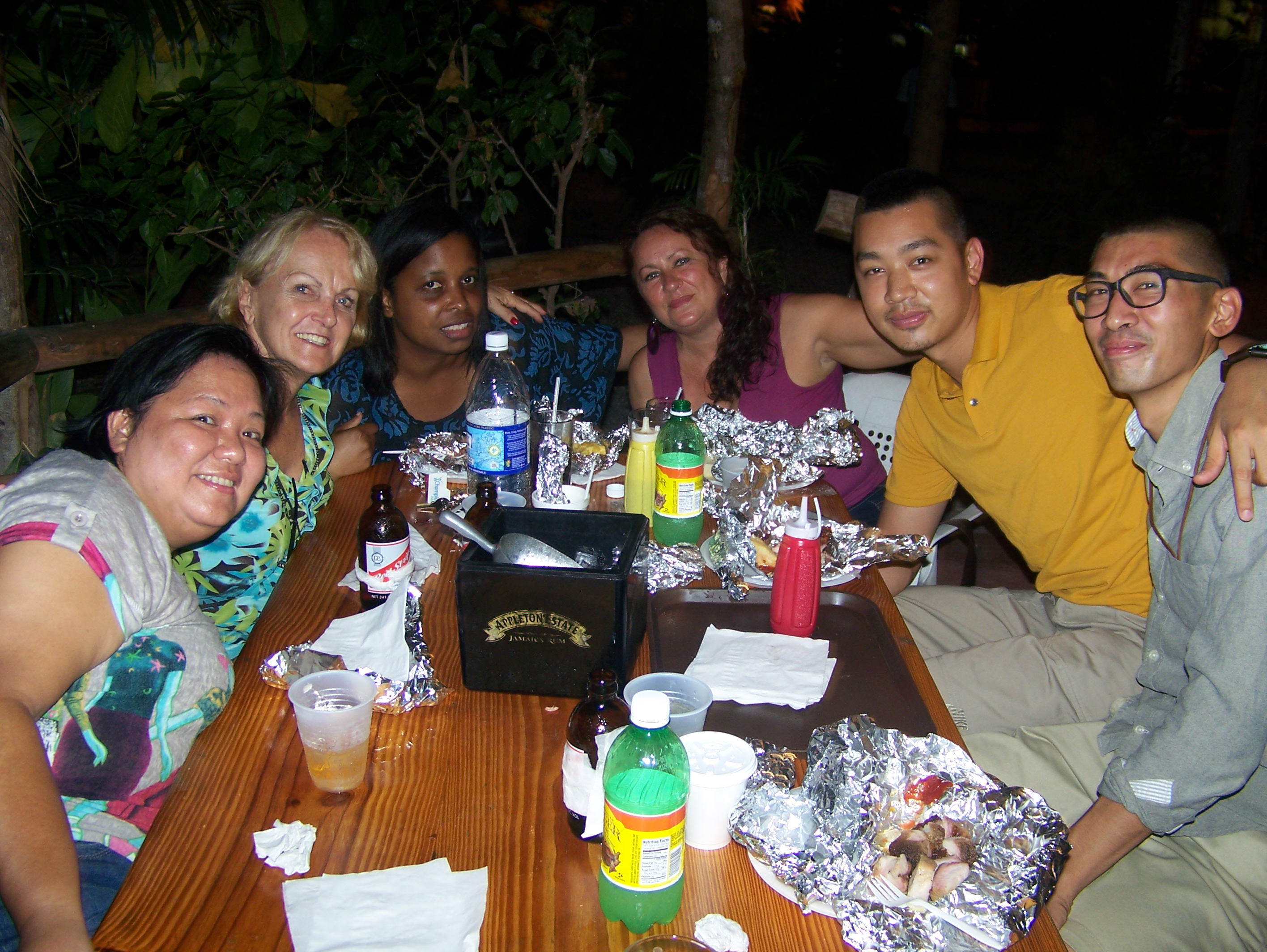
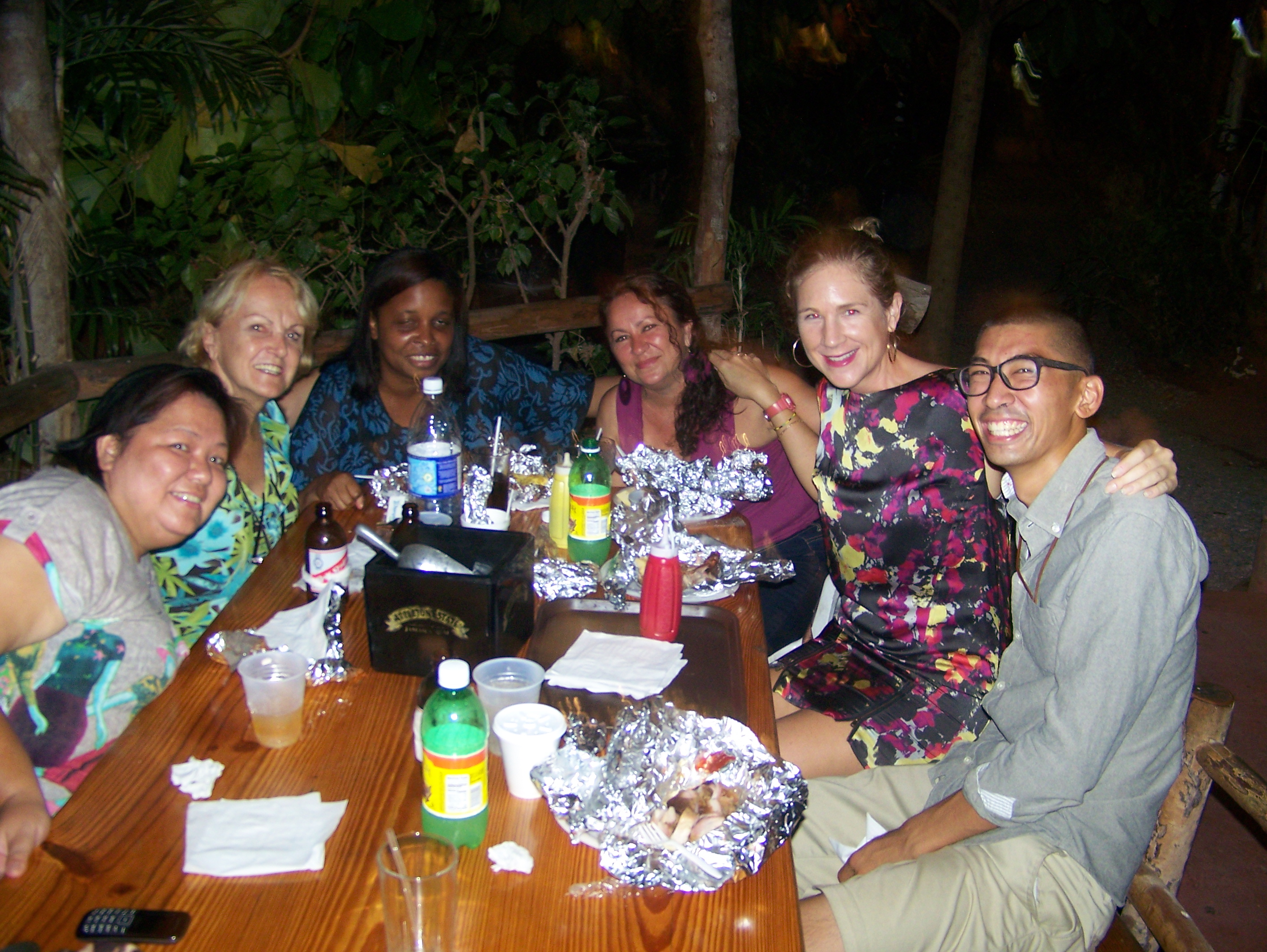
Vicki, Carol, Michelle, Rhonda, Marcus and JasonVicki, Carol, Michelle, Rhonda, me and Jason

Last night was one of birthdays and goodbyes. First, I went to my friend Ann’s birthday party then headed over to Scotchie’s (jerk chicken, pork, etc), to say goodbye to Jason. We met him at an event earlier this year. Jason was sent by the YMCA to work with the local Y here, teaching youth about sexual health. Here is a blog he wrote recently. Jason’s internship was funded in part by the Canadian government, CIDA to be exact, but it looks like the funding status of this worthwhile project is questionable going forward. Let’s hope not, and good luck to Jason, who will be missed.

Absurdity in St. Elizabeth and Westmoreland, Jamaica


This blog is worth a read. It speaks to preservation and development issues in Jamaica. Happy Friday!

How to find the right narrative


Yesterday, I met a young man who is leaving Jamaica. He is young, in his twenties, and gay. He often chooses to dress up in what are traditionally regarded as women’s clothes and accessories. He is leaving because he does not feel safe. He does not have a secure place to live, nor a stable means of generating income. He will hopefully be issued a Visa by the Canadian government in the next few weeks.

This is one story. I hear others, via both firsthand accounts and in the media. Some people relay that they can live relatively normal lives, while some people are harassed daily because of their sexual preferences. For the media, it is a challenge to accurately portray this situation.

Of late, I have been writing a lot about the media’s responsibility in covering sensitive topics such as this. Check out some of the pieces here, here and here.

And check out fellow blogger Annie Paul’s take on yesterday’s reporting on a tragic accident in which a jet ski driver killed a young girl and injured another (the reporter chose not to mention anything about the alleged perpetrator, only focusing on the victims. Paul asserted that the reporter is aiming to uphold the privilege enjoyed by wealthier Jamaicans). Also, a Facebook post alerted me to this story, criticizing the writer for this sentence:

“Frano’ could hardly have been more unfortunate in the looks department. A corpulent man who makes the shade black look black, Francis knows what it takes to make athletes run pretty quickly with poise and beauty.”

This story profiles track star Shelly Ann Fraser-Pryce’s coach with the supposition that even though he is not traditionally “pretty,” he still deserves the love and respect of fellow Jamaicans. No need to analyze what is wrong with this thought, it is not deserving of your time.

So why did I initially tell you about the young man I met yesterday? He got me thinking again about the media’s role and responsibility, as did the examples I cited. This young has a story, it is tragic yet contains seeds of hope. It reinforces the stereotype that Jamaica is a hostile place for people who do not conform to its norms, yet it is a story worth telling. So how do you tell a story that by shedding light on it, you can possibly lead to positive change? Perhaps the Toronto Star’s recent piece is a baseline, although even that was subject to criticism.

Since the Toronto Star ran this story about Jamaica being a homophobic country, some people reacted with negativity, claiming that the story did not portray the situation accurately. This came from members of the LGBTQ community, who say that they can live “normal” and safe lives. They claim that media coverage focuses too much on the sensational.

I continue to ponder this question. How do you tell stories that need to be told, that highlight issues that need immediate attention, while staying “right-sized,” while maintaining the correct proportion? I guess it depends on both the source and the recipient. For this young man who must leave Jamaica in order to have a safe, fulfilling life, it is of crisis proportions. Yet for many gay Jamaicans, this issue does not demand daily, immediate attention.

For the family of the young girl who was killed by the jet ski, life cannot get much worse now, and the reporter portrayed this and focused on them as victims. Yet the reporter chose to leave out an entire portion of the equation, this mysterious person driving the jet ski. I am almost certain that the girls’ parents would not choose this narrative for the story.

For the coach, who is portrayed as ugly yet still deserving of our love and respect, how does he respond to this article now? I am almost certain he would not choose this narrative to tell his own story.

Yet these stories are now on record, accurate or not, fair or not, with people’s feelings as casualties.

So how do you adopt the correct narrative? How do you tell stories with respect, accuracy and fairness? It is something I continue to ponder.

 

Storms rolling in


This is the view from my office window yesterday. Storm clouds rolled in and we got some rain briefly. It has been like that in the afternoons for a week or two now. It cools things off, only ever so slightly.

Today is a busy day of meetings and I am experimenting with a Twitter discussion at 1 p.m. with the topic being youth unemployment. Join us if you can, using the hashtag #youthunemploymentJA.

Have a great day!