The U.K. is floating the idea of fining young people who do not vote. This recommendation comes from a think tank and was prompted by one political party’s suggestion to lower the voting age from 18 to 16.
This suggestion is a twist on compulsory voting, which fines people who do not vote. Australia is a good example of this practice and it turns out that when faced with an incentive of keeping your own money in exchange for casting a ballot, people choose the former. No surprise there. Voter turnout rates in Australia hover between 93 and 96 per cent.
Let’s compare with Canada, which does not have compulsory voting. Voter turnout has been on the decline for decades (let’s confine this to federal elections, municipal and provincial turnout rates are even more abysmal). It now sits around 60 per cent. People have floated the idea of compulsory voting in Canada, but it never seems to pick up steam. There are all sorts of issues related to compulsory voting, including the perception that it challenges one’s right to freedom of expression. People also object and say they choose not to vote because they do not like any of the choices (although a “none of the above” option would solve this problem, which the U.K. would introduce).
But scholars, not just Canadian, have linked the idea of increasing voter turnout with targeting youth who are just about to reach voting age with education campaigns as a means of getting them to vote. You must create a habit, you must create awareness and you must provide rewards, human behavioural studies seem to show. You must also show youth that their vote matters to counter their cynicism about politics.
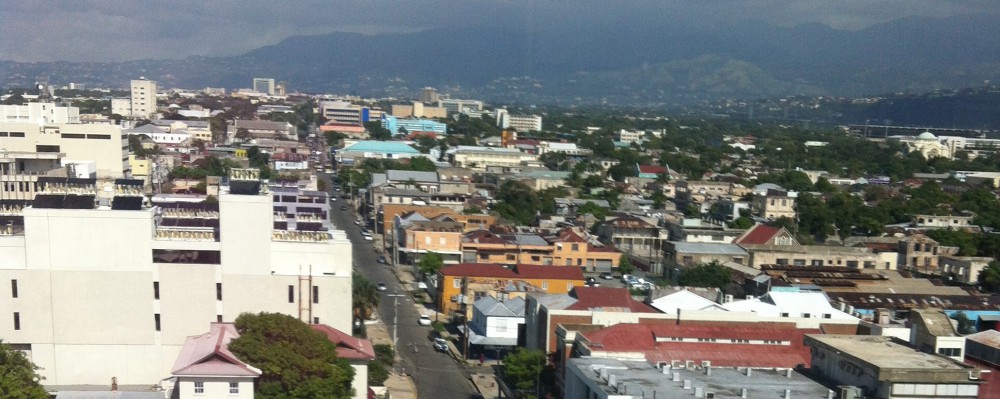
I wonder if compulsory voting would work in Jamaica, where voter turnout rates are not much better than Canada.
Let’s look at this response I got on Twitter when I asked the question:
If people choose not to vote its there choice,if they have to pay a fine in these hard times they will become rebellious
I would tend to agree with this statement. Cultural context matters here greatly. People are extremely cynical and distrustful of politicians. Historically, this distrust is well-founded, as Jamaica deals with the issue of corruption.
People are also struggling with the effects of a stalled economy.
I would think you would have to address these problems first before instituting compulsory voting that included a fine.
 Jamaican Journal
I think this will cause more harm than good on the island of Jamaica. In a political arena that is laced with so much corrupting to be given the power to force 16 year old kids who are clueless about life to vote is very wrong. Those politicians would only use the votes of those youngster to steal their lives away. There is already not much of a future for Americans who are not in the upper class, such actions will certainly bring them social death.
One has to ask what problem does voting solve? How does voting improve the economy or social services. If a government gets 100% of the votes how does that help anybody? Alot of people align voting with “busy-work” – a kind of “buy in” and “shut up”, “feel good” mechanism which happens every 4 or so years in a period of heavy advertisement and promotion. It would seem that politicians know that winning is the most important thing. And winning over shadows all other aspects. Mandatory voting would essentially force large groups of people to align themselves with 1 or 2 kings in a aim of mass compliance. If the best party wins why don’t they do good?
I think it is better to increase the impact of voting. Making it more frequent and more specific instead of it being a 5 year popularity contest. Conditions of the government change all the time yet voting is a mere one night stand in a relationship that lasts 4 years and trillions of dollars. Who knows what lies one would say to get elected. Once elected the chance for change is practically none. People basically agree to participate in a non-participatory system of choosing a side in a football match. The last thing the government want is for people to become rebellious. I think they should pay people to vote. In fact I think they should pay MORE MONEY. Enough money to last them through the 4-5 years in which they cannot vote on anything but the type of tissue they buy in the supermarket.
Technically, voting does not solve anything unless it is a direct referendum on something, which you suggest Jamaica should have more of. The problem with that is that turnout rates are low to begin with, so it would be a challenge to get people out to vote even more. I agree with you, though, that the same thing happens over and over again, rewarding people with power who do little with it. However, Jamaica only achieved universal suffrage in 1944. If people stop voting, the country will, by default, return to that state. Is that really what Jamaicans want? Your vote is your voice and the more people that do it, the more politicians will listen. The fewer the people who vote, the more politicians will think the populace don’t care. Is that what Jamaicans want? Thanks, Owen, for reading, and your thoughtful comment.
No prob, I read from time to time when I update my news website. I hate your huge masthead though, its a waste of screen space.
I think Jamaicans want the best they can get and voting should do that but in reality it doesn’t. If you win the election you should win because you are the best person for the job and you know what to do, you are skilled and have years of experience to serve the ENTIRE COUNTRY. When you win you get 100% of the countries resources. If 20% vote you still get 100%. Which goes to show the importance of voting. Anyway, I’ve ranted enough, I don’t think I have any more points on the issue. Have a good day.