
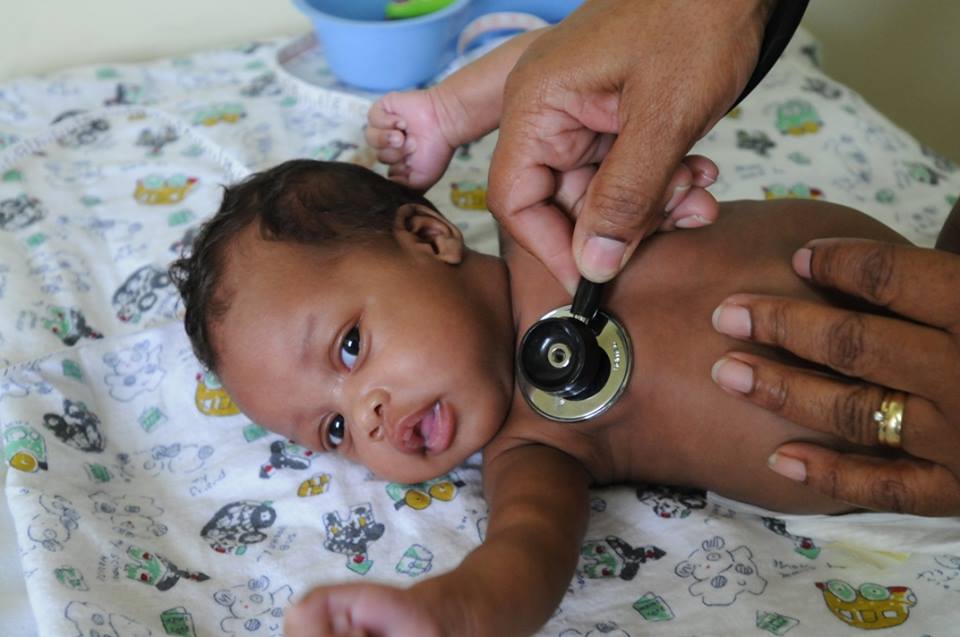
There is certainly enough depressing news to lose hope here some days, so any progress is so heartening and encouraging. Such is the case with the news that Jamaica is set to become one of the first countries to reach the target to reduce mother-to-child transmission of HIV. Unicef Jamaica this week issued a release and apparently the Ministry of Health will do the same later on with the release of a report to the Pan-american Health Organization.
The Minister of Health, Dr. Fenton Ferguson, confirmed the reduction, which was 10 per cent in 2004 and is now down to a rate of two per cent. In addition, over the last decade, the rate of child deaths from HIV has fallen by 43 per cent while there has been a 25 per cent reduction in transmissions. The improvement has come from the purchase of anti-retroviral drugs, the union of several health authorities and partnerships with the private sector. Here is Dr. Ferguson:
“Jamaica has made good progress especially in the areas of the prevention of mother to child transmission and the availability and use if anti-retroviral drugs. The Government is moving towards ownership of the HIV Programme and has put in place several initiatives towards this including the integration of the National HIV/STI Programme with the National Family Planning Board to create one sexual reproductive health authority, the purchase of ARVs through GOJ budget and undertaking a sustainability study of the national programme.”
Jamaica has one of the highest rates of infection in the world among men who have sex with men and a prevalence rate of about 1.5 per cent. Here are some more facts from JIS:
AIDS STATISTICS FOR JAMAICA
- In Jamaica, it is estimated that 32,000 persons are living with HIV and as many as 50% are unaware of their status.
- The most urbanized parishes have the highest cumulative number of reported HIV cases: Kingston & St. Andrew – 1570.1 cases per 100,000 persons, and St. James – 2094.6 HIV cases per 100,000 persons.
- The total number of reported AIDS cases in Jamaica between January 1982 and December 2011 is 16,264. The total number of reported AIDS deaths in Jamaica between January 1982 and December 2011 is eight thousand four hundred and ninety eight (8,498).
- The cumulative AIDS case rates are higher among males (689.3 cases per 100,000) compared to females (504.9 cases per 100,000 females).
- Although the epidemic affects more men than women, over time females are accounting for an increased proportion of the AIDS cases that are reported annually.
The media has no trouble reporting on violence, gossip and negative news, let’s hope they give equal play to this story. It is well-deserved.

