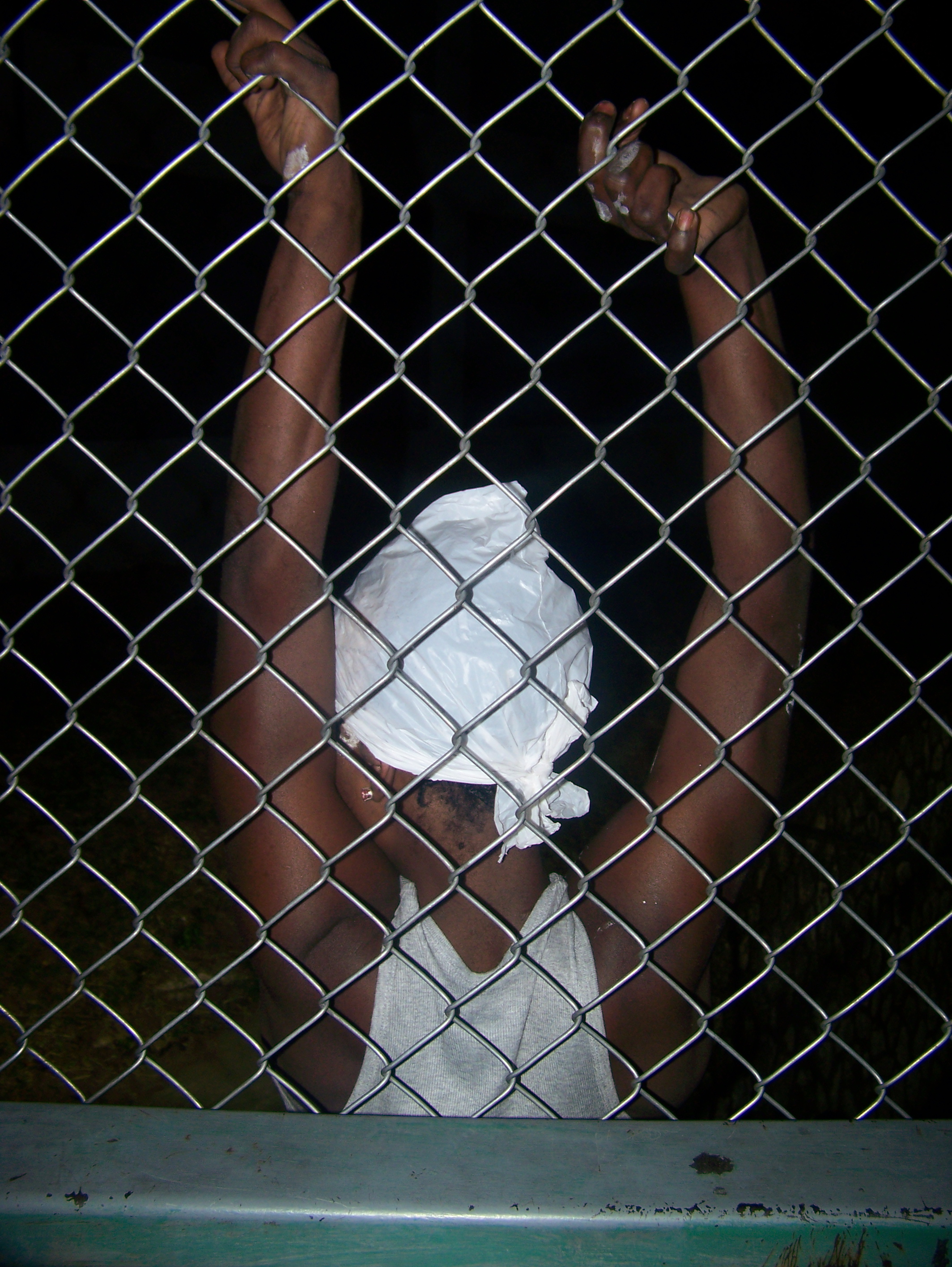
This is not Anthony, but one of the boys who lived i the Gully.
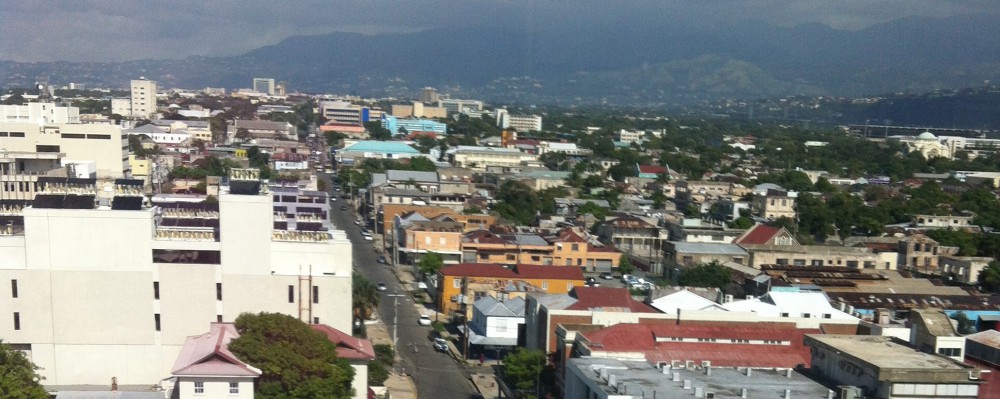
Life in the garrison, amongst members of the Rat Bats gang, was good for Anthony (not his real name) until he was about 12. “At a younger age, coming up, I had flamboyant behavior,” he says. At that time, people in the community started calling him Dandy Shandy or batty boy and tormenting him. He began to seek comfort in a group of boys he met while going through Halfway Tree on his way home from school. He felt comfortable with them. “I started to meet friends who had my type of behavior,” he says during a conversation at Devon House, one of the few places in Kingston boys like him feel safe to congregate. “Persons in my area started to talk (when he started coming home later). They discriminate me, call me batty boy. And I had an older brother who always beat me because of my behavior.”
So Anthony started to run away and live on the streets. He is 21, born on June 25, and he has four brothers and two sisters. His mother does not approve of his behavior, but she supports him when he goes home, as do his sisters. Over the years, they have tried to get him to come home to his mother’s farm in Golden Spring, once by promising him food. But the discrimination proved too much and he made the streets his permanent home at about age 13 or 14. He dropped out of high school in grade nine after his peers started to throw chicken bones at him. “The stigma was so high,” he says. So he and three other boys started to walk the streets, staying in “capture” (abandoned) houses. Things were easier then, he says, compared to now, when a group of young men started causing trouble in New Kingston by stealing and harassing people. “No one used to steal anything,” he says. “Fifteen of us stayed together. We’d come on the street at night, and cook and eat and have fun and no one quarreled.”
This is the kind of life, the kind of community, these boys must create as a result of the homophobia, discrimination and sometimes attacks they face in Jamaica. They are uneducated, often homeless and lack the skills to get the employment they need to support themselves.
As for Anthony, things improved a little bit when he was 17 and met a 24-year-old man who became his partner for several years. They lived together but then his partner started to cheat on him so Anthony returned to his mother’s for awhile. “My Mom loved me. She don’t like my lifestyle, but she doesn’t let it bother her. My Dad, I don’t grow with him, it’s not really a tight connection.” But the community started to bear down on him again and Anthony found himself back on the streets, this time in the infamous gully, which is an underground storm drain that a group of young men had lived in until they were kicked out by the police in December 2014.
Anthony was doing sex work to make some money, and at first this life was comfortable enough, as much as an underground drain could be, but then boys from all over started hearing of this community. The crime and fighting started. “It is rough. When I was at the gully, I used to do prostitution work, but since the tiefing started, I don’t want to get caught up in it.”
Anthony again returned home when he fell ill with the flu, but again had to leave, despite the fact that his mother took care of him (“There is no one like your mother,” he says.) . He is back on the streets again, having just completed an employment training course with the Colour Pink Group that he hopes will land him a job and eventually an apartment. “I really enjoyed that course. It is a good thing, and I’m glad I put my best into it.” In fact, Anthony won an award for his performance in the course, which taught a group of 13 boys about customer service and office administration. They received a certificate and an internship, both of which will help them when they seek employment.
But he lacks the necessary clothes, hygienic items, a place to sleep and even food that would bolster his chances of success at the internship he has just started. “The Lord has been providing. I go to church all the time, I ask people (for money) on the street, but sometimes I go a day or two without eating.” Like everyone else, Anthony has dreams. “I’ve always wanted to do my own TV show. I want to be an ambassador for the gay community, maybe open a training centre…I want to be my own boss, be an entrepreneur. But for now, I just have to work on what I have.” For now, Anthony must fight to survive in a hostile environment, with little in the way of defences. “Being gay in Jamaica, it is just very risky. If you have the behavior of a lady, up and down in the streets, you can calm it down, but if you don’t you will have persons attack you.”
 Jamaican Journal
Reblogged this on Jamaican Journal and commented:
I am reposting this blog today because the young man featured in the story is asking for help. He would like to start his own business selling spices and sauces. But he needs mentoring and some guidance. I am also seeking a suitable person, but as you can imagine, it is difficult to find someone who is sympathetic and has the time to devote. Anthony has nothing, no resources, so he has many obstacles to overcome. But after getting to know him, I have seen his passion, resourcefulness, intelligence and ambition, qualities he needs to survive and thrive. If you have any ideas, please leave them in the comments. Thank you.