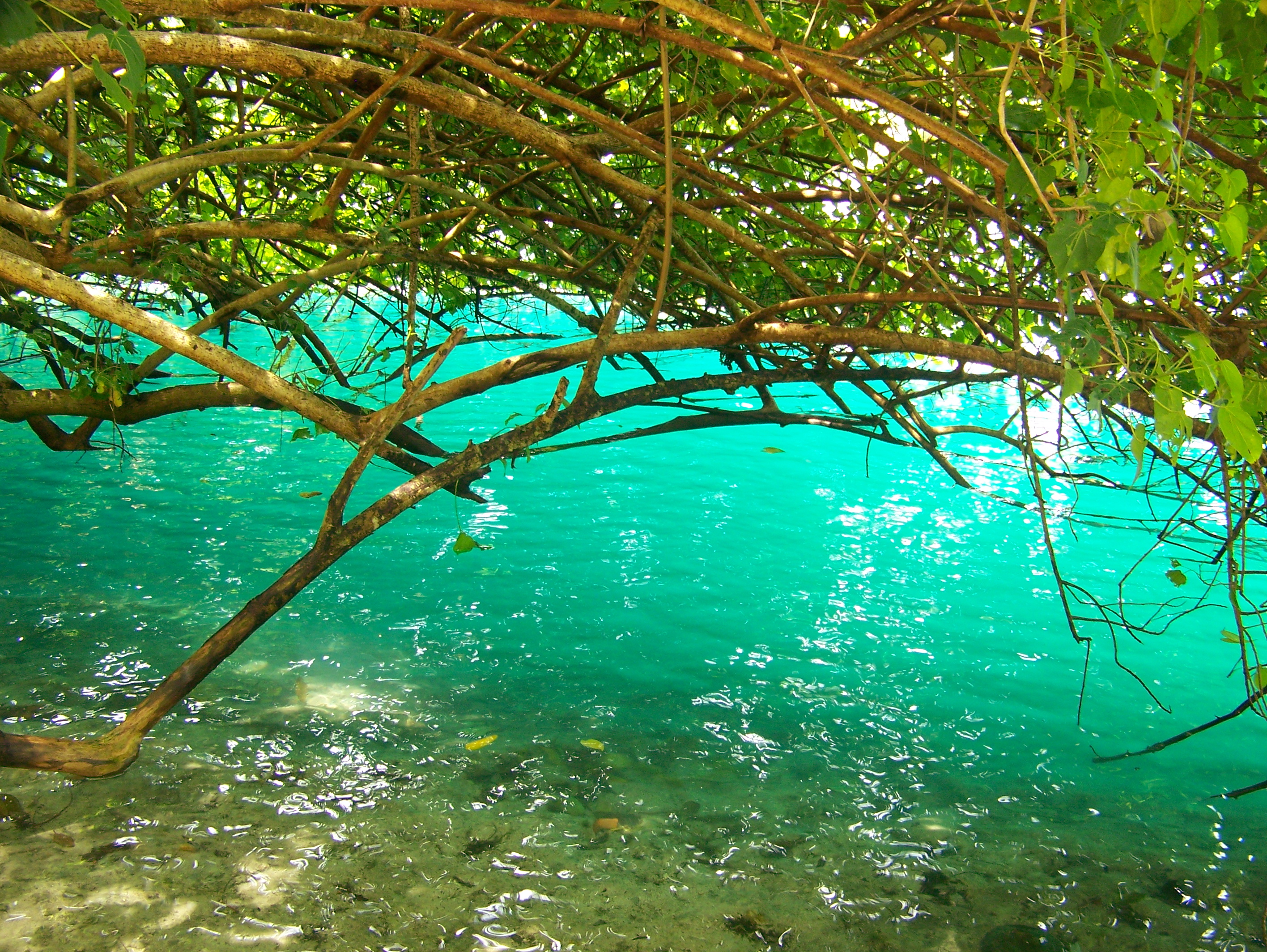
Blue Lagoon, in Portland.
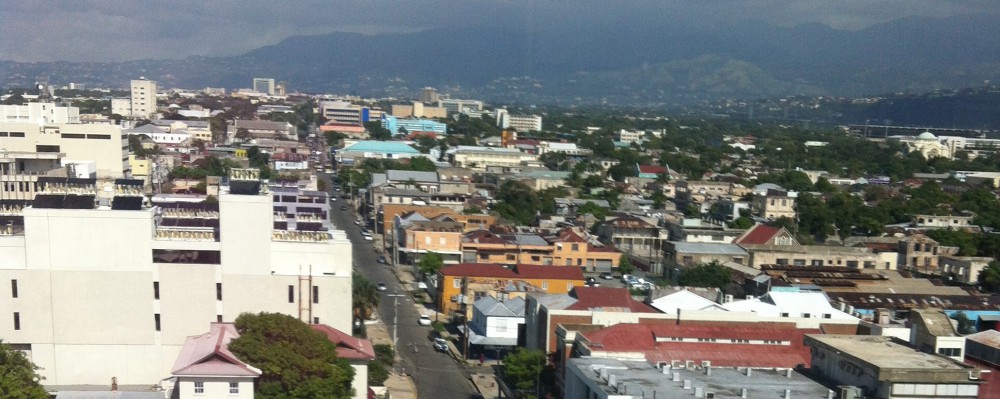

Blue Lagoon, in Portland.
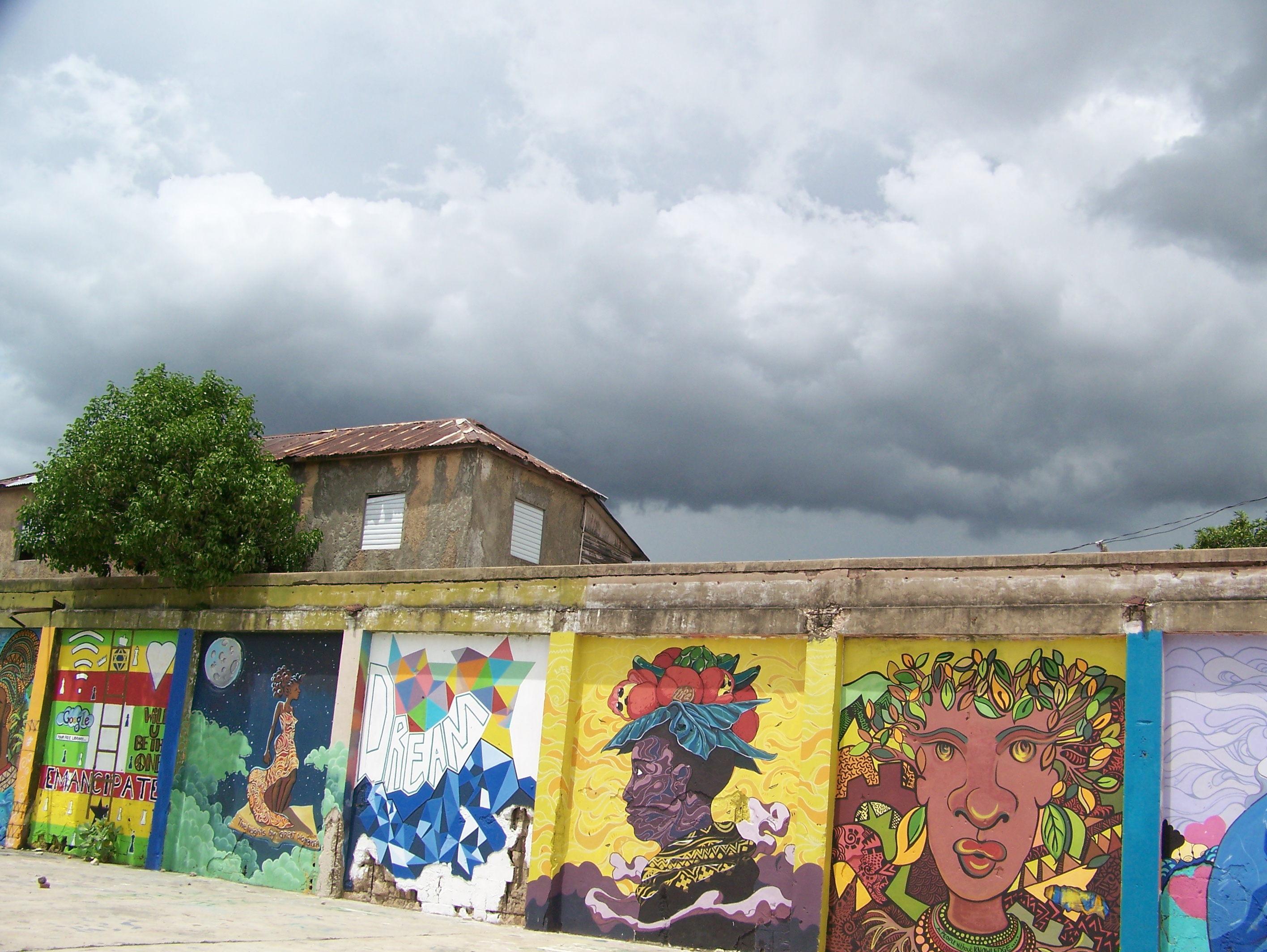
A mural on Fleet Street, downtown Kingston. Part of the Paint Jamaica initiative.
The first Pride Parade was held in 1969 as a result of the Stonewall Riots. Forty-five years later, Jamaica will hold its first set of events for Pride this year, in conjunction with the nation’s Emancipation and Independence celebrations. Pride parades recognize the LGBTI community and over the years, have become joyful celebrations.
Activists here in Jamaica have been planning Pride for awhile now, which in itself has attracted attention. The response, not surprisingly, has not been all that welcoming. A couple of months ago, JFLAG had to reassure people there would not be a parade, stating that Jamaica is not ready for that.
Once again, this week JFLAG reassured people there would not be a parade due to security concerns, but rather a series of events. These include a flash mob on Emancipation Day, a flag-raising ceremony, an art exhibition, a symposium and an open mic night. In addition, local businesses deemed LGBTI-friendly will offer discounts for the week of Aug. 1-8.
Here is JFLAG’s associate director Latoya Nugent:
“I believe together we can and we will demonstrate to all of Jamaica and the world, in the spirit of this year’s Independence theme, that we are proud and free Jamaicans breaking the rules of oppression,” she added.
Progress, not perfection, an old saying goes. And progress is certainly being made, forged by these courageous individuals and this resilient community.
Oops. It seems the Government of Jamaica is not responding well to yesterday’s U.S. Department of State report on human trafficking. Citing a lack of evidence-based findings, Justice Minister Mark Golding in a release said that:
“The negative inference, therefore, seems to be derived from conjecture rather than being evidence-based, which is a recurring feature of the report,” the ministry said.
In reading the report myself, as a journalist, I did notice a curious a lack of citations and direct evidence. Where did the report’s authors get the information? Who did they talk to? How did they get away with a lack of sources or citations?
The subject of human trafficking is a mysterious one. In my previous research, I found that people did not want to reveal a lot of information, and it was not just because I was a journalist. It was either because they simply did not know enough (several people from government or law enforcement said they were just beginning to study the topic) and those in civil society did not want to reveal information for fear of putting the victims in danger, which is understandable.
In any case, I guess this is a little-understood topic that requires more research. I do know that there is at least on U.S. State Department working here on the ground on human trafficking. I interviewed him on background and while he did not tell me anything specific to Jamaica, he did acknowledge U.S. efforts to combat the problem are ongoing. (Check out yesterday’s post for more about the report).
The United States Department of State yesterday released its 2015 Trafficking in Persons Report. Jamaica fared the same as last year, with a Tier 2 designation. What this means is that while some progress has been made, it is not enough. For instance, Jamaica has appointed a National Rapporteur on Trafficking in Persons (Children’s Advocate Diahann Gordon-Harrison), and it has made “substantive efforts” to raise awareness about the problem. However, the report states that
The Government of Jamaica does not fully comply with the minimum standards for the elimination of trafficking; however, it is making significant efforts to do so.
To back up a step, here is the State Department definition:
“Trafficking in persons,” “human trafficking,” and “modern slavery” have been used as umbrella terms for the act of recruiting, harboring, transporting, providing, or obtaining a person for compelled labor or commercial sex acts through the use of force, fraud, or coercion.
Specific to Jamaica, the report cites sex trafficking and labour as the two main problems. Young women and girls (and increasingly boys) are sent out to do sex work by their parents or pimps or “dons”. They are recruited anywhere, from schools, nightclubs, massage parlours…I have done some research on this and have heard that even taxi drivers who take children to and from school prey on these young people. They often live in a one-parent household or even with no guardians. They get caught up in earning money and do not have the resources to get out. There are a few safe houses in Jamaica, but of course, not enough.
From the report:
Authorities identified 20 potential sex trafficking victims in 2014, including four confirmed victims—three adult females and one female child—and 16 suspected victims, all adult females. In comparison, authorities identified 14 suspected victims of trafficking in 2013. Eleven of the suspected victims were Jamaican and nine were foreign nationals from Colombia, Guyana, and Suriname.
Forced labour occurs more on foreign soil, the report states, in the U.S., Canada and the U.K. Jamaicans are tempted by offers from people promising a good life and salary and then find themselves stuck in a foreign country without legal status and only one way to make money. I also researched this, and heard of a group of young Jamaican men who went to the Boston area, only to find themselves living there illegally and working long hours as movers. They were promised their papers, but never got them.
I have seen evidence of the public education campaign, yet it remains an issue that is hard to grasp in general. In addition, there has been no word from the National Rapporteur to Parliament on what has been happening lately.
The report also cites a lack of prosecutions as a failing area.
The director of public prosecution successfully concluded a trafficking case at the Supreme Court. Despite these measures, the government did not demonstrate evidence of overall increasing anti-trafficking efforts compared to the previous reporting period;therefore,Jamaica is placed onTier 2 Watch List. For the sixth consecutive year, the government did not convict any traffickers, including officials complicit in human trafficking.While the government identified more Jamaican adult trafficking victims than in the previous reporting period, it only identified one child victim compared with the high number of children vulnerable to both sex trafficking and forced labor.
It should be noted that only one case of trafficking made it to court (which resulted in a hung jury), no convictions were made, but 13 cases were pursued. It was only in April of 2014 that the government enacted the Criminal Justice Act, “which may be used to prosecute traffickers who are members of a “criminal organization” with penalties of five to 15 years’ imprisonment. These penalties are sufficiently stringent and commensurate with penalties prescribed for other serious crimes.
As far as recommendations go, the report calls on authorities to more vigorously prosecute, convict and punish traffickers. Which means devoting more resources to victims, creating a national action plan, developing standard operating procedures for authorities and providing more resources for victims once they try to re-enter life, granting the National Rapporteur more authority, providing an annual report and continuing to raise awareness.
On Friday, the New York Times ran a long piece about China’s investment in Ecuador. It is worth a read and makes one wonder about the conditions of their investments here in Jamaica. Check it out here. It is a good piece of journalism.
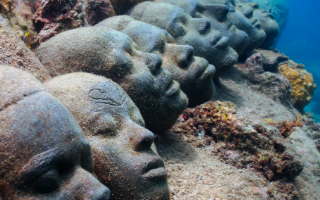
Kick ’em Jenny, an underwater volcano off the coast of Grenada, is threatening to explode. The University of the West Indies at Trinidad is tracking the activity and has raised the alert level from yellow to orange. In other words, it is not an imminent threat to anyone, but there is increased seismic activity. The minor quakes and “gassing” are being tracked, and it seems the immediate area under threat is the incredible Grenada Underwater Sculpture Park. Jamaica is not in danger, according to authorities. I wonder where the name came from?


Yesterday I visited a friend in a senior’s residence. It was exactly as you might imagine. Quiet except for the chatter of the staff and soft music flowing from somewhere. Several elderly people were slumped over and dozing off in armchairs. One man was guarding the entrance, a resident I presume. He would unbolt the door whenever anyone came through. He had a bottle of rubbing alcohol in his pocket to cool off his skin, he said.
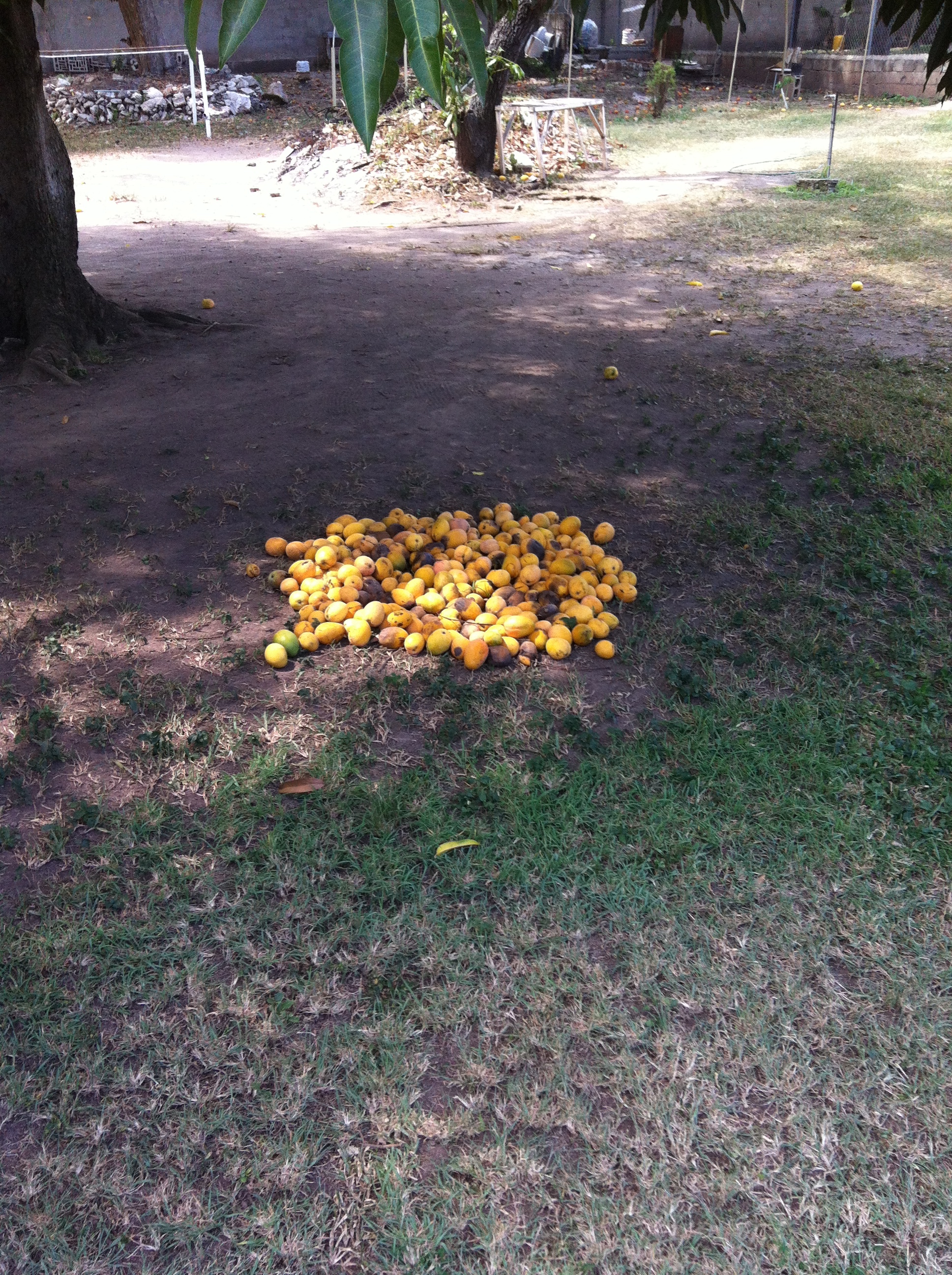
The backyard was large and beautiful, with several mango and ackee trees. Clothing fluttered on a line and these chairs were lined up, waiting for people to enjoy the breeze, I assume. It was not as bad as I would have imagined, this place where people go to expire.
 \
\
Jellyfish floating- Atanta, GA.
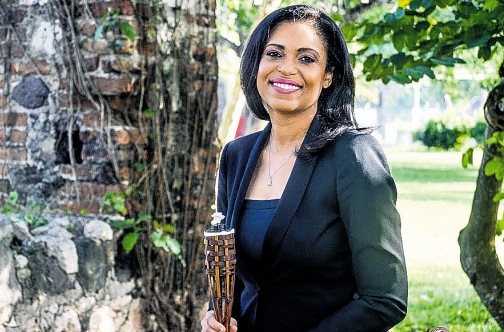
(Photo courtesy of Jamaica Observer)
I am continuing to work with 18 Degrees North, an investigative journalism outlet based here in Kingston. Yesterday the Jamaica Observer ran a feature on its founder, Zahra Burton. It could have been worse, yet it could have been better. There was not much substance or critical thinking, which can probably be attributed to the venue or demographic it serves.
But it did discuss the challenges Zahra has faced as an independent journalist during a time of drastic changes to the industry, as well as in a country that is incredibly partisan. In fact, as the person responsible for the social media accounts for 18DN, many of the questions we get during interactions with “followers” center around the funding source or 18DN. People want to know where the money comes from; is Zahra an independent journalist? Implicit amongst these questions is the assumption that she is tied to a political party or a large company, I think. These questions are natural, but seem more urgent here in JA.
I can state for the record that 18DN is fiercely independent. Funding is hard to come by and does come from the private sector. But it is a difficult journey. People hunger for quality journalism yet nobody wants to provide the funds it takes to pay the researchers, writers and producers, who work long hours to uncover information, verify it, interview, find footage, and put it all together.
So congratulations to Zahra, who continues to work hard to bring investigative journalism to the Caribbean.

