Unknown's avatar

About Kate Chappell

"And all I offer here is the distilled poetry of my existence..." Claude McKay, Poet Laureate of Jamaica, 1890-1848 I have been a reporter since 1998, covering mainly business and politics. I have also capitalized on the many skills journalism requires to become an all-around communications specialist. In addition to being a professional curious person and communicator, I have a bad case of the travel bug and can't seem to stay put. Finally, I have put my skills to work as a volunteer in the community wherever I have lived. Now, follow me as I combine these compartments of my life in Kingston, Jamaica, where I am a writer, reporter, journalist and lecturer.

Does Jamaica have “DEATH SQUADS”?


Yesterday’s front page of the Sunday Gleaner cried about ‘DEATH SQUADS.’ Apparently, according to two unnamed sources, (one retired police officer and one on active duty) senior police officers plan the murders of criminals and frame them as criminal activity. The story also included reaction from officials. Here is an excerpt:

Due to the sensitivity of their claims, the sources – one of whom spent four years in the JCF patrolling the streets of Clarendon before joining the Mobile Reserve; and the other now performs his police duties at a government agency after helping to maintain order in downtown Kingston for more than two years – asked that their identities not be revealed. Theirs are dark stories about condemned ‘criminals’, who they claim to know were killed at the order of senior police officers. These senior lawmen, they told The Sunday Gleaner, assign illegal guns – dubbed ‘sweeties’ in some circles – to the policemen, who place them on the dead men’s bodies in order to corroborate pre-written reports of shoot-outs with the lawmen.

“That (police executions) cannot be done by any likkle policeman at any likkle rank. That has to be ordered [at a higher level],” explained the ex-policeman, who told stories of how he saw alleged gangsters executed in a rural area prone to migrating gangsters from Spanish Town, St Catherine, and its environs.

These are scandalous allegations, but unfortunately, are not all that shocking. There were 219 extrajudicial killings in 2012 (a euphemism for police killings), and according to Amnesty International, these types of killings account for about 12 per cent of all murders in Jamaica on an annual basis.

And already this year, Jamaicans for Justice reports that police have killed 18 citizens. It is only January 20. (A task force called INDECOM was established in August of 2010 to investigate these killings and other complaints from the public.)

Needless to say, this is unacceptable and has attracted international attention from human rights groups, calling for an end to this practice. Congratulations to the Gleaner reporter who was able to get these sources on the record discussing this issue. It will hopefully shed some light and spur some action. However, I have reservations about publishing such serious allegations based on two unnamed sources. It is a risk, hopefully it was well-calculated and well-informed.

The Importance of Mangroves


Mangroves split their lives between land and sea, protecting the shore line and providing shelter for hundreds of species. This is certainly the case in Jamaica, and yesterday a group of Rockfort residents got to visit their natural habitat. As part of an environmental awareness project Youth Opportunities Unlimited is running in partnership with the Environmental Foundation of Jamaica, about 30 of us visited the University of West Indies Marine Biology Laboratory in Port Royal yesterday.

We met up at the community centre in Rockfort at about 8am and headed in a bus down to Port Royal. First, we received a fascinating lecture from UWI grad Chantelle on the habitat of Jamaica’s harbour. Here are some facts:

Jamaica’s harbour is the seventh largest in the world.

The area around the UWI Marine Biology Lab is an area protected by law, as it is home to many endangered species like sea horses, sea turtles, sting rays, pelicans, grouper and mutton snappers.

There are four types of mangroves: red, black, white and button.

Many species use the mangrove roots as shelter, like crabs, sponges, oysters, rats, mongoose, snails and fish, and the trees act as a buffer from the elements, as well as a filter for carbon dioxide. However, their existence is threatened by hurricanes, invasive species and human interference.

Foreign ships are not allowed to be driven into the harbour as it can get as shallow as three feet. So Jamaican ships meet the foreign ships and bring people ashore in small boats.

After the lecture, we set out in a boat with Captain Terrence for a tour of the mangrove forest. It was a calm, grey, overcast day, perfect for a boat ride. We slowly made our way past the fishermen into the mangrove forest, which is spectacular and peaceful. We glided slowly under the green canopy, spotting all of the creatures mentioned in the lecture. We got to hold an oyster and sponge and saw a mongoose and many species of birds. It is mating season, so we also heard the cries of baby birds taking their first steps. We encountered a couple of fishermen diving for oysters and conch as well.

As we cruised, Chevelle narrated what we were seeing and the participants had many questions and observations. We heard the alarming fact that 21 gullies empty their refuse into Kingston’s harbour and we saw the effects of this: the red mangroves at the fringes are dying. We also saw plenty of garbage, from tires to shoes to a laundry hamper to hundreds of plastic bottles. Another instance of “human interference” we witness were bare patches on the ocean floor. These empty spaces were where fishermen had used dynamite to catch fish.

We then made our way back and toured the Lab, where you can see jellyfish, crustaceans and several types of fish.

This tour was eye-opening: garbage is everywhere in Kingston, including the beautiful harbour, but this trip allows one to see the effects on the many species vulnerable to it. The Rockfort residents were engaged and surely this trip will have an impact on their mindset in their attitude towards the environment. I know it has made me think twice and generated more appreciation for this unique environment.

Colour Pink Group


A network of drains runs through Kingston, about 10 feet below ground and usually clogged with trash. They are there to catch the rains, which come sometimes with no warning and can be very heavy, flooding the city’s streets and making roads impassable.

A few steps from Kingston’s main business thoroughfare, one of these drains is home for a group of men and boys who have nowhere else to go.

These men and boys are between the ages of 15 and 28 and have most likely been rejected by their families and communities because of who they are. They are gay, bisexual, transgender, or like to wear women’s clothes. (I have written on this topic, check out one of the posts here.)

Last night I visited these men with friends who run the Colour Pink Group.

We arrived around 7 p.m., when the men and boys were getting ready to attend a free party later up in the hills of Kingston. Some were bleaching their hair with peroxide, so they had plastic bags on their head. Others were walking around, just talking to one another, and us, when we arrived.

Representatives from the Colour Pink Group (a non-profit organization that aims to raise money for these youth and provide skills training) visit these men and boys every Friday and Saturday nights, handing out free condoms and just checking in to see if they are ok.

Sometimes they are, sometimes they are not. Many of them earn money through sex work, which is a risk in itself. All of them face threats to their safety simply because of who they are and most of them do not know when they will next eat or drink. They also face the threat of being exposed to the elements, in a drain that can flood when it rains. If there is a threat of a hurricane, there are shelters, but in reality, these shelters are not accessible; some of these men dress in women’s clothes and identify as female and would not be safe.

Living in this drain also means they are vulnerable to the public. The police will often come and “run them down,” which can mean several things. (A while back, they made several arrests after people accused the group of robbing nearby homes and businesses.)

On this night, the condoms were received eagerly. One man of 20 years old told me he was not going to the party because he had to go work on the road. I asked him about his work, and he said he can get around five or more clients every night. Depending on the night, he can make at a minimum $500 for oral sex. He is at risk, of course, because while some men know he is male, others don’t, and if they find out, the consequences can be severe. He carries a knife or a bottle sometimes.

As we were chatting, the boys and men called to people passing by. Most did not acknowledge them. A few people stopped to stare as if it were a TV show and then moved on. A couple of vendors stopped by to see if they could sell anything (cotton candy and fruit). The police also drove by a couple of times, once stopping nearby, but out of view, so that only their blue flashing lights could be seen glancing off the nearby building.

We stayed about an hour, and more young men kept joining us. For the time being, this is their home and their community, but the Colour Pink Group and an advocacy group called Dwayne’s House is trying to change the situation, as it is not acceptable.

Michelle Obama’s biceps and bangs


Michelle Obama, Harvard and Princeton-educated lawyer and social activist, celebrates her 50th birthday today. What an interesting life she must have had so far. From humble beginnings in Chicago, as the cliche goes, to life in the White House as the wife of the most powerful politician in the world. The things she must have experienced, the knowledge and expertise she must have accumulated.

If I were a journalist preparing for the opportunity to interview her, I would have researched her opinions and areas of interest in terms of policy. I would want to know what she thinks about domestic policies relating to poverty, social inequality and how her initiative to get people moving and eating more healthfully is proceeding.

Yet today, on her birthday, I know more about her hairstyle, her workout regime, what she likes to eat and where she goes with her “girlfriends”. This knowledge is courtesy of the New York Times.

Let’s try a little experiment I like to do, a substitution exercise. Imagine that this article is written about a male Harvard-educated lawyer who has worked for a major hospital and is involved in a national domestic policy campaign, and who is married to an extremely powerful woman. (I am quoting from the New York Times article.)

In hairstyle news, the bangs of 2013 are gone, replaced by a traditional first lady wave. As Mrs. Obama told the TV chef Rachael Ray last year: “This is my midlife crisis, the bangs. I couldn’t get a sports car. They won’t let me bungee jump. So instead, I cut my bangs.”

She has perfected a mean forehand, is working on her yoga poses, dishes with girlfriends over brussels sprouts and dirty martinis (one olive) at the Mediterranean hotspot Zaytinya, pushes her two daughters to play two sports — one of her choosing and one of theirs — and said this week that the wonders of modern dermatology, like Botox, are in the realm of possibility for her.

Michelle Obama is in many ways the embodiment of the contemporary, urban, well-heeled middle-aged American woman. She likes to take “me time,” as she did during an extra vacation week this month without family in Hawaii, setting off a tabloid furor over the state of her marriage. She frets that her older daughter, 15-year-old Malia, hangs out with the boys a grade above her. She gardens, although unlike the rest of us, she has significant weeding help.

She toys with false eyelashes.

Can you imagine this being written about a man, let alone such an educated and powerful man?

Even more egregious, the journalist is female.

I understand that the topics Mrs. Obama chooses to discuss are heavily dictated by advisors and the President himself. I also understand that she is not the one in charge and that she must shy away from anything controversial. But can we move away from such infantilizing, marginalizing and condescending characterizations? Would we ever care about a man’s grooming habits or workout?

Perhaps this type of story is more suitable for People magazine, which was granted the opportunity to interview the First Lady on the occasion of her birthday. Here is the article, in which we again learn about her workout regime, as well as her thoughts on Botox and menopause.

It is disheartening that women are still reduced to beings who are accessories to powerful men and preoccupy themselves mainly with domestic duties and their appearance. I give the New York Times journalist the benefit of the doubt, however. She probably did not have much control over the interview and one does not turn down this kind of access. So this article speaks more to the way in which women are still perceived and portrayed in the media, even a woman such as Michelle Obama, who is more well-known for her hairstyle changes and biceps than her law degree or her opinions.

How will Gleaner’s decision to charge for online newspaper access affect democratic participation?


During what the media dubs a “slow news period”, the Jamaica Gleaner dropped the news that it would start charging for online access to its news stories. In fact, it was December 29, when most people are still shaking off the food coma from Christmas dinner and preparing for New Year’s Eve.

I saw little reaction to this decision, other than a provocative and interesting question from a colleague. Here is a rough approximation of that question: will the Gleaner’s decision to charge for online access have an impact on democracy? The implicit, secondary question here is whether or not newspapers and information have an influence on political participation, which includes everything from informal conversation to voting. I’ve been pondering this question for awhile now and what follows are my initial thoughts. (They are partly underpinned by what I studied while I pursued my Master’s degree in political theory, as well as my 15 years of experience as a journalist).

First, I must say that I have yet to decide how much the media influences popular opinion (and ultimately political participation) here in Jamaica. In general, it is always difficult to determine how much the media is reflecting popular discourse versus how much it is influencing it. However, it is usually a mix of both.

I will say that informal discourse, whether in the media or at the corner shop or church, is extremely important here. Jamaicans like to talk, and they are an opinionated and passionate people, especially when it comes to politics, which are extremely tribal here. In fact, politics can get downright dangerous here, with neighbourhoods divided by political part affiliation.

(For my non-Jamaican readers, there are two main newspapers: the Jamaica Gleaner and the Jamaica Observer, which is owned by businessman Butch Stewart).

I have decided, however, that television and radio are much more dominant in shaping discourse. The Gleaner seems to have some influence, maybe not over opinion, but rather in terms of influencing what people talk about, as well as conversation about political happenings. The Observer seems to have more influence over opinion and discourse relating to stories about sports, entertainment and business. And the Jamaica Star, the most sensational of them all, seems to be read and talked about mainly by lower-income Jamaicans.

With all this being said, I was not surprised that the Gleaner’s move to charge for online access caused very little uproar. This lack of reaction tells me several things:

Exclusive to Jamaica, it shows that most people here buy the print version to read. Anecdotally, I see many more people reading the newspaper than I do in Canada or the U.S. I would propose that those who read it online are more educated and/or of more substantial financial means. This factor, I think, is a function of Internet access, which is, of course, a function of income.

So then we need to differentiate between Jamaicans who read the Gleaner online but now cannot afford to do so, and the affluent who decided to pay for a subscription. This distinction is important because those who read the Gleaner online but now do not subscribe are most likely well-educated and engaged but with lower incomes yet still relatively influential in terms of shaping opinion and discourse.

Not exclusive to Jamaica, people are simply getting their news elsewhere, other than physical newspapers. This is not news. Readership has declined, check out some numbers here. As a result, academics have started to conclude that people are getting their news from a much wider array of sources that usually reflect their political views. The result of that is a much more diverse and polarized social environment. (Not sure if I agree with that, but it seems to be the common academic consensus).

So how does all this media-shakeup impact democracy, that nebulous concept that can most accurately be measured through participation at the polls? (Jamaica’s voter turnout rate, for the record, is abysmally low, like many other countries. The most recent federal election drew only 53 per cent of eligible voters.)

Stretching back to the founding of the U.S. and the current state of affairs, in which journalism is being pitched as a common social good that strengthens democracy, we can draw some conclusions, but first some background.

Newspapers are now attacked for being partisan instruments, but this used to be common and explicit. (I am now obnoxiously going to quote myself from an essay I wrote about this subject a few years back). According to historian Daniel Walker Howe,

Newspapers played an essential role in making representative government meaningful and in fostering among the citizens a sense of American nationality beyond the face-to-face politics of neighborhoods.” Furthermore, Howe writes that “The central role of journalists testifies to the importance the administration attached to the communications revolution and public opinion. While political factions controlled key newspapers, in return newspapers played key roles in politics and patronage.” Newspapers also spurred action amongst the citizenry, Howe writes. They “prodded men to vote while also rousing general popular interest in political events.”

Alexis de Tocqueville wrote in general about the power of the press and its ability to conquer distance and unite people.

de Tocqueville writes: “The sovereignty of the people and the freedom of the press are therefore two entirely correlative things, whereas censorship and universal suffrage contradict each other and cannot long remain in the political institutions of the same people.” Essentially, de Tocqueville sees freedom of the press as a medium through which individuals, who consent to be ruled as one member in a sovereign society, filter the information that situates himself in this society. In other words, the press relayed information and opinions that “guided judgment” and subsequent actions. This information aided individuals as they surveyed and judged the society in which they participated in, and consequently absconded much of his sovereignty to a ruler, to decide whether or not he would assimilate and subjugate himself, or take rebellious action, if he was displeased with society. So the press not only prompted citizens to determine their political views, but it then influenced their actions; which included everything from who they would associate with, to who they would vote for and where they would choose to settle and raise a family.

The aspect of conquering distance and the power of the press to do that is another important factor when analyzing Jamaica. This is not a large country, but it can be imposing in terms of getting around, both financially and just physically. So a national newspaper can provide some unity in terms of providing information and influencing a common discussion and driving the political agenda.

If people are not able to access Gleaner articles online, they will not share them on social media. This will impact discourse and shared narratives. In other words, people (especially those who have the audience to shape discourse) will talk less about things they are interested in and things that they might be compelled to act upon. The inability (I say inability meaning that people will not be able to fit newspaper subscriptions into their budget) to access online news will also impact the press’ ability to conquer distance in terms of the dissemination of information. For example, a story about applying for a skills training program will not reach the same audience it did before it was available for free online.

So going back to de Tocqueville, the lack of online access will erode at the unifying role newspapers play in terms of conquering distance. It will also erode the phenomenon of sparking common discourse and shaping opinion.

So my initial thoughts are that a lack of online access might have a small impact on democracy in Jamaica. However, I think it won’t be drastic, rather things will just change and Jamaicans will adapt. For that is one thing I know for sure, Jamaicans are a resourceful and adaptable people.
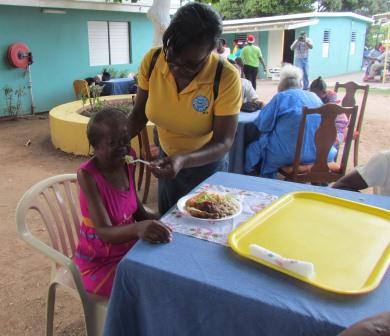
Navada Smith: Success Story


Navada

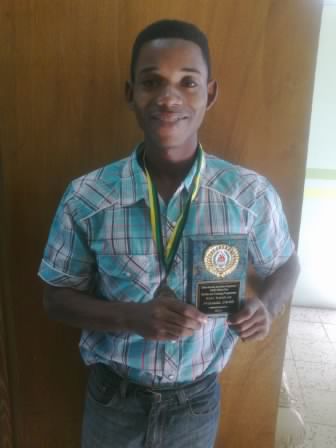
For 18 months, Navada Smith showed up at a construction site every morning at 8 a.m., wearing steel-toe boots, a coverall and work glasses. He engaged in all the activities one might imagine happen on such a site- shoveling, painting, repairing things. Among other things, he learned that hard labour is just that- hard. It is not suited for everyone and even for those who do this type of work, it can burn out a body pretty quickly, but Navada not only survived, but thrived.

Judging by his small frame and the fact that he had never done anything like this before, one might think that would not have been the case. “It was a lot of hard work,” the 22-year-old says. A lot of hard work and dedication and consistency. In 18 months, Navada was late only once.

For this, Navada received an award: Most Discipline. He earned this award by participating in a Ministry of National Security work/training initiative called the Citizens’ Security and Justice Programme. In addition to the recognition for his work ethic on the construction site, Navada received an award of Distinction for his output on a Web Design course he took through the same program.

(CSJP began in 2009 as an effort to combat crime and violence. It implemented programs in 39 “vulnerable and volatile” communities such as employment training, life skills and parenting workshops. Youth Opportunities Unlimited was involved in CSJP, and Navada was one of the youth who participated).

“The program helped me, taught me discipline and how to plan,” Navada says, adding that he worked alongside soldiers from the Jamaica Defence Force. At 22, Navada has been involved with YOU since 2005, when he joined another of its programs. He attended workshops where he learned life skills such as work environment etiquette, planning for the future, nutrition and organizational skills. “I learned a lot of things, like how to be organized, how to plan and how to deal with children.”

Navada is from the community of Mountain View, which as suffered from violence and shootings in the past. Growing up, he says, was not hard, but being exposed to the violence was. “It was violent around other communities. We could hear gunshots at night and we couldn’t sleep,” he says, adding that the gunmen only came out after midnight.

Navada has graduated high school and is also dedicated to his church. He hopes to learn how to play the keyboards so he can play in the band at his church. He also wants to take a course in accounting, but a lack of funds is currently prohibiting this. “I have a couple of plans but I’m praying to God that they work out,” he says. In terms of who he attributes his success to, Navada says “I want to thank God first and foremost. If it wasn’t for Him, I would not have achieved these things, if only for His love.”
–

Fresh fruit


fresh fruit

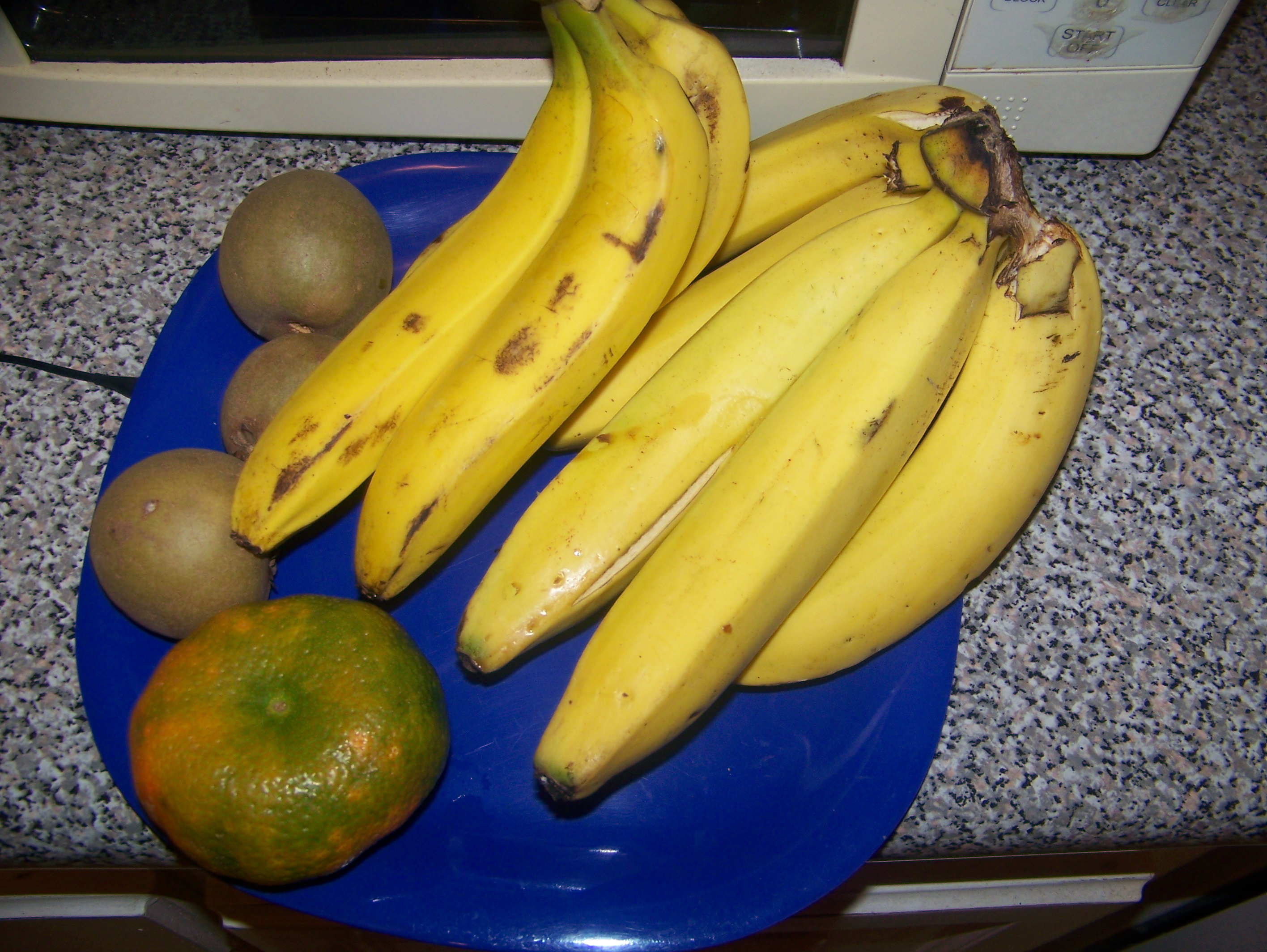
It is a busy day of work and meetings so I am simply sharing a picture of some fresh fruit I received as a birthday gift last week. A star apple, some oranges, bananas and naseberries. The latter are my favourite, and they were perfect. What better gift could there be, especially after being submerged in -20 degree Celcius weather, where nothing grows outdoors and where there is very little sunshine?

Enjoy your day!

Welcome Home Tessanne


Welcome Home Tessanne

(Photo courtesy of Air Jamaica’s Twitter account)

Last night thousands of people converged on Kingston’s downtown for a free concert welcoming new national hero Tessanne Chin home. If you don’t know, Tessanne won The Voice a couple of months ago. And while Jamaica has actual, official, formally recognized National Heroes, Tessanne is not one- yet. I’m only sort of joking when I say that she could be nominated. Although Bob Marley has still yet to be declared a national hero, so who knows.

In any case, thousands of people headed downtown, which in itself is an interesting twist to this story. Many Jamaicans are afraid to go downtown because of its reputation as a dangerous place. A couple of people have told me they haven’t been in 20 years. But an effort is underway to lure people back downtown, including Digicel’s deliberate decision to build its new headquarters there. The lack of people frequenting it is a shame, as it is a beautiful place that could be redeveloped and restored. The problem, as usual, is a lack of funds.

But back to the now-beloved Tessanne. The way the nation has thrown its support behind her is remarkable, especially after years of not receiving widespread support on the radio and in terms of record sales.

It will be interesting to see what comes of the album she records, how much “Jamaican” and reggae influence it incorporates. Tessanne is not a traditional Jamaican artist in the sense her music is strictly reggae or dancehall or ska music. Instead, I would characterize her as a rock/pop/soul artist with heavy Jamaican influences. In any case, she is heavily imbued with talent and charm and deserves the international career she is seeking, as well as recognition not just from the rest of the world, but from her fellow Jamaicans, who are finally on the bandwagon.

Food for the Poor


This picture was taken at one of FFP's Christmas treats

This picture was taken at one of FFP’s Christmas treats, it is courtesy of FFP’s Facebook page.

Last month, the community of Jacques Road in Mountain View was interested in organizing a “treat”. This is a community in which most people pull in low incomes, so presents are not all that abundant. “Treats” are common here in Jamaica. They are put on for a community’s children, and often involve traditional food like jerk chicken, as well as cake and ice cream. Presents are also handed out.

After making some calls, we were able to solicit donations from both CB Chicken and Food for the Poor. This all happened very fast, despite the undesirable last minute request to these busy companies. The private sector and charity agencies, as you can imagine, are used heavily here in Jamaica, so often you must make several attempts before you are successful. However, this time, things seemed to align perfectly and we were able to secure rice, beans, chicken and other food that will be used for the “treat” in Mountain View.

I am writing about this because I am so impressed with both of these organizations. CB Chicken, despite a last-minute request, during the Christmas break, responded quickly and generously. (CB Chicken is a 75-year-old Jamaican company started by the Hendrickson family and its products include, of course, chicken, as well as other meats and staples.) As did Food for the Poor, which I will talk about a little more now.

FFP is a Florida-based international, Christian charity that works in 17 Latin American and Caribbean countries. From its web-site:

Our goal is to improve the health, economic, social and spiritual conditions of the men, women and children we serve through emergency relief aid and programmes in the areas of housing, food, medical, water, sanitation, education, agriculture, outreach and micro-enterprise.

FFP sends people on “missions” in different communities, whether they are to expose people to poverty or work on specific improvement projects, like building housing. Again from the web site:

The Mission is not only a spiritual journey that provides financial support for various Food For The Poor –supported projects; it also supports the economy in a significant way. This is done through hotel accommodation and purchases made in local craft as souvenir items, food seasoning and clothing. However, the Mission is not a vacation. It a transformational journey through which significant change takes place. The mind is renewed and a deeper appreciation for life is generated.

My experience with FFP began with a phone call, during which I learned I had just two days to meet a deadline to file a formal request, via a mailed letter. I did so, not expecting much. Several days later, I received several messages saying I needed to go to the FFP warehouse in St. Catherine to pick up the food. I quickly arranged a ride and we made the 30-minute drive over. The warehouse, and the complex itself, like most things in Jamaica, are behind barbed-wire fences. But the buildings are large, relatively modern and clean.

From the minute I entered the grounds, FFP staff were polite, efficient and helpful. Collecting the actual food was a slightly confusing process, replete with many layers of bureaucracy common in Jamaica, but within half-an-hour, we had gigantic, heavy bags and boxes of food in the trunk. The speed and efficiency and the actual kindness associated with this experience has me still pondering everything. It is so easy to get discouraged, especially in the charitable, non-profit sector, in which you are constantly asking for aid, and often being told ‘No’. This experience generated so much hope and gratitude.

Thank you Food for the Poor and CB Chicken. Photos and story of the “treat” to come.

Polar vortex


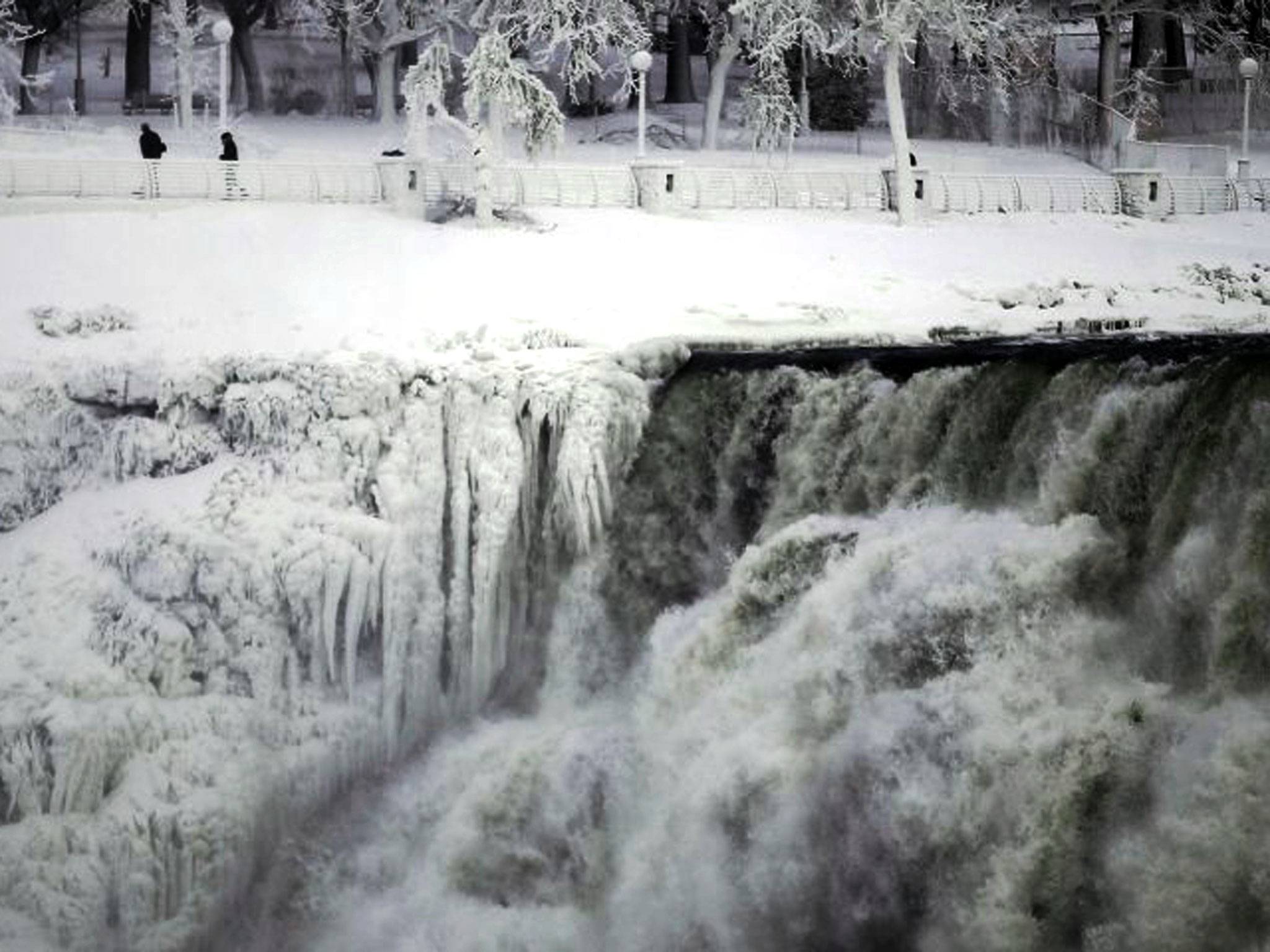
(Photo courtesy of The Independent newspaper)

I am a victim of the monstrous Polar Vortex. I arrived safely in Kingston last night, my bag did not. It is currently enjoying Boston, will then go to Atlanta, then hopefully here tonight. Flying yesterday was a nightmare, many delayed flights (things still seem to be backed up from the Polar Vortex), tight connections and agitated people. But anytime I end up 36,000 feet above the earth inside a cylindrical metal object and make it back to Earth safely, I am happy.

Kingston is just the same, of course, and blissfully hot. Enjoy your Friday.