Unknown's avatar

About Kate Chappell

"And all I offer here is the distilled poetry of my existence..." Claude McKay, Poet Laureate of Jamaica, 1890-1848 I have been a reporter since 1998, covering mainly business and politics. I have also capitalized on the many skills journalism requires to become an all-around communications specialist. In addition to being a professional curious person and communicator, I have a bad case of the travel bug and can't seem to stay put. Finally, I have put my skills to work as a volunteer in the community wherever I have lived. Now, follow me as I combine these compartments of my life in Kingston, Jamaica, where I am a writer, reporter, journalist and lecturer.

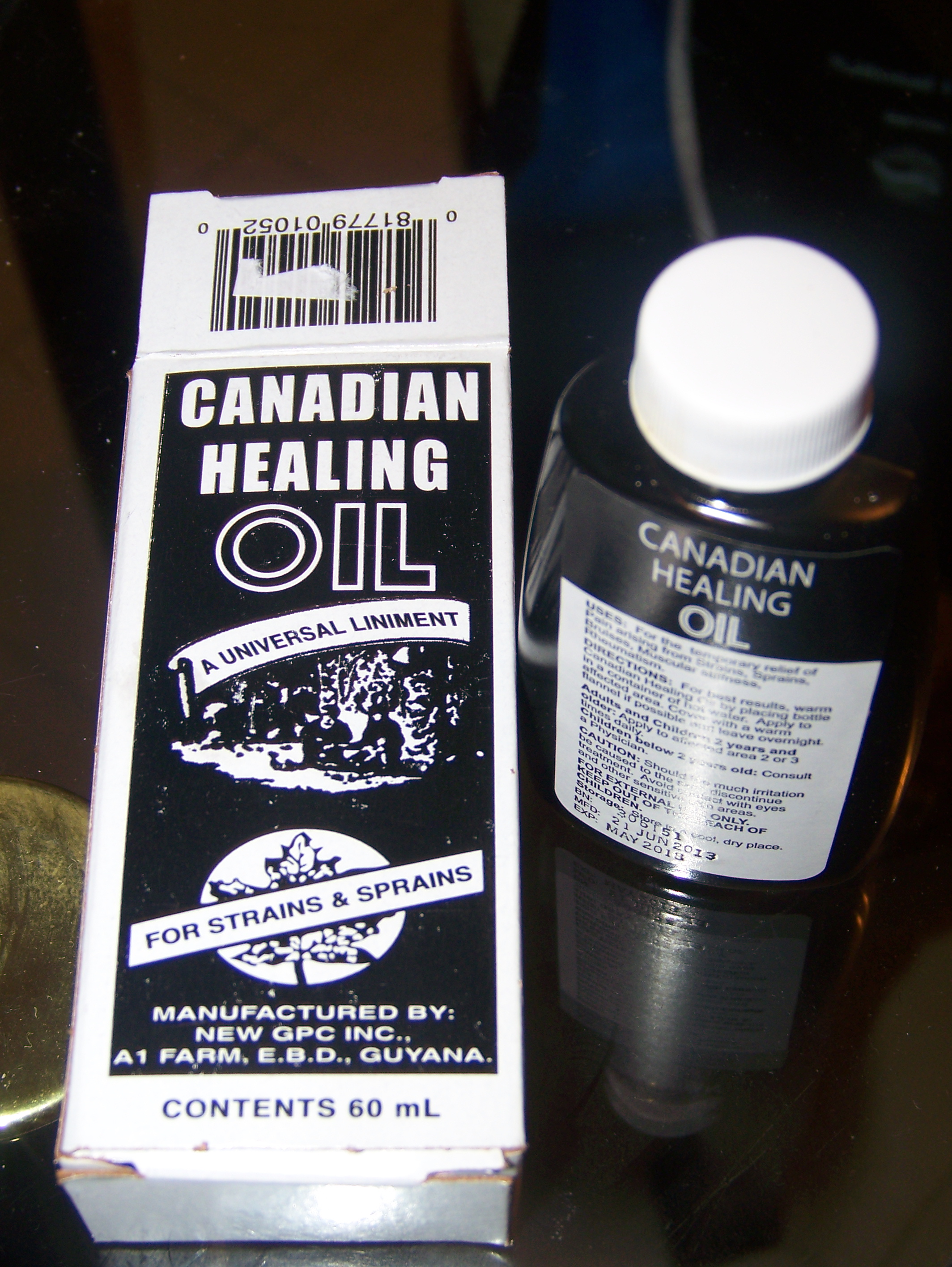
Canadian Healing Oil, good for man or beast


Yesterday I was running with a couple friends early in the morning, before the sun rose. We were running down a main road rutted with potholes and other obstacles. And I fell victim to it. The road lick me, as a Jamaican might say. I stumbled in a sizeable hole right up against the sidewalk but did not fall. Nothing hurt at the time, but a bit later in the day, my left ankle began to protest. It swelled up and I could barely walk.

Mrs. Denton, our office manager, suggested a “country” remedy: Canadian Healing Oil, custard apple leaves and marl. A nurse friend of mine also suggested this oil, so I thought I might supplement my usual regime of ice and elevation with this mysterious product.

I tried to get the latter two ingredients, but only managed to locate the CHO. I had seen it in the pharmacy several times and wondered ‘what about it makes it Canadian?’ and ‘what is it for?’ Well, now I know. It is a liniment that heals apparently most common ailments. The two main ingredients are turpentine oil and birch oil, curiously. And it is made in Guyana, so I still don’t know what the Canadian link is. All I could find on it was this article. I opened the small bottle at home and was immediately struck by the smell (like a campfire) and the colour (dark brown).

And I can report that it works! Or maybe the effect was psychosomatic, or the ice did the trick. In any case, I am now back to normal and ready to run (and probably fall) again. Enjoy your day!

International media taking note of “extra-judicial” killings


International media taking note of “extra-judicial” killings

I must link to this story today. England’s Independent newspaper has published a story about the amount of “extra-judicial” killings by the Jamaica Constabulary Force. The international media is finally taking notice. Last week, the Daily Mail wrote this story, and whether or not this is right, when the international gaze falls on a country, officials take the issue more seriously (a phenomenon not exclusive to Jamaica). This is, of course, because international reputation still matters, especially in countries dependent on tourism.

Jamaica has brought in an independent investigator from the U.K. to look into this matter. His name is Hamish Campbell and there has been surprisingly little news about him, and almost no explanation from the JCF or government ministries that I can find. (Campbell is not the first Englishman to join the JCF; Mark Shields and several others previously did so in various roles.)

The story I just linked to above was the first mention in the mainstream media of Campbell, according to a quick web search. Here are some others: INDECOM laments ‘extraordinary high’ number of police killings in October; and another, both from the Gleaner. And Observer stories: here, and here. The lack of media focus on Campbell surprises me, I must note, as it is such a significant appointment. Why is the media not paying more attention to Mr. Campbell’s appointment? Perhaps access has been restricted, or is there another reason?

This is remarkable. Think about the optics and the reality of an Englishman, a foreigner, coming to Jamaica to examine the activities of its security forces, who are allegedly killing beyond the constraints of their nation’s own binding laws. Think about that for a minute. An official from a nation’s former colonizer coming to investigate alleged extrajudicial activities. While this phenomenon does not technically raise issues of state sovereignty, it does call into question a nation’s own mastery over one of the very institutions that should bind it together.

Think also about how people of another nation would react if police were killing an average of one person per day. The police allegedly kill one person every day in Jamaica. What if they had rubber bullets or tear gas or tazers? Of course, these are no match for criminals who are equipped with guns, but I am just trying to explore this issue through different lenses. There must be a more fulsome conversation, but unfortunately, there does not seem to be more uproar amongst the general public. Or perhaps they are frightened? In any case, hopefully the international attention will push this issue to the forefront of the government’s agenda.

Raising voices, $ and awareness, @Bell_Letstalk #bellletstalk


Today a wonderful initiative aimed at raising money and awareness about mental health is underway in Canada. Every tweet that uses the hashtag #BellLetsTalk means 5 cents is donated to the cause. The social media campaign is an effort to end the stigma surrounding mental illness and to get people suffering to open up.

The campaign is funded largely by Canada’s main telecom company, Bell, to the tune of $62 million (CDN). It has four “pillars,” which include workplace health, access to care, anti-stigma and research.

Go and check it out, it is worth your time and a tweet or two.

American football in Jamaica?


Football rules here in Jamaica, and that’s the European kind, of course. However, American-style is gaining popularity, and if Roger Salmon and Keith O’Sullivan achieve their goals, it will become both a mainstream sport and an opportunity for young players to further their education.

Roger Salmon and Keith O’Sullivan co-founded the Jamaica American Football Association in 2009, fuelled by a love of the sport and a vision of helping young athletes earn scholarships abroad.

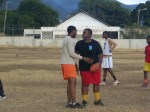
“I normally watch the NFL games, and we have a lot of guys here with talent, so we thought we could give this thing a try here in Jamaica,” Salmon said during a practice at Camperdown High School’s football field in the Manley Meadows area of East Kingston. “We want to create opportunities for these young guys to play in the States. Our aim is to make them into young men of tomorrow and make them into leaders.”

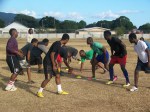
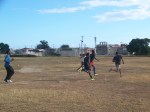
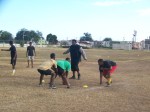
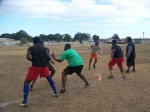
Every Saturday, around 20 young men between the ages of 15 to 30 show up to practice for a few hours on the dusty field. Because of a lack of funding, they only play tag football, as they cannot afford all the protective gear, nor the cleats necessary to play tackle-style football. A full kit costs about $14,000 (JMD) and pair of cleats alone costs $3,000 (about $30 US), which is out of reach for most of these young men.

Salmon, however, is able to provide training, which he is learning from an online course from an institution in Ohio. But it is not just the practical skills and drills Salmon provides. He also serves as an informal mentor and creates a sense of structure, accountability and support for these young men. “This is not just about football. We want them to become more responsible. They have to get their education, because that is the most important thing. We look out for their education first and foremost.” So if a team member is struggling to balance work, school and football, Salmon will urge him to take a break from practice and return when he is ready.

Paul, who is 25, is one of the informal leaders. When he was in junior high, he lived in Philadelphia, where he played football. Wide receiver, to be exact. “It’s just a different sport,” he says. “It was not something I was used to and it just grabbed by attention.”

Salmon is currently trying to raise funds for a summer camp, which culminates in a tournament. The first summer camp was held successfully last year, with about 40 participants. To this end, Salmon has written to the Ministry of Youth, Sport and Culture asking for support and received a favourable response. Salmon is also completing the paperwork to register with the formal governing body, but that has a prohibitive cost of around $120,000.

So how does Salmon think Jamaicans will receive American football, in a nation obsessed with track and field and football? Judging by the reception he gets when visiting high schools, there is potential. “People get very excited. They say they did not know it was around and they say they want to learn.”

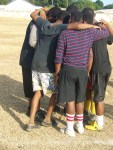
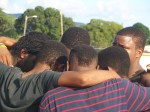
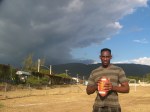
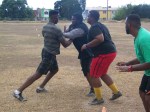
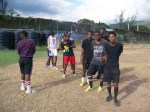
In the meantime, Salmon (who also works full-time for a financial investment company) shows up every Saturday as coach. However, his job as coach extends beyond these hours, as he continues educating himself about the sport and acting as a mentor to these boys. On the Saturday I visited the practice, the enthusiasm was evident as the young men did drills for speed and agility, then played a very competitive game. The enjoyment, sense of camaraderie and co-operation among the young men was remarkable, especially when differences of opinion came up, which was often. Hopefully, the JAAFA will continue to grow and provide both opportunity and an outlet for these promising young men.

Struan Castle hike


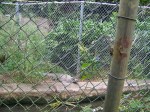
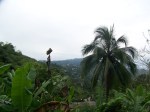
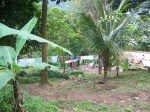
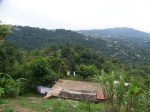
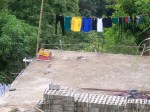
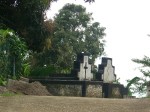
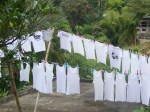
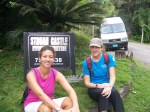
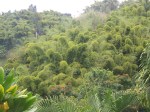
Struan Castle was the site of a hike today. It is located about 30 minutes away from Kingston, up in the hills. It was a “cool” day as Jamaica is still experiencing a cold front. So it was about 24 degrees and cloudy. Perfect for a hike. The views were spectacular, as usual, and it seems it was laundry day as well. We also saw a crocodile named Fred, caged up on the grounds of Struan Castle. Hope you are enjoying your Sunday.

Dance lesson


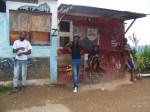
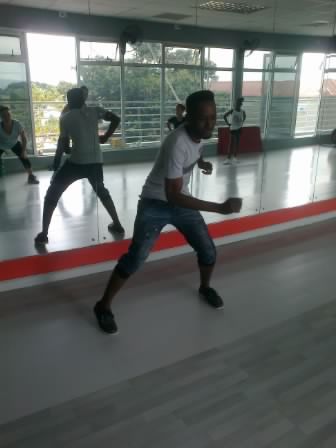
Impromptu dancehall lesson today at the gym. Anthony teaches dance classes and offered to show us a couple of moves. This one was walkabout something or other, I did not catch the name. Enjoy your day!

Healing with Hope


Image


Image


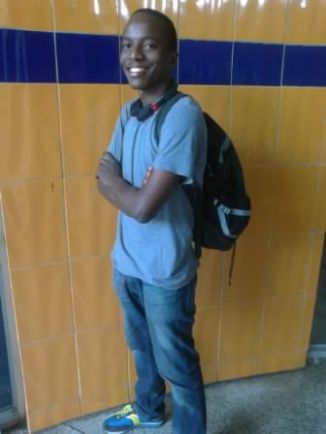
It takes a monumental amount of courage and determination to do what Damone Thomas is doing. The 26-year-old is on a mission to provide education, comfort and advocacy for people living with HIV/AIDS in Jamaica. Fueled by this courageous spirit, in 2012 Thomas founded Healing with Hope, a charitable organization that aims to 

“be ‘THE VOICE’ for People Living with HIV/AIDS (PLHIV) among Faith-Based Organizations (FBOs) and Communities, while stimulating ‘HEALING’ to the mind, heart, soul, spirit & body and at the same time spreading the message of ‘HOPE’ to those who are living with and significantly affected by HIV/AIDS.”

This is HwH’s vision, and the specific activities this vision encompasses include reaching out to churches and spiritual leaders to provide education and support for outreach; raise awareness and hope; reduce stigma and discrimination and increase harmony amongst all interested parties. 

Thomas’ journey with HwH started in the summer of 2012, when he was laid off from his job as a customer service representative at a credit union. “I reflected on life overall, and this vision was laid out in my heart, and I started to write it,” he says. “The name came about because I believe people living with HIV/AIDS, with God, healing is possible, but I don’t want to push my belief in God.” Prayer and spiritual connection are an important factor in healing, Thomas believes. “I want people to know they are not alone.”

However, he faces a challenge in Jamaica, where people tend to associate HIV/AIDS with homosexuality, which in many circles is taboo. “It takes a lot out of me to get people to see that HIV is not a sin.”

According to Ministry of Health statistics from 2011, there are approximately 32,000 people with HIV in Jamaica, with up to 50 per cent of them unaware of their status. In 2011, 1,250 people with advanced HIV (661 males and 589 females) were reported compared to 1,503 in 2010. (Check out a comprehensive country progress report here.)

The Ministry of Health in 2004 struck a $23.318 million agreement with the Global Fund to Fight AIDS, Tuberculosis and Malaria to provide medication for those afflicted with the illness. However, this agreement is close to an end and may not be resumed, Jamaica’s status as close to achieving middle-income status being the reason. Talks to resolve this, however, are underway right now. 


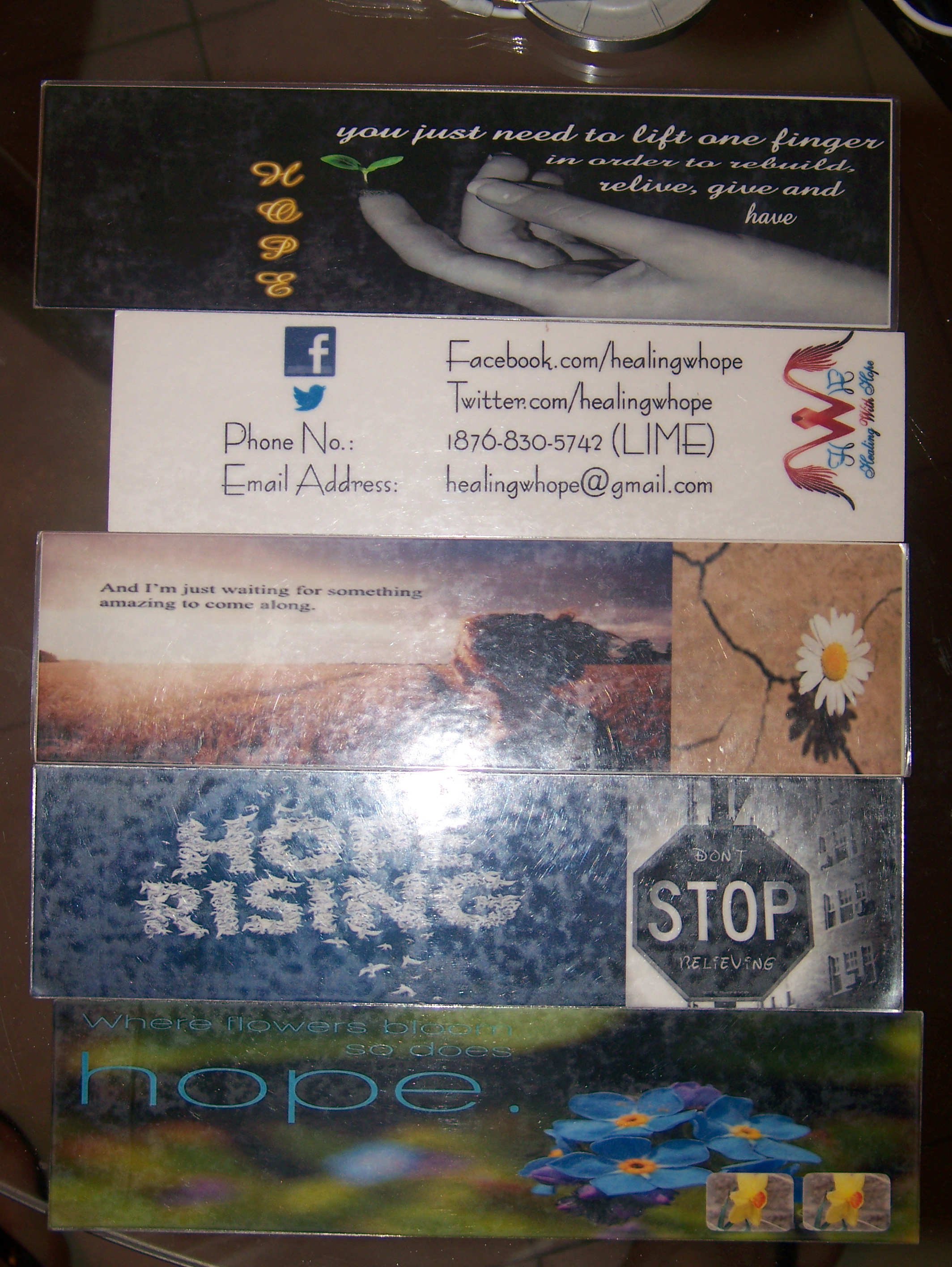
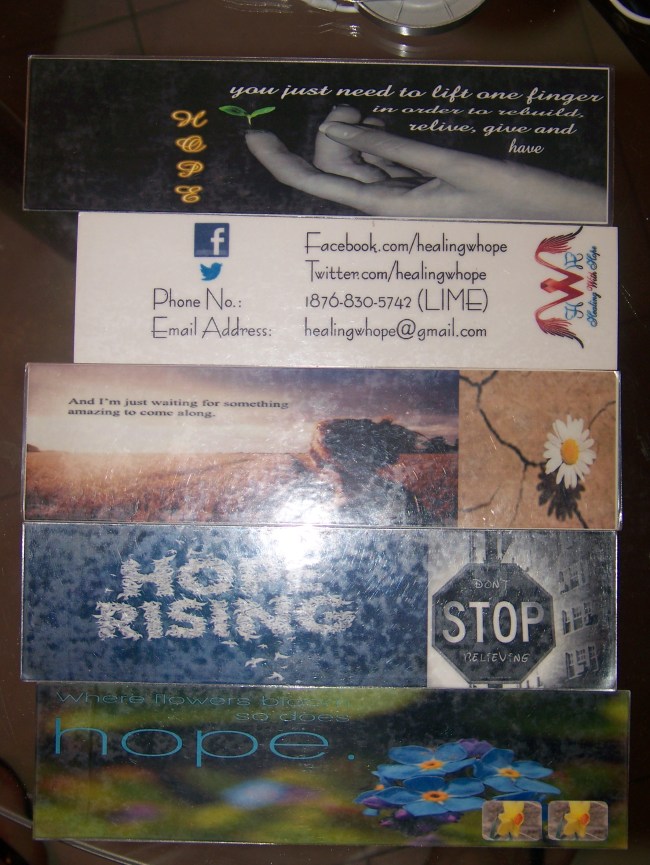
In the meantime, Thomas continues to work with churches, attend conferences when he can find sponsorship and in a bid to raise money, produces and sells the bookmarks pictures. He charges $100 each (about $1US), which is re-invested in the organization. Thomas is also focussing heavily on employing social media to get the word out. In addition, he recently designed a new logo with sponsorship from a California-based organization. And he has travelled across the U.S. for conferences, learning and spreading the word.

In Jamaica, Thomas wants to target vulnerable communities in which those afflicted by the disease are too afraid to be tested because they fear being discovered, or who, because of their work schedule, are not able to see a doctor during the day. “If they get on treatment, it does work. It is the only way you can suppress the virus.”

HwH is clearly a labour of love for Thomas, as he has not been able to secure funding. He does, however, receive support from other NGOs such as the Caribbean Vulnerable Communities Coalition and UNAIDS. “I am a determined person,” he says. In order to overcome the stigma many people he encounters have about HIV/AIDS, Thomas cites the example of Jesus’ treatment of the leper in the New Testament of the Bible. “Jesus never asked him what sin he had done. He spoke with him and reached out to him and helped this man. I believe that’s what I want the church to do.” And this is his core message: “You can’t just force somebody to change. You have to show love and care and support, and at the end of the day, once you show love, people will say they can make it.”
Strategic Priorities


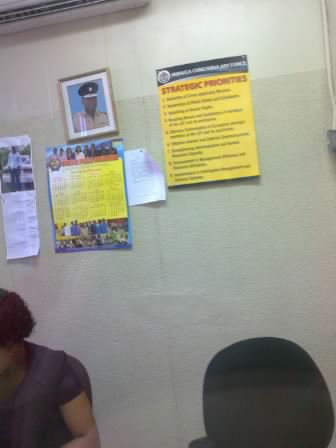
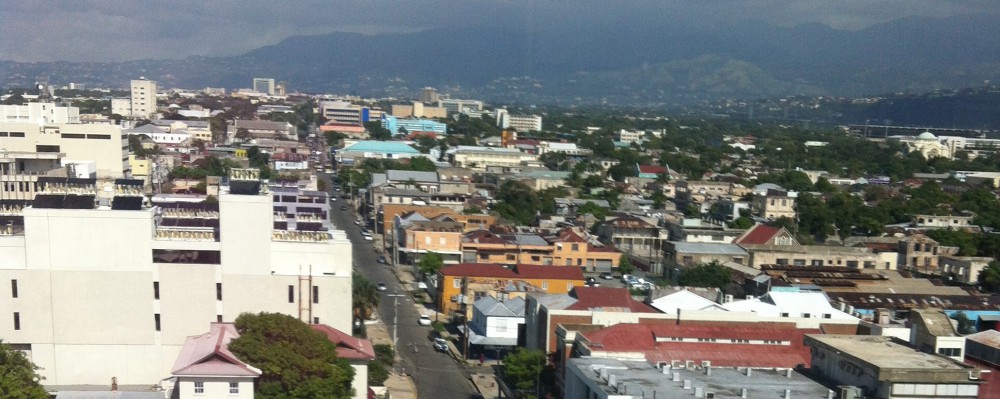
I snapped these pictures today and yesterday. The first was taken at a downtown Jamaica Constabulary Force Office. I was there for a meeting and took this picture of a list of strategic priorities. It is hard to read, but they include reminders that officers should respect citizens and other similar sentiments. This struck me in light of the recent revelations of the amount of extrajudicial killings so far in 2014, which is nearing two dozen, approximately.

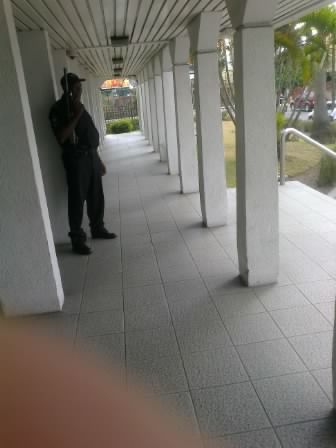
The other picture is of a guard with a large rifle outside a bank at HalfWay Tree. He was watching the entrance as two colleagues collected money in the bank. Just a reminder that crime and violence colour the lives of every citizen in Jamaica, no matter who you are, no matter where you are.

Orange Villa: “I don’t want anything less than justice”

I am re-blogging this today as it is a must-read. Emma’s first-person account puts a human face on crime and “extrajudicial” killings. It reminds us that we can become immune to reacting to the daily headlines shouting at us about two or three more people killed (statistically about one in ten of them by police on an annual basis). Also, no words. Rob Ford is drunk again, this time speaking patois. Jamaican blogger Annie Paul was contacted by the New York Times yesterday and appeared in this story. Check it out http://thelede.blogs.nytimes.com/2014/01/21/new-video-shows-torontos-mayor-using-jamaican-patois-in-obscene-rant-about-police-surveillance/?smid=tw-thelede&seid=auto

petchary's avatarPetchary's Blog

We were driving down to the Orange Street Jewish Cemetery (more about this in a later post). It was a busy Monday lunchtime, and on the way we were slightly delayed by a minor accident – two cars with rumpled radiators and rear bumpers. Nothing serious. But as we drew near to the cemetery, we came across a yellow tape, right across Orange Street, with another one further down the street. In Jamaica, that means only one thing.

The Jewish Cemetery, where volunteers from overseas were working on recording a part of Jamaica’s history, appeared to be in the middle of a crime scene.

I managed to slip through to the cemetery entrance, and was almost overrun by a group of military-looking policemen in black overalls, all carrying big guns and all laughing and joking among themselves. They had apparently just set up the yellow tape. They seemed very happy…

View original post 1,011 more words

Canada wants JA’s ganja


The Gleaner is getting some strong scoops lately. Today, I direct you to its front page story with the headline “Canada wants weed- Medical ganja company boss says country would purchase Jamaican marijuana”.

Apparently, Jamaica could have access to a $1.2 billion (CDN) market in Canada, where ganja is sold for between $7 and $10 per gram. A fellow named Blaine Dowdle, CEO of Canadian MedCannAccess, was in Jamaica over the weekend for the Cannabis Stakeholders Forum, and told the Gleaner:

“I’m here from Canada representing 50,000 sick patients right now who don’t have access to safe, reliable, inexpensive medicine. Lots of the people using medical marijuana in Canada are disabled, they are literally sick and don’t have a lot of money, and they do need lower-cost cannabis in Canada,” he told The Gleaner.

He noted that in Canada, the number of patients under the medical marijuana programme has been doubling in size annually.

“We are expecting it to continue along that trend. That means within the next four to five years, we should be able to supply between 400,000 to 500,000 patients,” Dowdle said.

It seems that cannabis is just one thing that could create a lucrative trade for Jamaica. It will be interesting to see how this plays out.