Unknown's avatar

About Kate Chappell

"And all I offer here is the distilled poetry of my existence..." Claude McKay, Poet Laureate of Jamaica, 1890-1848 I have been a reporter since 1998, covering mainly business and politics. I have also capitalized on the many skills journalism requires to become an all-around communications specialist. In addition to being a professional curious person and communicator, I have a bad case of the travel bug and can't seem to stay put. Finally, I have put my skills to work as a volunteer in the community wherever I have lived. Now, follow me as I combine these compartments of my life in Kingston, Jamaica, where I am a writer, reporter, journalist and lecturer.

“Many rivers to cross”


Tessanne is pretty much the only thing everyone is talking about today. She is on the front page of the Gleaner after delivering a goosebump-inducing performance on The Voice last night. Cheers could be heard after she finished, then I assume most of Jamaica voted for her in the singing competition.

Check out her performance from last night

My Giving Moment


This is an interesting new initiative coming from the office of Canada’s Governor General. Called My Giving Moment, it is meant to encourage Canadians to donate of themselves, whether it is time, money or expertise. Many of Canada’s large corporations are on board, which is always a good sign, and a new group called the Rideau Hall Foundation has been set up.

A quick look at the web site reveals that it appears to tackle head on some of the reasons that people do not volunteer, despite their good intentions. Aside from just providing ‘feel-good’ stories about how and why people volunteer and the differences they have made, the web site provides many creative suggestions about how to contribute. There is also a mechanism that seems intended to create accountability: people can log in and create an account, after which they can select suggestions of different actions and indicate whether they intend to do it, have done it or will challenge a friend to do it. At my latest check, 1,480 people have had “giving moments.” This tackles another problem with volunteering: most people simply don’t know where to start and get overwhelmed. Let’s hope this initiative catches on. I will leave you with an excerpt from the Governor General’s message:

I believe that the key to a smarter, more caring Canada lies in helping more of us discover what we have to give.

That’s why I’m delighted to invite you to join My Giving Moment, a campaign that will celebrate and generate the kind of giving that, as Canadians, is in our DNA.

Opportunities to give are all around us, every day. We call them “Giving Moments”. They’re those special moments when we see someone who needs help, something that needs changing, or other people giving. They’re those moments when we suddenly realize that we can give, too.

My Giving Moment will help Canadians seize these moments, and then act upon them. It will help more of us give something, whether big or small, and whether it involves time, skills, or money.

Join me in spreading the word about My Giving Moment. Use the website to discover and share your own Giving Moments. Read and share stories from other Canadians about giving. Find out creative ways to increase your community participation or to make a charitable contribution to an organization you had never thought of.

Together, we will inspire one another to achieve great things through giving of all kinds, one moment at a time.

We will forge a stronger, more caring nation that innovates by embracing the talents and natural generosity of all its citizens.

We will do more than just envision a better world.

We will create one.”

Millions unspent


According to the Ottawa Citizen, the Department of Foreign Affairs, Trade and Development left $300 million unspent last fiscal year. Unspent budgets are normal for the federal government; a sum of $300 million is not. It represents 10 per cent of the former Canadian International Development Agency’s budget last year. In 2011, only $25 million was unspent and the previous year, a mere $2 million.

This money had been earmarked for aid and development programs abroad and is on top of a prior $377 million cut to the country’s aid budget.

When I was a reporter, I pored over the government’s spending estimates and public accounts, both of which spell out how much the government intended to spend and how much it actually spent. Unspent funds are relatively normal, just not to this extent.

Critics from development groups immediately jumped to the most cynical conclusion: the government is further cutting the foreign aid budget by stealth, hoping no one will notice. Perhaps the general public won’t notice, but foreign aid and development groups certainly will. Cuso International is still waiting on word to see if its funding cycle will continue (it ends in March 2014).

Giving the government the benefit of the doubt, perhaps this is an attempt to more strongly adhere to practices that ensure that millions of dollars are not going to waste. Indeed, this is an international trend, for more accountability and measurable results.

It is just unfortunate that some projects that had already been approved and vetted (by the Harper administration itself) will now not go ahead, at least in the short term.

Again, with this move, the Harper government continues to create confusion about what its “development” mandate is, beyond fiscal accountability. It has yet to respond to this article, which you can read here.

Do you know where your youth are?


Once again, Jamaicans are in a moral uproar about the behaviour of some youths. This time, the furore is over a two-year-old video of some high school kids dancing and gyrating. Nothing to see here, really. This happens EVERY DAY in Jamaica at some party or another, or a concert or in someone’s yard, by people of all ages. I think the proliferation of social media just blows these things up, out of proportion, and people react like fish to a shiny lure and then move on the to the next thing.

Prior to this, the Jamaica Observer published a few sensational articles about kids behaving badly in the HalfWay Tree Transport Centre “fights, sex, robberies“. Apparently, they touch one another, scream and frolic and generally do the things that teenagers across the world do.

For some reason, however, the media treats this with (or perhaps reflects) an attitude of shocked horror, as if these children are engaged in new and scandalous activities.

As someone who was a youth who started to head off in the wrong direction, and as someone who works with Jamaican youth, a few thoughts:

1. This is not new behaviour. Why are the media and citizens exhibiting such shocked reactions? Could it be that it is easy to blame the youth without looking at the root causes of the behaviour, if it is indeed problematic behaviour?

2. If it is problematic behaviour, where are the parents, community leaders and educators in all this? Why are these children allowed to roam free after school? If the Observer article is accurate, some of the behaviour is indeed troubling:

Linval Thompson, the man charged with managing the transport centre on behalf of the State-owned JUTC, said that the unruly behaviour of the teenage students have JUTC staff and the police personnel assigned to keep order in the centre stretched to the limit.
“On a Friday it is just madness,” Thompson told the Jamaica Observer. “The children come here and they do not leave the park until late in the evening. They are involved in all kinds of activities.”
His claim was corroborated by Sergeant April McFarlane, who heads the team of cops assigned to police the centre.
“On a Friday it’s chaos. The students don’t want to leave. They come to the bus park and linger. The girls arrange to meet men they met on the Internet. We have caught children having sex in the bathroom. They fight every day, but on a Friday it gets worse. We have found every form of weapon that you could imagine,” Sergeant McFarlane said.

So where are the adults in all this?

3. Instead of complaining and being shocked, why don’t people talk to these youths or create after-school programs for them?

4. From a journalistic perspective, I would also cast doubt on the stories being written about this subject. They focus on a small percentage of Jamaican youth. What about the vast majority of youth who go about their business, go to school, go home and do homework?

5. I have walked through HWT many times on a Friday afternoon and have never noticed this behaviour. I’m not saying it doesn’t happen but I have never felt threatened, at least by the high school students.

6. These students are modelling the behaviour they see around them, both in media and by adults behaving badly.

My point overall is that if there is indeed a problem of epidemic proportions, then responsible adults must look at the symptom. Blaming students for normal behaviour (I am not saying violence, robberies and underage sex is normal or acceptable, but if it is indeed occurring with regularity, then it must be addressed holistically rather than attacking those partaking in it) is not helpful and puts a wedge between generations.

For another measured perspective, read this column by youth advocate Jaevion Nelson.

How do you say goodbye forever?


This past week I was at home to visit with family and friends. My grandmother is ill. So I did what I do, and wrote something about it, trying to sort it all out.

My grandmother is 99 years old. She is dying. Just a few months ago, she was in robust health, traveling to Thailand in March for a wedding. Taking exercise classes, walking on the treadmill, telling me she was going to start running soon. She also maintained a busy social schedule, often more so than mine.

But her good health has careened downward. Cancer now occupies her vital organs and is spreading elsewhere. Illness has also stolen her mind.

How devastating this is, to witness the departure of someone’s spirit and the degradation of their body. My grandmother went from acute awareness and physical health (we often had to stop her from what I called “going rogue;” she needed help to maintain balance, so we had to stay by her side when she walked, but sometimes she would escape and walk away too fast from us) to a tiny, bony body and vacant, suspicious eyes.

My last visit with her, I sat beside her as she finished lunch of soup and half an egg salad sandwich. We then moved to the couch, where we pondered a Canadian Geographic magazine and talked about going to visit her mother, who has long ago passed away. “I must get dressed,” she said in desperation.

As we sat and talked, I studied her, tried to imprint everything about her on my memory. I attempted to follow her trail of thoughts, often in futility, as I tried to maintain some kind of connection. I tried to be strong, pretend nothing was awry, but tears flooded my eyes the first time she asked me if we could go and visit her mother.

This hit me particularly hard, as it came from a woman who could recount almost a century of memories and stories with little difficulty.

In my attempt to richen the connection and deepen what will likely be one of my last memories of her, I touched her hands to see if they were cold. She had been rubbing them, either they were cold or she was continuing a new nervous habit of fretting them, examining them. Her hands were warm though. Nevertheless, I used this as an excuse to hold them in my own, a premise to touch her, to sear this memory in my mind.

“Your hands are cold,” I told her, “let me warm them.”

Once so long and graceful, they are all bones now, crooked and awkward, more like claws. It takes her forever to do anything and she wields them with robotic movements. These constructions of bones and flesh at the ends of her arms, these limbs that are supposed to do what she signals, now respond so slowly as to be ineffective. We sat side by side, facing forward. I let my hand rest on top of hers for several minutes, engulfing them, feeling warmth and energy pass from me to her.

As we sat, her bent over, eyes pale and watering, I examined her face, trying to memorize the creases and flow of her delicate skin. The tiny triangles of wrinkles where smooth skin once lay. The lines of her neck, the life in her eyes. I searched for an indication that she knew she was with me, in the present moment. Perhaps part of her was, but she remained convinced that she needed to visit her mother in Toronto. Tried to convince me she must go there. She would take the streetcar if she had to. I’m not certain she knew who I was. I told her I love her and she did not respond, when usually she does. She just smiled at me with reticence and looked me in the eye. With this lack of response, I wondered: Is this how she will end her life, circled back to how she originally operated, which was a place of anger and fear?

For many years, she kept us at a distance. She was cold and often critical, imbued with negativity fueled by a life of many heartbreaking challenges. Over the last few years, however, she had mellowed. Old age softened her, rendering her my biggest cheerleader. We grew close, me listening to her memories, taking her on trips to her old home in Toronto. She indicating her pride in my accomplishments. Our relationship became such that I felt less alone in the world, guarded by a grandparent that I had never had, a protective, benevolent and unconditional source of love.

With cancer, however, her mellow mood has hardened, such that she is turning on the professionals who now care for her. Her gentle nature has fled, instead she scolds and fusses.

“You must be kind to Jane, and the other girls who are taking care of you,” I told her in an attempt to convince her to stop lashing out at the ‘personal support workers’ who now surround her. “They are just trying to help you, to take care of you, to stop you from getting hurt worse.”

This is the key with her, emphasizing the potential loss of what little independence she has retained. I’m not sure if she understood me. “Okay,” she said softly.

During another recent visit, she remarked suddenly to me: “I don’t want a big ‘do’ you know.”

I wasn’t sure what she meant. “You mean for your funeral?” I asked.

“No, for my 100th birthday.”

I laughed and then told her she didn’t have much of a choice in the matter, that 100 years is a big deal. She then went on to plan her next trip- a cruise in the Caribbean somewhere. And down to the Bahamas at Christmas.

Again, I was at a loss for words and I felt my eyes warming with tears. Maybe she will make it. We don’t know. What we do know is that she is an amazing, spirited, beautiful woman, whose name Grace is befitting of her stature. We also know we love her as we watch her fade before our eyes. I am not ready to let her go, as if I have a choice in the matter. I said goodbye the other day, unsure if it was forever. How do you do that? Say goodbye to your 99-year-old, terminally ill grandmother?

Nevertheless, I am grateful for our relationship. As we grew closer over the past several years, I told her and asked her everything I needed to. I have peace and gratitude for our relationship. At least, I do intellectually, in my brain. Emotionally, however, I am panicking, screaming, grabbing onto anything solid by my fingernails as hurricane-force winds threaten to blow her away forever.
In transit


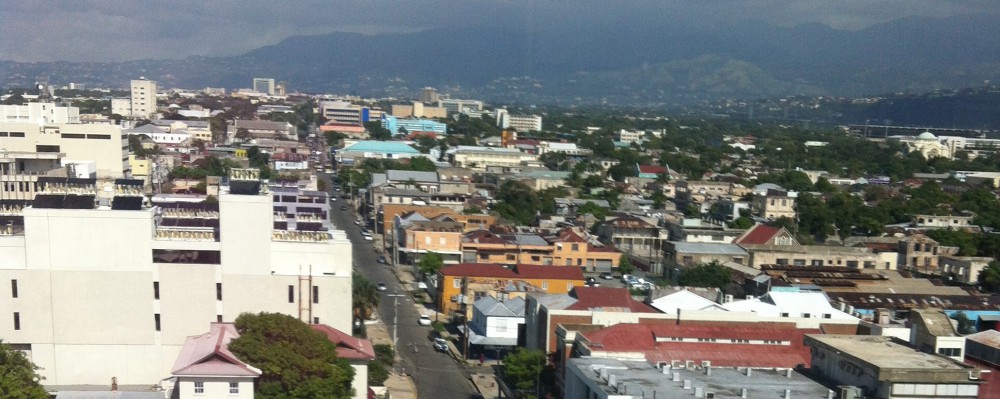
I am heading back to Kingston today via too many cities (courtesy of Air Canada). It has been a whirlwind week of visits with people aged three months to 99 years, a graduation ceremony and errands. And too little warmth. To my horror, it was snowing when I left this morning.

Today I direct you to this great article by Ally Foster of Embassy Magazine. It profiles the people who will be reorganizing Canada’s development and international trade departments. This is a crucial time for Canada’s international affairs portfolio. The next few months will shape the country’s role in an ever-changing world. Take a read and enjoy your day.

Link


19-year-old shot in Mountain View

Thoughts and prayers are with the people of Mountain View today. Nineteen-year-old Romarco Wilson was shot by police in his home. Residents burned tires and blocked roads in protest. Hope things settle down soon. 

Mawnin! New day, new view


The web site for Youth Opportunities Unlimited has finally been set free. Our server/designer has been working on it since before I arrived in JA! This has presented some challenges in achieving my goals in terms of public relations and communications, although social media is now such that you can work around not having a web site, thankfully. This is a soft launch, as we still have to work some bugs out, but take a look here: http://www.you-jamaica.com and let me know what you think. Have a great Monday!

Link


US issues travel warning for Mountain View/Rockfort

Over the past several weeks, we have been hearing reports of “increased gang activity” and a shooting in Mountain View. YOU is working in both of these areas right now. The warnings are confusing. Community leaders in Mountain View do not seem concerned and attribute the last shooting to one individual who was “terrorizing” the community. They indicated relief that he was no longer around. Police, however, seem to be relaying a growing wariness of the latest criminal activity in Mountain View. The last few times we were down there, they had a heavy presence and show of weaponry. 

I have also heard that people from outside of the community have been hanging out at traffic lights and robbing people who stop for the red light, with a gun. This has not been confirmed, however, until this latest travel warning from the U.S. This is, obviously, not good. Mountain View Road is a major thoroughfare and most people take it to get to the airport. 

I am not sure what is going on in Rockfort, a nearby community, as I have not asked YOU’s staff member, who is currently working there, what is going on. I do know that he goes down there regularly and does not seem worried. 

In any case, a travel warning from the U.S. is a big deal. I am not sure if it is warranted, however, but the damage is done. It is always difficult to determine what is actually happening on the ground. There are conflicting reports from community leaders, residents, police and international officials. We do know two things, however: safety is paramount and perception is everything.

Hallowe’en!

Image


Halllowe’en does not seem to be a big deal in Jamaica. I suspect a couple of factors come into play, namely, safety and financial, but I do not know. It is a big deal here in Canada and the US, mostly due to some fantastic marketing machines. My neighbour is also way into Hallowe’en. He told me a story from his childhood about why, which I will not go into, but enjoy the work he has already put into celebrating this holiday.