Canada- way too cold!
4






The Reverend Margaret Fowler takes a pragmatic approach to the heart-wrenching issue of human trafficking and prostitution: “We will never stop prostitution as a whole, but if you have skills to draw from, you can make another choice.”
Rev. Fowler makes this statement from her second-floor office at the Hope United Church in Kingston, where she has lived for 25 years. Rev. Fowler was a social worker from Scotland when she arrived in Kingston, where she studied at the University of West Indies, eventually becoming a Minister. She worked in Negril for a decade, combatting prostitution and helping vulnerable girls get off the streets.
The Reverend set up the Theodora project in 2004 to this end. “To take anybody out of anything, you have to provide alternatives.” So through the government’s HEART TRUST/NTA program, the girls are offered education in English, maths and some practical training in skills such as cosmetology, housekeeping and computers. The program has also expanded to include boys, who were trained as lifeguards. “This has been very good, because they could get jobs,” she says.
In addition to focusing on practical matters, the girls and boys receive counseling and life skills training, like how to dress for a job interview.
This program has since expanded to include the construction of a safe house in Negril, where, unfortunately, a lot of prostitution and trafficking occurs. “The project has been quite successful,” says the Reverend. In fact, it is poised to expand into a formal partnership with the Ministry of Justice.
The issue of prostitution and trafficking is not a new one, but Fowler says minimal research has been conducted. She would also like to shed more light on the issue of missing children.
According to the web site http://www.missingpersonsjamaica.com, hundreds go missing every year. There is also a constant flow of girls between the rural and urban areas, Rev. Fowler says.
Horrifically, the reason can usually be attributed to the mother, who is seeking to improve the family’s economic status. “The mothers send them out,” she says, adding that the girls are usually vulnerable in the sense that they lack education. “They have difficulty reading and writing,” she says.
As a result, another common scenario is that “taxi men” in the community end up taking care of these girls, in exchange for companionship. “The mothers tell them to go and be nice to these men because he’s going to take care of you.”
But the Reverend does not focus on these dire circumstances. “I believe that everybody has to have opportunity. I am motivated to provide opportunities that these girls might otherwise not get. I want to keep them away from older men.”

Embassy Magazine has a great article today on how the Department of Foreign Affairs, Trade and Development merger is unfolding. Please click here to read. This is not just relevant to policy nerds. This affects Canada’s culture of “development” and it will also affect Cuso’s future. It is strange to be on the other side. As a reporter, usually I am the one uncovering information like this. Now, I am the recipient. Enjoy your day!
It is National Heroes Day in Jamaica. The city is quiet, most people have gone to the country. As I wrote the other day, I was supposed to be working on Saturday to meet a deadline for a writing project, but I was convinced to go to the beach instead. A wonderful decision! Yesterday I also took some time out to do a training run (3 hours!) for the Reggae Marathon, which is quickly approaching, and go to a friend’s BBQ. I tried curried goat for the first time, and given that I don’t really eat meat, it was surprisingly enjoyable.
On this National Heroes Day, I will also point you to this article by Associated Press writer David McFadden. I have not met him, but have been in contact with him and know he lives in Kingston. The story is good, as is all the work he produces. But more and more, I have been contemplating the value and impact of these stories, how they are packaged and how often they run. The Associated Press produces one story every few months about Jamaica, and I am assuming they run in most major newspapers. The result is a very specific and narrow portrait of this very complex nation (this issue is not exclusive to Jamaica, of course.)
This story is about the police campaign to eradicate gang activity through the removal of murals dedicated to community dons. (While this picture is not of a mural, it is a picture of some graffiti on a wall entering the community of Mountain View, declaring allegiance to one of the main political parties.)
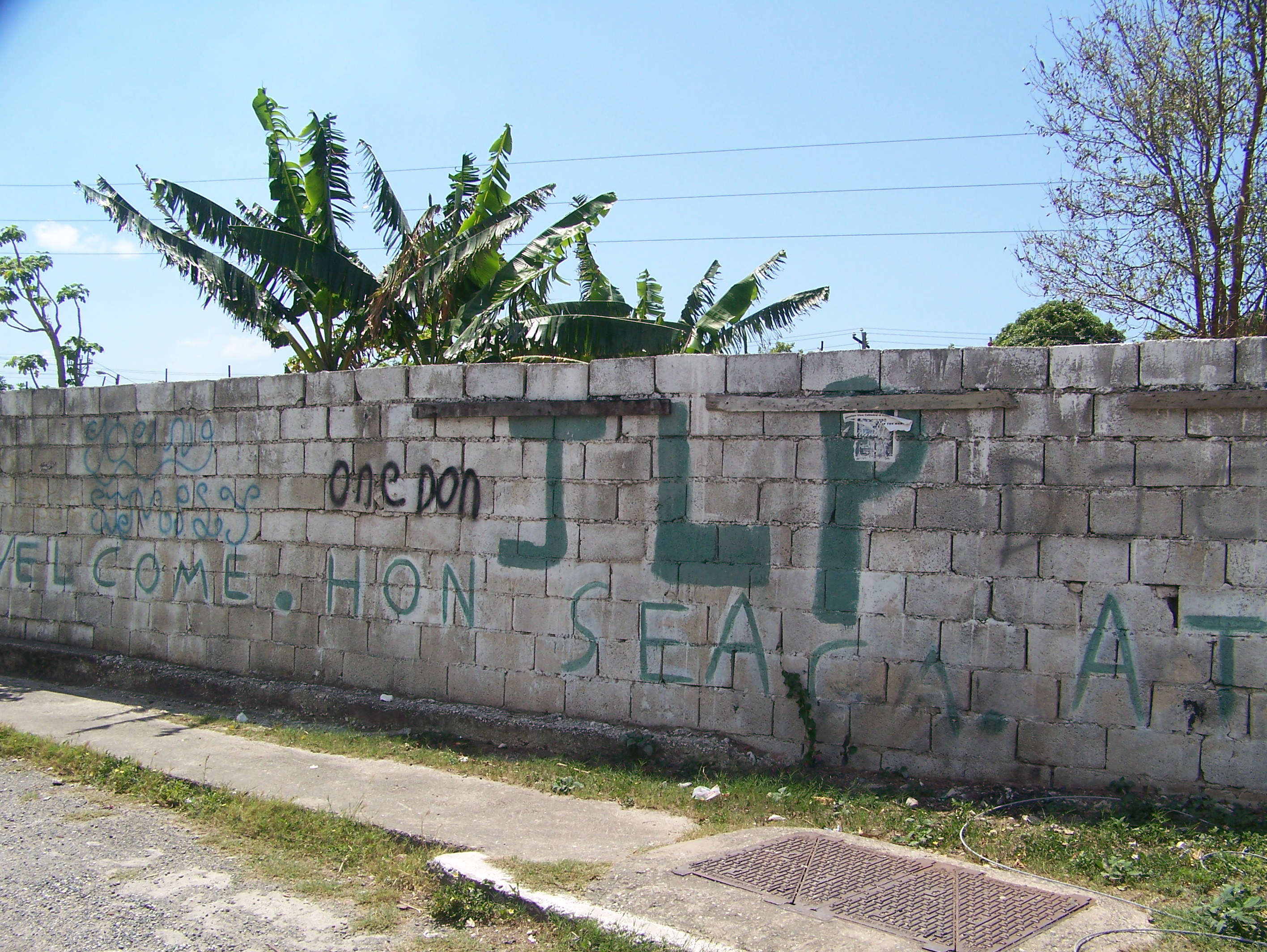
It is a good story (Thanks John Wilson!) with different sources, some background and context. However, as with all stories like this, it portrays just a fraction of the complexity of the issue. I am concerned about what someone reading the story in Nebraska or Jakarta or Sydney might think. What do they take away from the story? Will they go and do more research on Jamaica’s criminal activity? I doubt it, and does that even matter? What is the alternative, you ask? Perhaps a story about how gang activity has ceased, how a community intervention project has worked miracles.
I’m not sure those positive stories that would provide balance exist, unfortunately. Even in Mountain View, the community where YOU has worked since 2003, a young man was shot and killed by police a couple of weeks ago, breaking a streak of several years of no shootings. (Word from both police and community members indicate that the young man who was killed was “terrorizing” the community and that they are relieved. A policeman was also shot, but he will recover). Gang activity has also flared up again in West Kingston and is spilling over into neighbouring communities.
One person who might have some answers and understands the complexity of the issues is Horace Levy of Peace Management Initiative (Thanks Emma for pointing to this letter). It would be great if the Associated Press would talk to him for an article. Read in full below his response to police tactics towards gang activity:
THE EDITOR, Sir:It is helpful that Police Commissioner Ellington has responded to my challenge. His reply, in the Observer of August 27, 2013, makes it clear that he does not get the two main points of my letter: (1) that present policing strategy is repressive, and (2) is failing to reduce murder rates.
What remains is for Security Minister Peter Bunting, the person responsible for policy, to discuss policing strategy and its failure with the public. Other ministers – in agriculture, education, communication, etc. – discuss their policies and criticisms of them with the business sector and civil society. Why not national security? Why not discuss a PREVENTIVE strategy – its methods, advantages, costs?
Ellington’s reply, to come back to it briefly, does not deal with the repressive nature of current policing. The facts are unassailable and, therefore, mostly undenied:
Police turning the community space (of poorer communities) into detention zones as though the majority of their people are criminals.
Police death threats to community leaders.
Police wearing masks without justification.
Police’s unjustified killings of large numbers of civilians: the correct INDECOM statement is that 51 per cent of all claims investigated, including very minor ones, were found unsubstantiated, not Ellington’s 80 per cent (of fatalities this year).
Police promoted who have supervised many such fatalities: an approval by the Police Commission, which is being appealed in the courts, does not alter the fact.
Police seeking to reverse civilian supervision of their (mis)conduct and, to escape that supervision, even refusing now to engage criminal elements.
Ellington’s reply tries to cover up the failure of the strategy by manipulating the number of homicides. The plain fact is that the number of days from January 1 to August 3 is 215, and the number of murders for that same period, according to the Jamaica Constabulary Force crime report, is 662. The number 662, when divided by 215, yields the number three with 17 left over. In other words, the average daily number of murders for the past seven months is a fraction more than three; and the rate is worse if the 742 murders up to August 24 are taken into account – 3.1.
And if Mr Ellington will count the days from June 1, 2010 to December 31, 2012, and divide it into the number of murders for that period, he will find the exact same average daily rate of three. He cannot get around it. Murder, with all the violence associated with it, is the crime that measures the success or failure of his policing.
Mr Ellington’s claim of success in ‘clearing and holding’ is just ludicrous when one considers the level of homicides and robberies not only overall but, for example, in west Kingston (and worse in St James and Clarendon). And the fact is that until ‘clearing’ seriously occurs, no substantial ‘building’ by other agencies can go on.
HORACE LEVY
halpeace.levy78@gmail.com



























Yesterday marked the launch of the Diaspora Youth Connect Project, an initiative that a few other volunteers are working on. I was the official photographer. Here is more information about the Project:
The Diaspora Youth Connect (DYC) Project is being implemented by the Jamaica Diaspora Institute (JDI) in collaboration with Cuso International. Some key partner organizations and investors in the project include: Mona Social Services, UWI Mona; Social Development Commission, Montego Bay, St. James; Agency for Inner-city Renewal (AIR); RISE Life Management; the Planning Institute of Jamaica and the Jamaica National Foundation. The project has also received support from USAID and CIDA who have provided volunteers from the USA and Canada to assist in the implementation of the project.
The DYC Project has three main purposes:
To connect youth in vulnerable communities in Jamaica with young persons (Future Leaders) in the Jamaican Diaspora; and
To develop a cadre of persons in Jamaican communities and in the Diaspora who are or will become volunteers in assisting the development of vulnerable communities in Jamaica.
To assist youth in vulnerable communities to convert their creative ideas and talents into business ventures.
The morning session was full of speeches from dignitaries. We broke for lunch and the youth were then engaged in workshops and short talks from entrepreneurs who have achieved success despite difficult odds or who have conducted academic research on entrepreneurialism. The day concluded with the youth being matched with the entrepreneurs who coached them on how to give an elevator pitch. Once it was perfected, three group members presented a 90 second pitch to judges. The winning group chose to try to sell contact lenses.
This will be the last post about Jacques Road, I promise! But I must mention the lovely ceremony we had yesterday to thank the Canadian High Commissioner to Jamaica Robert Ready and his wife Joanne Ready. We held the ceremony at the beautiful homework centre, where repairs and refurbishments were done on Sept. 29, when the Canadian Navy (who were docked in Kingston on the HMCS Preserver for the weekend) descended on Jacques Road. The homework centre received new paint, windows, shutters, a garden and other repairs. In addition, a container was turned into a computer centre that will accommodate 20 computers.
In addition to the High Commissioner, other attendees were YOU’s Mrs. Lewis Scott, Cuso International’s Tarik Perkins, members of the Jamaica Defence Force, the Jamaica Constabulary Force (Insp. Alton Spencer is particularly in tune with the community), CIDA, the Community Security and Justice Program and members of the Jacques Road Parenting Group. The Rev. Francina Pryce presented a plaque to the High Commissioner, who in turn with wife Mrs. Ready presented a book called “Canada in a Thousand Pictures” to Francina. Mrs. Lewis Scott also thanked the Canadian Navy, specifically the ship’s Commander Gregory Adamthwaite. As we listened to people share their thoughts, a small group of men kindly halted their work making cement blocks, one of the community’s income generating businesses.
All this to say, the ceremony was well attended and people were on time, except for members of the local police force. The ceremony started promptly at 10:00am, with everyone confirming prior that they would attend. However, local police pulled up around 10:30. They were quite disappointed that we had already finished and someone said, “I thought you started at 10:00am,” to which I replied, “Yes, it is 10:30 though,” and we all burst out laughing. Soon come.
This ceremony came on the heels of a tragic event in which a young man was shot by police in Mountain View and a police officer was injured (he will be ok). This incident has shaken the community, but off the record, people said that this individual was “terrorizing” the community. Our thoughts and prayers are with all affected.
Please check out the pictures from yesterday’s event <a href="here“>here.
Good morning! We are heading down to Jacques Road today for a ceremony to thank the Canadian officials who were instrumental in the community improvement project we recently completed. Pictures to come. In the meantime, check out the latest edition of the Cuso Chronicle which details Cuso’s activities here in Kingston.
I will also point you to a story circulating here in Jamaica: the Ministry of Health is warning against consuming mongoose meat. I don’t know much about mongoose, but I do know that I see them dart across the path when I am running up at the Mona Dam. I also know that they seem to be quite disgusting creatures and I would not want to get up close to one. Apparently they eat snakes and boost men’s sexual prowess, which is the reason that mostly men are consuming the meat, according to the story. Anyway, enjoy your day and please refrain from eating mongoose meat.
Arlene Bailey could easily have directed her energy towards revenge and reprisal. On July 8, 2001, her son’s father was shot and killed by someone in her community. Her son, four at the time, witnessed the murder. “I was so alone and without friends,” says Bailey, who was 30 at the time.
“I was never sure of who the killer was. I never knew the truth so I couldn’t even grieve well.” This horrible event was a turning point for Bailey. “Reprisal could be easy, but it no make no sense to have revenge. Pain came with passing loss, but I wouldn’t wish that on anyone. I now yearn to make positive change in the community,” she says.
Indeed, this is what Bailey has achieved. From a childhood spent bouncing around between rural and urban Jamaica, between different homes, Bailey is now a leader in the sometimes volatile community of Fletcher’s Land.
Bailey has now been a receptionist for the Department of Communications and Social Marketing with the Citizens Security and Justice Program since Nov. 2012. She hosts a weekly, hour-long program on ROOTS FM 96.1, lead the Fletcher’s Land Parenting Association for eight years and established the Arlene Bailey Foundation. The Foundation has already held an award ceremony, which recognized 36 people from Fletcher’s Land and distributed text books to students who could not afford them.
Bailey’s path to community leader started after the tragic event drove her to get involved. “Anything they tell mi fi do, I do, I just wanted to shut out the pain. It gave me a reason for being and filled the gap. People need to help people and make life better for the community,” she says.
Youth Opportunities Unlimited provided Bailey with both the means and the experience necessary to become a community leader. At the time, YOU was running several programs in Fletcher’s Land, including its core activity, mentoring, as well as life skills, public speaking and parenting training.
“I garnered so much self-esteem,” she says, and now describes herself as a “self-assigned community mobilizer.”
At the beginning of her journey, Bailey didn’t have the right clothes or hair and did not know how to conduct herself. “I was in a bad state,” she says. “This allow mi fi blossom. Someone with a troubled past tends to be arrogant, but I have been polished a lot.”
Through community development work, Bailey has now travelled the world (Canada, the U.S., Peru, Slovakia, Barbados, Antigua, Mexico, Brazil) and realized a dream of becoming a home-owner. She also subscribes to the notion that community development work, like projects run by YOU, can have a lasting impact. “As long as you want to do something, it can be done.”
Unfortunately, Fletcher’s Land is now experiencing an uptick in conflict (due to internal community disputes) and Bailey’s house was broken into in September of 2012, but she maintains her faith. “The devil has a way to find out how strong you are,” she says. “You have to lead by example and you have to surpass everything. I am committed to a life of service.”
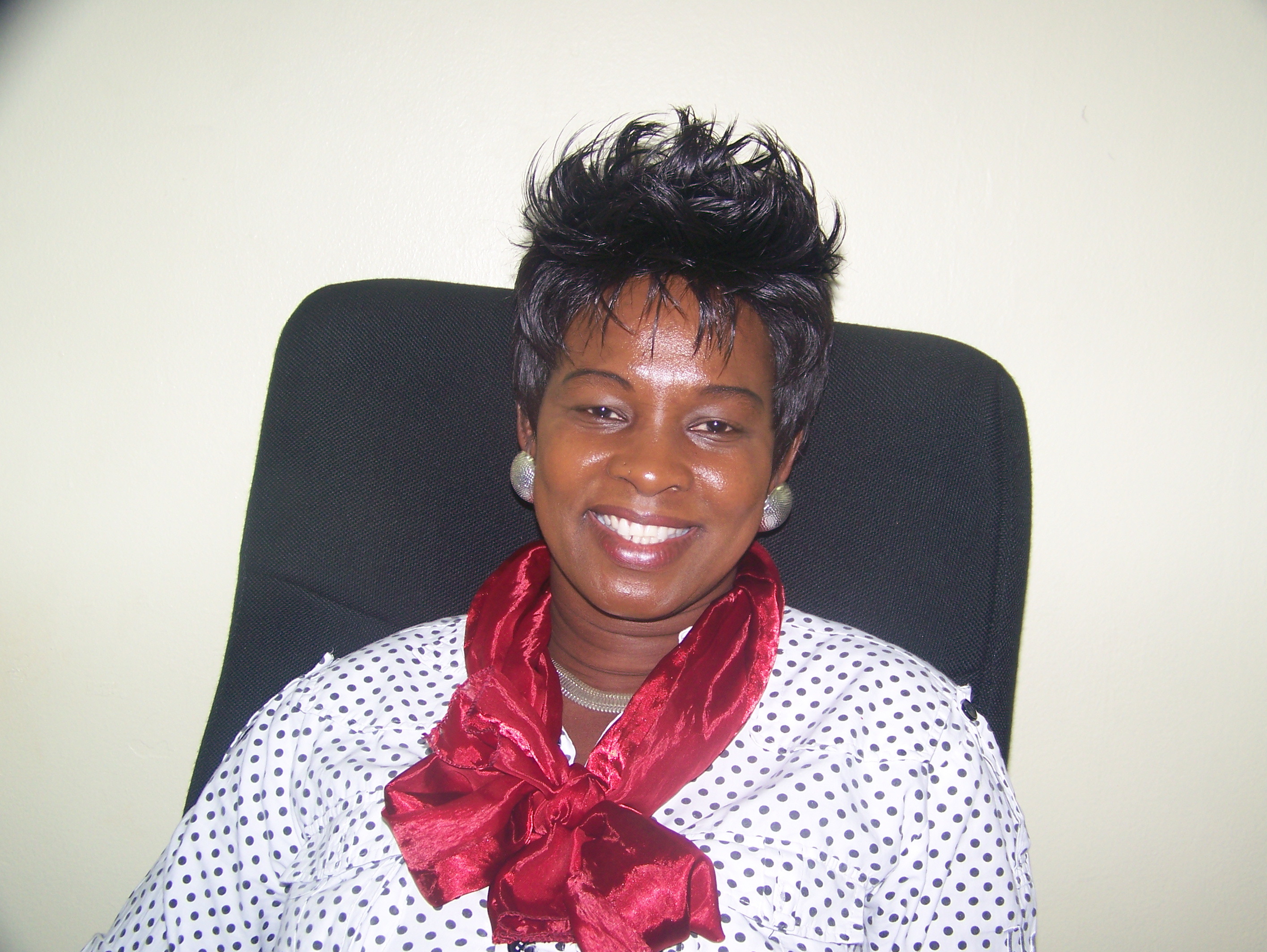

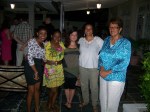





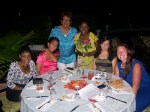


Last night the Canadian Women’s Club hosted its annual Thanksgiving Dinner at the Canadian High Commission’s residence. It was an evening of delicious, traditional food (turkey, stuffing, potatoes, etc) and good company. The turnout was strong, including many members of the CWC, Cuso volunteers and of course, the gracious High Commissioner to Jamaica Robert Ready and his wife Joanne.
The Canadian Women’s Club is a service club I am involved with as secretary. Please read below a press release highlighting its recent accomplishments, which were steered by Outreach Committee chair Erin MacLeod. The CWC does some good work in Jamaica!
KINGSTON, JA- Despite its low profile, over more than half a century, the Canadian Women’s Club, through its philanthropic work, has helped thousands of under-served Jamaicans and has dispersed millions of dollars generated through its fund-raising activities. The CWC’s scale of activities serves as an example that philanthropy need not be on a grand scale to make a real difference in the community.
In 2011-12 alone, the CWC donated a tent to the National Council for Senior Citizens, held a treat for children in the Bustamante Children’s Hospital and donated a computer to Jamaicans for Justice.
“We have operated in Jamaica for more than 50 years, and every year, we exceed our expectations in terms of how we are able to raise money and give back to the community,” says CWC president Dr. Barbara Matalon.
“The Canadian Women’s Club is a group of dedicated, strong women who are committed, through incremental acts, to make Jamaica a better nation and to help thouse who are in need of some care and assistance.”
The Canadian Women’s Club meets monthly at the Canadian High Commission and consists of women both with ties to Canada and those who are interested in philanthropic work. Perhaps its most notable activities are a charitable Bazaar and the Annual Spring Fling Fashion Show, which this year was held at the residence of the Canadian High Commissioner and was organized by former Miss Jamaica and CWC member Joan McDonald. This event raised more than $140,000* alone.
The Canadian Women’s Club of Jamaica is a non-profit organization that has been active for over 50 years. It was granted a tax-free status as a charitable organization in 1986. The CWC was established to acquaint Canadian women new to Jamaica with the local culture, to hold monthly meetings with interesting guest speakers, and have different types of social events such as visits to places of interest and dinners; and to assist welfare projects in Jamaica
For more information and to schedule an interview, please contact Kate Chappell at 452-1900 and please see below for a complete list of the CWC’s notable achievements.
RECENT CWC BENEFICIARIES
2011-2012
• In observance of International Women’s Day, we distributed about 150+ gift packages containing personal care items to adolescent girls at the Maxfield Park Children’s Home and at the Wortley Home, to the ladies at the Centre for Women in Crises, and the Verley Home forRetired Women.
• Verley Home: We held an afternoon Tea Party and Bingo for the ladies.
• National Children’s Home: We donated a dozen each fitted and flat sheets and pillow cases sewn by our member, Beth Hyde McDonald, from a donation of sheets from the Wyndham Hotels.
• National Council for Senior Citizens: We donated a 20’x12′ tent which is used as an outdoor shelter for seniors.
• The Trench Town Reading Center: With help from the Sangster Book Store, we donated books, stationery, art supplies and reading materials, and from the Gleaner Company, 2 large rolls of newsprint. We also donated garden hoses, fans and a large outdoors garbage container, suitably cemented into place by Montcrieffe Patio Shop.
• Christmas Party for children at the Burn Centre at the Bustamente Children’s Hospital: The party included a magician, a balloon artist, ice cream and fruit drink (courtesy of WYSINCO), cake (courtesy of Sugar and Spice), and a “goodies” bag (extra small gifts and sweeties packed by the ladies of CWC). Although we had planned for 45 children, it turned out that many more children, their parents and care-takers also attended. Subsequently, the goodies bags were given to the matron to give to their patients in the wards after the crowd dispersed.
• The Child Resiliency Programme in Papine: We donated and presented books as prizes for 10 “Outstanding Graduating Students.”
• Jamaicans For Justice: We donated a desktop computer.
• Salvation Army Drug Rehabilitation Center, & the Downtown Outreach Programme of the Kingston Parish Church: We donated items of clothing for men, women and children.
• Wortley Home: We donated items of clothing for the young girls living there.
• St. Patrick’s Foundation: We donated printer ink cartridges (for a printer that we had donated to them last year). We also held a special “cook-out” and swimming party for young Canadian volunteer students working at the St. Partick’s Foundation during their Spring Break.
• JSPCA: We donated a power-wash machine to clean the kennels.
• Women in Crises: We donated a refrigerator (in honour of His Excellency, Mr.Stephen Hallihan and his wife, Cathy, for all the support they had extended to the CWC during their tenure in Jamaica)
2012-2013
• Children First: We donated 31 shirts for trainees in their summer programme:
• John Bosco Boys’ Home: We donated 160 cups and 160 bowls that Sisyer said was needed for their boys
• August Town Association of Basic Schools: We donated a laptop computer
• CVSS Summer Games: We arranged for the provision of busses for transportation of disabled youth.
• The Trench Town Reading Center: We donated one 6 foot table, one 3 foot table, and 2 whiteboards on easels
• Reach Women’s Club Forum: We arranged for the provision of refreshments for their forum on “Motherhood is more than giving birth.”
• Jamaican Diaspora Insttute: We arranged for admittance for selected youth from the inner city of Kngston to attend the conference in Montego Bay
• Alpha Boys School: We donated four new monitors for their computer lab; long outdoors extension cord and an electrical receptical box for their band
• Sistren Collective Theatre: We donated a computer, printer, ink and paper
• RISE Life Management: We donated three sturdy 6 foot tables to support their programmes
• Independent Actors Movement: We donated fabric for costumes for a youth theatre production
• Jamaican Association for the Prevention of Cruelty to Animals: We donated two carrying cases, cat food and three new cages for their animals. Ongoing donations of newspaper
• Woman’s Inc: We donated 50 care packages for their Crises Centre
• Youth Opportunities Unlimited: We arranged for a dinner for visiting social work students from Western Carolina University

