Unknown's avatar

About Kate Chappell

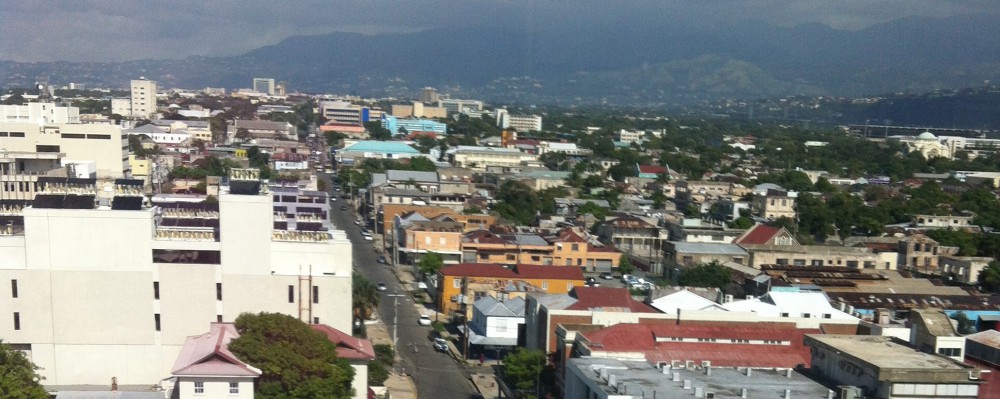
"And all I offer here is the distilled poetry of my existence..." Claude McKay, Poet Laureate of Jamaica, 1890-1848 I have been a reporter since 1998, covering mainly business and politics. I have also capitalized on the many skills journalism requires to become an all-around communications specialist. In addition to being a professional curious person and communicator, I have a bad case of the travel bug and can't seem to stay put. Finally, I have put my skills to work as a volunteer in the community wherever I have lived. Now, follow me as I combine these compartments of my life in Kingston, Jamaica, where I am a writer, reporter, journalist and lecturer.

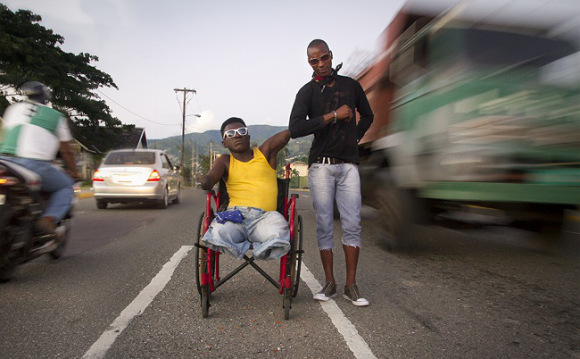
Joshua Brown, survivor


joshua brown
Photo by Varun Baker.

At some of Kingston’s main intersections, on any given day, you might see a pair of young men darting in and out of the traffic. One, named Joshua Brown, is in a wheelchair and his arms and legs are stumps, as he was in a car accident years ago. Another young man pushes him around in the wheelchair and they ask drivers for money. They are always smiling. When people walk by, they issue a friendly greeting.

Read an article about Joshua here. It is an exercise in testing yourself and your own spirit to think about these men; one who personifies determination (among other qualities) and the other loyalty.

A former Cuso volunteer, Varun Baker, has worked with these two young men to create a photo exhibit. Check it out here. Congratulations Varun, who is now showing in the National Gallery!

Blue Mountain Peak


I was awoken by my alarm at 3am this morning to get ready for a hike to the Blue Mountain Peak. After convoying up past a tiny community called Mavis Bank (where some of the island’s fastest runners come from), we all loaded into 4×4 vehicles and headed to Whitehall, a farmhouse used to accommodate hikers. We departed at 7:04 am.

Blue Mountain Peak is an elevation of 7,402 feet and lies about two hours north-east of Kingston. It is the second highest elevation in the Caribbean, and on a clear day, you can see Cuba. Most hikers depart around 2am in order to catch the sunrise, but our group did not as it can be treacherous. The first part of the hike is the most challenging in terms of how steep it is, and is called Jacob’s Ladder. Judging from what I’ve heard about Jacob’s Ladder, I was pleasantly surprised that while it was not easy, it was not as difficult as I thought it would be.

We hiked up for about 2.5 hours, through a wide range of vegetation, temperatures and terrain. At times, the soil was bright orange, at times it was grey shale rocks and sometimes brown and dusty. The trees and plants all grow ferociously and parts of the forest appear magical, what with the hanging moss and massive palm and fern trees. The sounds are amazing as well: tree frogs, birds, the wind shaking the trees. And the views. Whenever we came upon an opening in the woods onto the mountains, it took my breath away. It is like an ocean of green, rolling, gigantic mountains. Sometimes the mist whistles through, pushed by bursts of wind. It had to be about 15 degrees cooler up there.

The peak yields stunning views of an eastern community called St. Thomas to the south and Cuba to the north. We lounged at the peak for awhile and then headed back down. This was harder due to trying to stay upright, but I managed to fall only once. We saw several other groups of hikers, everyone looking exhilarated.

Upon returning to Whitehall, we were served a delicious meal of jerk chicken and fish, yams, boiled bananas, salad and vegetables. The meal was made by Miss Lynette and her sons. Miss Lynette told us she has 12 children (three have passed away). She makes a living cooking and working at Whitehall. While we ate, her grandsons played with a red toy truck, and goats, chickens and cats frolicked around us.

On the way down, I could not help but feel emotional. This was the first hike of such a scale I have ever done. To climb up such an imposing feature of nature, to conquer it, then climb back down, in one piece, is an amazing feeling of accomplishment. I would do it again in a second. Maybe not tomorrow though, as my legs are a bit wobbly.

Does race matter in terms of White House coverage?


Check out this Washington Post article on race and reporting on the White House. It does a good job of framing the issue in a respectful but provocative manner. I think the same questions can apply to Canada’s Parliament Hill, where a majority of the reporters are white males.

Here’s an excerpt:

Condon, a journalist in Washington for 31 years, offers a mixed assessment of whether race makes a difference in how the presidency and the issues surrounding it are portrayed: “You don’t have to be Protestant to write about a Catholic president or Polish to cover Lech Walesa and Solidarity. People here are awfully good reporters. They cover lots of things that aren’t in their backgrounds.”
But at the same time, Condon acknowledges that a reporter’s racial heritage can influence his or her priorities and perspectives and the kinds of questions that get asked at the White House. He notes that April Ryan — an African American who reports for the American Urban Radio Networks — is “often asking questions that someone else would not ask.”

Yes, the facts remain the facts and the person relaying the message is relatively irrelevant, but at the same time, it is helpful if reporters understand the implications of the system that privileges white skin. Different experiences and perspectives help to drive and shape alternative points of views and agendas. We need more of that, not less. Have a great day!

SUMFEST!


After a whirlwind, last minute trip to Montego Bay for Sumfest, I am now headed back to Kingston. Sumfest kicked off last night with Dancehall night. It was amazing, with my favourite being Lady Saw. Still, at 44, she just never seems to have a bad night. Have a great Friday!

Can you measure the value of life?


Could there ever be an empirical way of measuring how much any given society values life? If one were to use a crude measure of media attention, in particular, to births and deaths, it would seem that white babies who are third in line as heir to the British throne are most valuable. Young men in Jamaica who prefer to wear what are traditionally regarded as women’s clothes are of almost no value. 

Clearly, however, there is no way to measure how much a society values a life relative to various social characteristics, but that would make a fascinating Phd thesis, I suspect. In the meantime, we are left with a striking and devastating situation in Jamaica. While much of the world celebrates the birth of William and Kate’s son, parents or friends and other relatives in St. James are mourning the horrific death of their son, brother, friend.

His or her name was Dwayne Jones. We know that he was dancing at a party the other night. He was wearing women’s clothes and it was reported by media that people at the party assumed he was a woman. He was dancing with another man, when another woman recognized him and revealed his identity. His dancing partner then chose to feel around in his genital area, only to discover the person was actually a man. (Fellow blogger Annie Paul also wrote about this story and so did Damien Williams:

In Jamaica, a 17 year old was chased by a baying mob of __________ (creatures masquerading as humans); stabbed and chopped multiple times. His lifeless body dumped in nearby bushes and those who robbed him of his life went back to their party as if nothing had happened. In the wake of finding his corpes, there has been little outrage on social media (just the usual and activists and a few others who acted as pseudo reporters, like OGNR). I can hear the crickets. The silence reverberates! There is no national call for a march or for intercessors to pray for a healthy society. No call for justice. Why? You guessed right. The dead boy belongs to a species too low to be worthy of compassion, justice or a march. He is a Homo-LGBTQ!! Yes, those are a lot lesser than Homo-Sapiens.The Jamaica Gleaner mentioned the murder but they did not mention that this was a possible hate crime, motivated by the teens perceived sexual orientation and gender non-conformity. In fact, the Gleaner deliberately tried to distance this murder from the youth’s sexual orientation. A first. Sexual orientation is often important when we are writing about (homeless) squatters in affluent communities; or loud brazen revilers who have no regard for respectability politics; or when we want to discuss pedophilia; or when they are wreaking havoc in New Kingston.

Oh, no call for justice!!! This teen caused his own murder (like Trayvon did, I guess). He provoked a crowd who were charged with the moral obligation to protect Jamaica’s values and morals and spiritual legacy to murder him. This is the will of God. This is just recompense for his sinful life. So, we stay silent and we hope it will go away – that his blood will be silenced because it is complicit in an abominable “lifestyle”. And Jamaica’s god and all his minions remain silent!!! 

As you were! Let the crickets continue to “chirp”. Back to your silence. Continue giving violence a pass – as long as it is against a Homo-LGBTQ, right?)

A violent confrontation ensued in which the young man was “chopped” to death (media’s word, not mine). His body was disposed of in the bushes. Apparently, there were numerous stab wounds and gunshot wounds. Imagine how much fury and anger this mob had to have discharged. Imagine then the battered body lying in the bushes. Imagine then that one life is now over unnecessarily. For more on the story, click here.

The media has not, to date, done much investigation of the story. It has not made many headlines. In fact, the birth of the Royal Baby was front page on both major newspapers yesterday. To say that this is an injustice is an understatement. 

So I go back to my original question: How do you judge how much a society values life? In this case, it seems that a young man who chooses a lifestyle that many Jamaicans fear or are offended by, not much, at least if we judge by the attention this horrific crime has been awarded. 

UPDATE: Here is a Jamaica Gleaner story from today’s paper.

Royal Baby is here, along with about 370,000 other new people


Countdown to the Royal Baby

The whole world was waiting for news about the happenings in someone’s womb for about a week, so it must now be relieved. The royal baby is here, a boy, and the reactions are more interesting than the actual event. The Parliament Buildings in Ottawa were lit up blue and countless world leaders congratulated the young couple, William and Kate, if you didn’t know.

Here in Jamaica, there is lots going on, as usual, so the royal baby’s birth hasn’t seemed to make many waves. Also, there’s the whole colonialism thing that might make some Jamaicans feel ambivalent about this birth. Prime Minister Portia Simpson-Miller has said it is time for Jamaica to go its own way.

“We have got to a stage and a level of our country’s development and independence, having celebrated 50 years of Independence, it is with Jamaicans to take the decision, and the changing times call for changes,” the prime minister said, arguing that she remained The Queen’s biggest fan.

However, a group of Jamaicans gathered last week (check out the link above) for a luncheon to countdown to the birth, complete with sculpted watermelons and blue and pink cakes. This crowd is what Jamaicans would call “uptown,” that is to say, the wealthy demographic. Reaction to this luncheon on Facebook was interesting, with the mainly young commentators expressing outrage.

The Gleaner ran a wire story about the birth, while the Observer doesn’t even seem to have the story on their site.

In addition to reaction on Facebook, Twitter’s response was fascinating as well, ranging from ecstasy to indifference to confusion to an admonition to people for caring. However you feel about this issue, there is no denying it is big news, and polarizing news at that, depending on which country you happened to be born in.

I Support Jamaica!


Crowdfunding is the latest iteration of fundraising. Essentially, people harness the power of the Internet to raise money for projects, which are usually smaller-scale and often aim at reimbursing the donor. Jamaica’s JN Foundation and the Jamaica National Small Business Trust has just launched a crowdfunding program called I Support Jamaica. It is intended to target the wealth of the Jamaican diaspora, as well as any other individuals who want to help.

I was invited last Saturday to a Blogger’s Brunch, where a group of us heard about this project. It is easy, with this type of thing, to get lost in jargon and technicalities. But to explain it in simple terms, people visit http://www.isupportjamaica.com, find a project that speaks to them and either donate money via the web site to a not-for profit project or provide a loan to a micro-enterprise. The potential beneficiaries have a limited period of time to raise the funds, and if they do not succeed, they return what they did manage to raise to the donors.

“This project allows people to get involved from all over the world,” said JN’s Saffrey Brown. “This is a way of really opening up resources for groups and individuals,” she added.

For example, Alpha Boys School is currently seeking US$4,700 for two Mac computers and two copies of Adobe to teach the boys the marketable skill of graphic design. (Alpha is a residential school for at-risk boys between the ages of 9 and 18).

Crowdfunding is still in its early days, but it is promising in that individuals, both donors and beneficiaries, can be empowered with relatively minimal action and funds. And these minimal actions can have a real impact on people’s lives. It seems especially suited for Jamaica, as there are so many hard-working, passionate and innovative people. They are up early, before the sun, with pushcarts laden with fruit, or tending to their bees, or molding pottery. They often just need a small burst of funding to take their business to the next level.

In my work with YOU, I have heard this story many times (and written some about it here), either from people seeking funding based on a business plan to expand their business, or from people who have done it already and want to grow beyond the borders of their neighourhood. Bank loans are possible, but hard to come by, so crowdfunding seems like a hopeful option for these entrepreneurs.

Watch this video about Baldie’s Lumber Yard that illustrates this situation perfectly:

And these videos from JN:

Here’s a little more about the project from JN’s web site:

I SUPPORT JAMAICA is a project which seeks to provide an easy and creative way for Jamaicans in the Diaspora and elsewhere and friends of Jamaica to provide financial support to projects, both microenterprise and nonprofit, that the JN Small Business Loans Ltd. consider worthy and reliable.

Jamaicans are known for their indomitable spirit in business, sports, music and any other area they choose to become involved in. As Benjamin Disraeli said, “The secret of success in life is for a man to be ready for his opportunity when it comes.” Unfortunately, this opportunity tends to hinge on the catalyst of money, and thousands of small entrepreneurs are unable to realize their true business potential because of their inability to access financing from traditional sources. The inherent perceived risk and the lack of adequate collateral are cited as the primary causes for this problem.

In an attempt to provide a tourniquet for this inherent business practice problem, I SUPPORT’s mission is to deliver innovative and accessible credit in a timely and profitable manner to micro and small entrepreneurs in Jamaica who have limited access to loans from traditional banking sources. The objectives of this project are to assist micro entrepreneurs to increase their income and improve the quality of their lives, create new jobs and to support the development of the Jamaican micro enterprise sector.

I SUPPORT also provides a platform for anyone who wishes to donate money to non-profits in Jamaica.

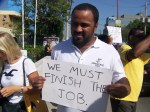
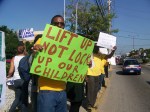
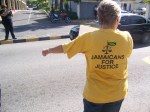
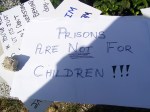
JFJ protest- #Liftupnotlockup


On Thursday, July 18, Jamaicans for Justice held a protest that lasted 67 minutes. It was held in honour of Nelson Mandela’s Birthday, during which it was suggested to spend 67 minutes (one for every year of Mr. Mandela’s service) in service. The protest was held to raise awareness of the government’s treatment of children in state care. Specifically, many children who come in contact with the law are placed in police lock-ups and children have historically been placed in adult facilities, which is in contravention of international law.

I attended the protest, which was held outside of the Ministry of Youth and Culture, for the story I am working on about this issue. I took some pictures and talked to both side, ministry staff as well as the protesters. JFJ delivered a letter to Minister Lisa Hanna, but dialogue between the two entities has of late been tense, to say the least.

Armed with Awareness of Our Own Perspective- Journalism in Jamaica- www.policyplay.com


Today I have a piece up on http://www.policyplay.com, a new web site that is still in Beta mode, but you can check it out here. I will be writing more pieces for this site on development and public policy. Here is the description for the site:

PolicyPlay™ is an international web log featuring original articles on entrepreneurship, governance, ethical finance, clean tech, social justice, and urban planning. Its headquarters are in Toronto, Ontario, with contributors from around the globe. PolicyPlay™ launched in an effort to provide high-quality articles with potential policy implications that casual viewers, policy leaders, businesses and governments could all benefit from reading.

In addition to columns by the founding core group of contributors, PolicyPlay™ encourages politicians and celebrities along with academics from around the globe to contribute on its wide range of available topics. The web log is also open to specialist bloggers who focus on priority areas such as impact investing, global health issues, ethics and more. PolicyPlay™ leverages an editorial-review process for all its published articles.

The web log distinguishes itself from others by ensuring only high quality publications from experts and thought leaders. As a trusted, leading brand on delivering quality information, PolicyPlay™ emphasizes system-change inspired thinking and writing with potential policy implications.

Have a great day!

Do young people care about politics?


Getting adults interested in politics, let alone participating, is difficult enough, at least if one judges by voter turnout rates. In Canada, the last federal election saw 61.4 per cent of adults vote. That is not quite a historic low, but close to it. And it is even worse at the provincial and municipal levels, where usually only about a third of the eligible population votes.

In Jamaica, voter turnout federal elections have seen a similarly precipitous drop, from a high of 86.91 per cent in 1980 to a low of 53.17 per cent in 2011. The world over, a group of interested parties are perpetually trying to figure out why people don’t vote and how to get them to do so, at least for the foreseeable future, while voting remains the only instrument democracies employ to choose leaders.

Several studies have shown that voting is a habit that must be created in one’s early years, that is, as soon as a youth reaches the legal voting age. It has been shown, too, that youth coming from a politically oriented family, where parents vote regularly, are more likely to vote. Civic education courses in school help as well.

A recent study of youth in four Latin American nations (Dominican Republic, Costa Rica, Nicaragua and Colombia) show some interesting results about young people and political participation in local government. Conducted by the United Nations Development Program, the study looked at the roles young people take in public policy decision-making and human development. According to the report, local government is most accessible for youth and so most likely to be where youth access political participation opportunities. (The study included 41 interviews and focus groups and dialogues with close to 200 youth, as well as 130 surveys).

The youth indicated that they are motivated to participate, whether it be in social or political organizations, for a few reasons, with the most popular being personal motivation (36 per cent) and an attempt to help their community (30 per cent). And what was the response as to why they don’t participate? The reason most cited was “Opportunities to influence changes are found in other circles” at 39 per cent.

An interest on the part of young people to be part of their local level was detected, but at the same time many young people experience feelings of rejection and/or constraints. From this perspective, young people want to become stakeholders and a creative force with the capacity to influence decisions which affect not only their lives but their communities, with the understanding that they will eventually no longer be youth but aspire nonetheless to live in a burgeoning community with opportunities. That is to say they aspire for a “virtuous circle” of human development which implies, on the one hand, political articulation producing beneficial public policies for both the youth itself and the community as a whole, and on the other hand, assuming the role of“change agents.”

Several pilot projects in communities were found to have produced results in terms of increasing dialogue and participation in local government. Interestingly, these projects used hip hop music and soccer as a means of creating links between youth and government.

So it is clear that young people do not get initiated into the political realm through traditional means:

As can be seen, the creation of an identity and political participation in young people is not always articulated in the formal spaces of participation offered by government and the local political system (councils, public consultations, public council meetings or local assemblies, development plans, or political parties). However, neither can it be said that these are articulated fully outside such formal spaces. Rather, a selective use on the part of the youth groups of the formal and informal spaces, as mentioned above, was noted, with young people tending to engage in multiple dimensions and activities.

This is a useful finding, in that going forward, youth can be drawn in through non-traditional programs. However, a barrier of distrust must be overcome. While more than 80 per cent of youth believe that local government is the best way to influence public policy and participate, almost all respondents (98 per cent) do not trust government to properly manage funds. Misinformation, or lack of being informed about political processes is another barrier, as respondents were not able to provide basic information about their governments when surveyed.

To conclude, I will leave you with a thought from the study that speaks to both expectations and the way people participate are changing:

There is emerging evidence showing that many young people are increasingly avoiding the traditional forms of political participation such as voting and the affiliation with political parties, and instead opting for more direct and innovative forms such as volunteerism, artistic and cultural expression, sports, and social auditing exercises, which can have the same effect in terms of their empowerment. As active political participation can play an essential role both in improving human development and democratic governance, it is important to understand if this is due to economic and political conditions and/or reflects rather natural dilemmas in the evolutionary process of democratic governance.