Unknown's avatar

About Kate Chappell

"And all I offer here is the distilled poetry of my existence..." Claude McKay, Poet Laureate of Jamaica, 1890-1848 I have been a reporter since 1998, covering mainly business and politics. I have also capitalized on the many skills journalism requires to become an all-around communications specialist. In addition to being a professional curious person and communicator, I have a bad case of the travel bug and can't seem to stay put. Finally, I have put my skills to work as a volunteer in the community wherever I have lived. Now, follow me as I combine these compartments of my life in Kingston, Jamaica, where I am a writer, reporter, journalist and lecturer.

Nelson Mandela Day


Picture courtesy of Google Images

Picture courtesy of Google Images

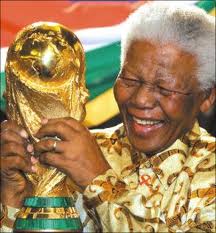
Tomorrow, July 18, is Nelson Mandela Day. In honour of Mr. Mandela’s 67 years of public service, it is suggested that people spend 67 minutes doing something to help someone else. Here in Kingston, there are several events planned, including a stand outside the Ministry of Youth and Culture aimed at raising awareness for children involved in the correctional services system. There is also a plan for a 67-minute yoga class in Hope Gardens.

With Madiba in ill health, it seems particularly appropriate to honour his unbelievable commitment, dedication and courage in the face of conditions that would probably defeat the spirits of most people.

Here are some suggestions from the web site:

Make a new friend. Get to know someone from a different cultural background. Only through mutual understanding can we rid our communities of intolerance and xenophobia.

Help out at the local animal shelter. Dogs without homes still need a walk and a bit of love.

Take someone you know, who can’t afford it, to get their eyes tested or their teeth checked.

To the poorest of the poor, shoes can be a luxury. Don’t hoard them if you don’t wear them. Pass them on!

Learn the story of someone older than you. Too often people forget that the elderly have a wealth of experience and wisdom and, more often than not, an interesting story to tell.

Waiting for Adidja


Waiting for Adidja

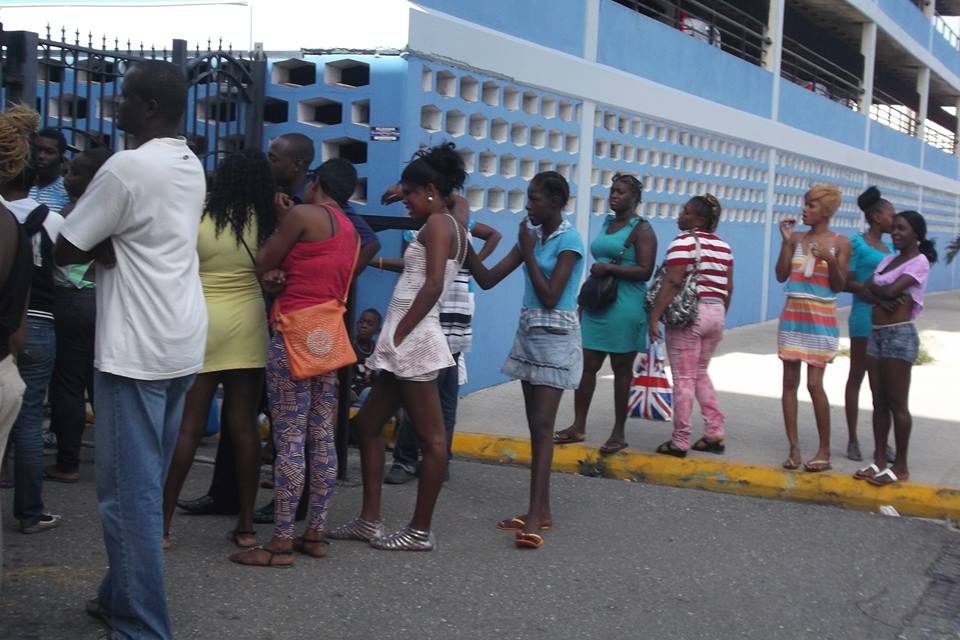
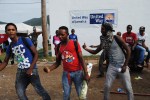
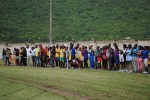
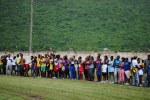
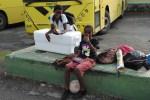
Vybz Kartel (real name Adidja Palmer) is a big deal here. At the age of 37, he is one of the most successful and prolific dancehall deejays. Youth emulate him, from his bleached, tattooed skin, to his style of dress. And he has perfected his image as a gangster to the point that he is now in jail on charges of attempted murder. His trial is ongoing, hence the picture today from my colleague Suzanna, who works near the Supreme Court. He has many devoted fans, as evidenced by these people waiting to catch a glimpse of him. He has not been feeling well as of late, as he made a trip to the hospital recently with chest pains. Hopefully, he is feeling better.

He must be feeling well enough to continue to produce music from his jail cell, or his producers have old tracks stored up, because Vybz Kartel keeps putting out tracks. If you want to know more about Adidja/Kartel, visit his wiki page. As Suzanna points out, it is entertaining, check it out here here. Whatever you think of the choices he has made in his life, and some of the lyrical content (it has a tendency to be violent and homophobic), his music is undeniably catchy.

CVSS Summer Games


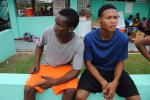
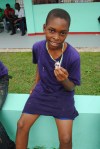
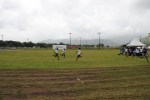
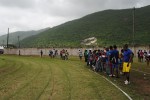
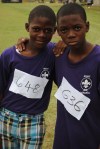
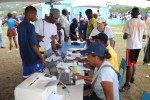
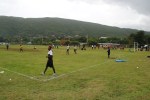
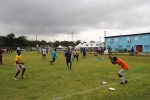
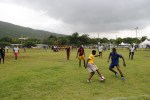
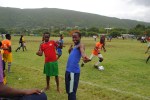
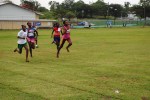
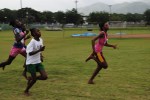
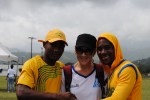
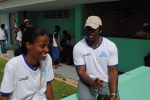
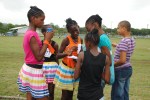
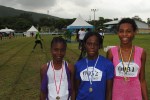
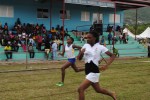
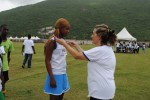
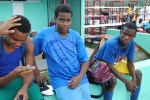
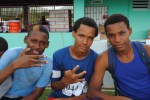
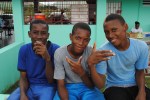
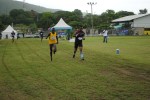
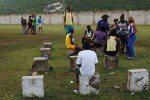
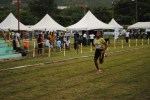
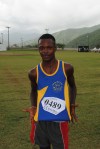
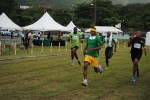
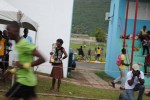
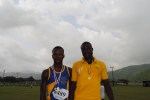
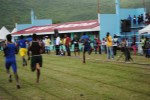
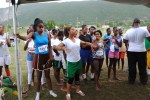
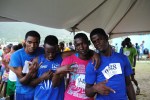
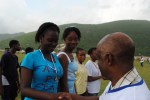
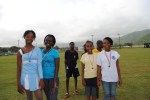
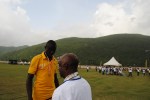
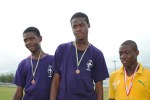
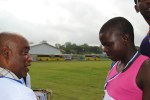
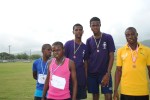
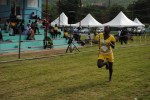
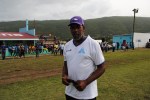
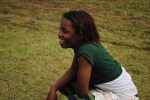
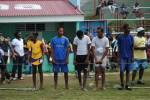
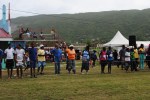
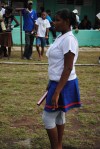
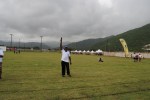
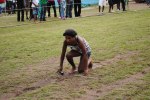
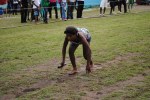
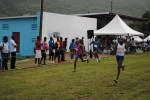
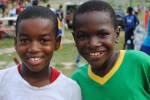
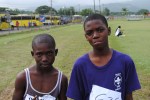
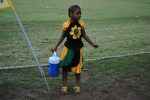
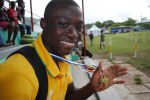
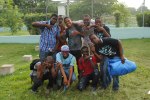
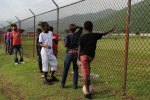
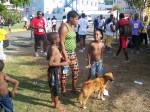
Saturday’s CVSS Summer Games were a success! Hundreds of youth from across Jamaica participated in several events. Rise Life Management won the overall gold medal, but forgive me the cliche, everyone was a winner, it seemed. The youth were enthusiastic, engaged and it seemed they had trained hard for all the events, which included football, cheerleading, running and relays, among others. And spirits remained high despite a postponement for rain.

I could not get enough pictures, enjoy!

Grace Kennedy 5K Run downtown


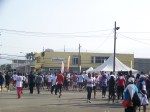
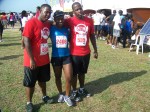
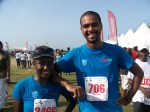
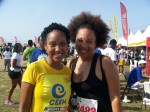
This morning, Grace Kennedy (a major company here in JA) hosted its fifth annual 5K Run. It benefits promising youth who do not have the financial means to attend tertiary education. We heard from a young man who has benefitted prior to the race. We also stood for anthem and then we were off! Apparently, 6,000 runners and walkers took part, which is a huge number for these road races. I somehow managed to come in at 23:33. My best time has been 26:11, but that is for a distance of 5.3 KM, while this race was 5 KM exactly. It was a beautiful, calm day and the route took us through the downtown streets. The harbour was the flattest I have ever seen it and the sunshine was hazy but strong. It was a great race. Tomorrow, there will be lots of pictures from the CVSS Summer Games, stay tuned!

CVSS Summer Games


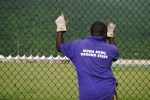
Tomorrow, hundreds of youth from across Jamaica will gather at the University of West Indies’ Mona Bowl for an athletic competition. Called the CVSS Summer Games, this event is intended to give young people a chance to compete who might not otherwise have the opportunity. The youth are from “at-risk” communities, and compete in various sports, like cheerleading, football and racing.

The Minister for with Responsibility for Sport, Natalie Neita-Headley, is scheduled to attend, as is the Canadian High Commissioner, Robert Ready. All will hopefully join in at 11:00am, when an open-invitation 100 metre race kicks off. I attended last year, see pictures above, and it was a great time. The mandate of the games (which are run by the Council for Voluntary Social Services) is to increase self-esteem and confidence through the training prior to competing. So far, 20 sponsors have lined up to support this worthy event. I will be taking pictures for it, so stay tuned!

JA’s least trusted: politicians and police


Transparency International has released the results of a survey that reveal a low level of trust amongst the public of its police and politicians. This is not really surprising news. 86 per cent of respondents (out of 1,003 people surveyed) believe that political parties are affected by corruption, while 85 per cent believe the same about police.

The legislature is slightly better at 74 per cent, while 36 and 30 per cent don’t trust businesspeople and the media, respectively.

These results are part of Transparency International’s Global Corruption Barometer. You can check out more results here.

On a more positive note, Jamaica rated high on the Human Development Index.

I am thinking about these figures as I am writing at home under cloudy, thunderous skies. We have the remnants of Tropical Storm Chantal passing over and flash flood warnings are in effect. Enjoy the rest of your day!

Home!


What with the catastrophic flooding in Toronto and Tropical Storm Chantal, I was not sure I would make it back to Jamaica. I arrived, however, safe and sound, happy to be back in the heat. Chantal has now been downgraded and we are just expecting heavy rains.

Me and Julie, a decade later


DSC_0021

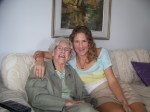
This is Julie and I. We met about a decade ago through a mentoring program run by Big Brothers and Big Sisters of Canada. We used to meet during school hours, when we played hang man and did arts and crafts. As she grew older, we moved on to shopping and movies and concerts (Rihanna!). We cultivated and maintained a relationship beyond the boundaries of the mentoring program and I have gotten to watch her grow up. She graduated high school a year ago and will attend college in the fall. I am so proud of her and feel lucky to have her in my life. Congratulations Julie!

Some more navel-gazing-> Who is a journalist?


Who is a journalist? Is this even a relevant question?

As social media continues to change the landscape of the way in which news is delivered, the debate over this question and many others is ongoing. (Here is a good article). People from academia and the profession itself naturally have different and often polarized points of view on who is a journalist.

I think it is way too early in the evolutionary process to make any definitive statements. One factor, however, that may distinguish journalists, stands out in my mind. A clear demarcation exists between people who choose journalism as a profession and those who gather and disseminate information as a citizen whose primary occupation is not a journalist. People who choose to be journalists more often than not receive academic and professional training and make a living from it.

In theory and ideally, journalists aim at relaying the truth as a primary goal. Secondary reasons often vary, but they could include advocacy or activism based on a personal agenda. Here is where the non-professional journalist comes in (sometimes called citizen journalists). More often than not, these people have a primary profession that is not journalism, thus, when they disseminate information, it could be said that their primary motivation is to disperse this information with a particular goal in mind, and one which is secondary to simply airing the truth. (As I stated, this is the ideal situation. I realize journalists are not free of motivation or bias, and thus usually pursue an agenda at some level, whether it is their own or their editor’s or the company for which they work.)

Social media has changed the news-delivering landscape such that there is now unprecedented levels of access to information. So people who are not trained (training is defined as the particular techniques of writing different types of news and feature articles, how to find information, ethics and how to interview subjects, for example), nor choose it as a profession can now do the same things that journalists do in terms of disseminating information. This difference calls into question objectivity because “non-professionals” are seen to be acting with specific motivations for finding and releasing information. The other factor is that this information is conceivably readily available to all, with the modern difference being the level playing field that the Internet creates. (excluding the digital divide, it must be said). In terms of access to information, journalists historically were privileged members of society in that their profession created opportunities not readily available to the general public.

And although many profess objectivity, journalists seek out and obtain information with a variety of goals, whether to act as a whistleblower, to simply seek recognition or notoriety or to act as an advocate. But perhaps we are starting at the wrong place when we debate terms such as objectivity and bias and advocacy. In any case, as the debate rages on, it seems to me that this act of choosing journalism can be a starting point because going forward, clear demarcations between professional and non-professional news producers can alert consumers as to the source, which can help people determine reliability and accuracy.

It is also instructive to pay attention to who is debating this issue. It is mostly the journalistic community. There is no doubt that it is an interesting academic exercise, but does it provide value anywhere? Does it add to the conversation? An answer might lie in the fact that when the information is out there, does it really matter who discovered it and exposed it? Take, for example, the case of Edward Snowden. Does the fact that he is 29, has a girlfriend and used to bash whistleblowers online matter? Does it change the facts surrounding the government’s activity? Of course, it does not, nor do his motivation or morals. There may be some merit in debating who is a journalist if we want to get into regulating the profession. But, as I have stated before, I think this is dangerous territory because there are few measureable inputs and outputs, nor is journalism a science. It is an activity characterized by millions of shades of grey, by personal opinions, perspectives and motivations. You cannot measure journalism like you can a doctor or lawyer’s performance (eg lives saved, hours of training, cases won), so regulating becomes difficult. Of course, you can track the number of errors made in a story and if someone exceeds this threshold, they could lose their license, but this seems to me to be the only thing you could regulate.

So is choice the common denominator that could allow us to determine who is a “real” and “objective” journalist? Or do we need to back up even more and acknowledge that this doesn’t even matter anymore within the context of social media? If we decide that choice matters, where do we go from there? Do professional journalists still matter, and if so, what is their role in comparison to those who participate in spreading information as an activity secondary to their chosen profession?

(Also check out this interesting study, which found that Twitter and newswires do not differ much in terms of which delivers news first. The concluding paragraph of the study: In this paper, we asked whether Twitter and newswire providers report on the same events and whether either source prominently leads the other. Our study has suggested that Twitter covers most of the events that are reported by newswire providers and that many events reported in Twitter are not mentioned in newswire. However, for the events that both streams report on, there is no evidence that one source leads the other in terms of breaking news. In general, while Twitter can break news before newswire in limited cases, for major events there is little evidence that it can replace newswire providers. On the other hand, the greater coverage of hyper-local news observed within Twitter sup- ports the idea that it can be used for localised use-cases such as community policing or local search.
Home in Canada


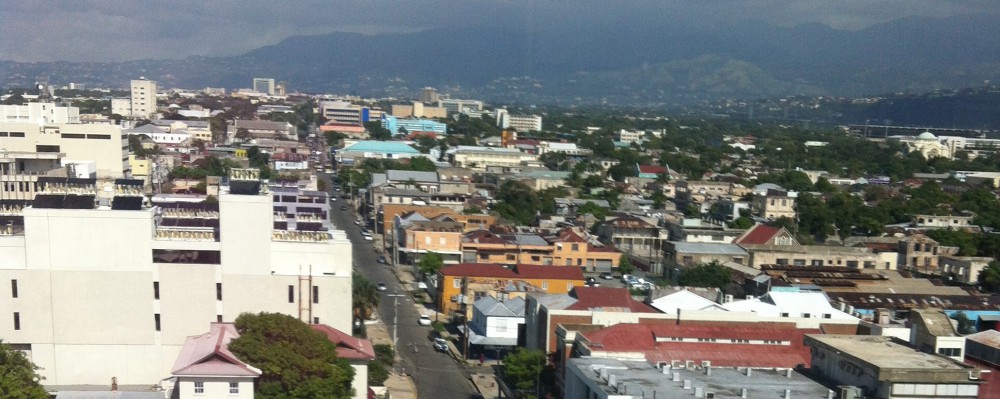
Scenes from visits and the ByWard Market in Ottawa.