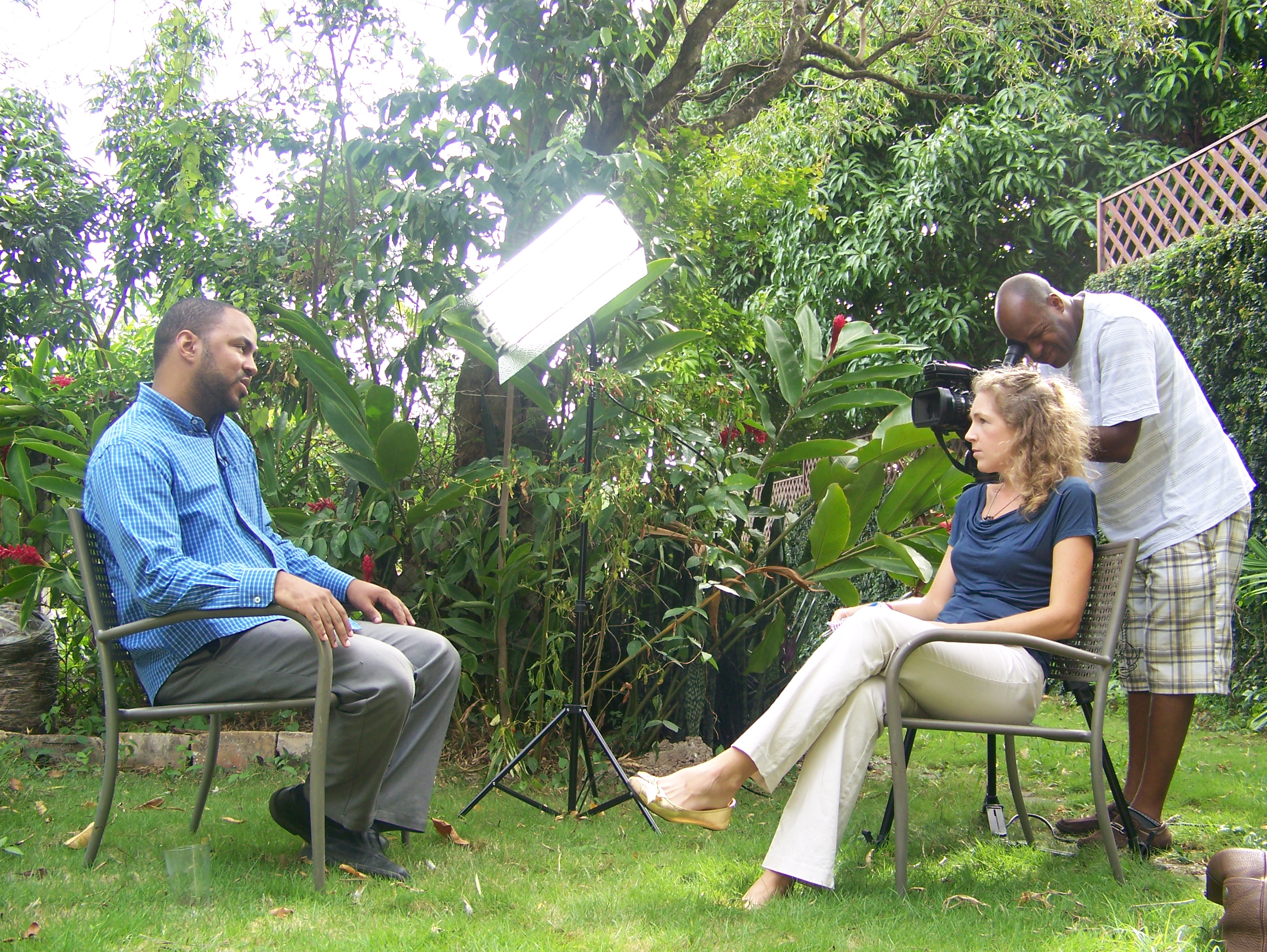
I have just about wrapped up the interviews for my story on children in prison. Here is the last one, with Alexis Goffe of Jamaicans for Justice. Enjoy your Friday!


I have just about wrapped up the interviews for my story on children in prison. Here is the last one, with Alexis Goffe of Jamaicans for Justice. Enjoy your Friday!
Being back at home, I have been reunited with all my political philosophy texts. I did not think I would miss them, but I did. Especially my favourite, Hannah Arendt. Here is my favourite quote from her, that I always return to:
The new always happens against the overwhelming odds of statistical laws and their probability, which for all practical, everyday purposes amounts to certainty; the new therefore always appears in the guise of a miracle. The fact that man is always capable of action means that the unexpected can be expected from him, that he is able to perform what is infinitely improbable. And this again is possible only because each man is unique, so that with each birth something uniquely new comes into the world. With respect to this somebody who is unique it can be truly said that nobody was there before. If action as beginning corresponds to the fact of birth, it it is the actualization of the human condition of natality, then speech corresponds to the fact of distinctness and is the actualization of the human condition of plurality, that is, of living as a distinct and unique being among equals.”
I must reblog this as well, great article! Thanks Annie Paul!

View original post 1,222 more words
I am in Canada visiting family, running around trying to catch up with everyone. It is lovely, but little time to blog. So I am reposting this great piece on citizens’ rights when stopped by police.
In Jamaica its so normal for the police to stop your car and search it if they want that the ruling of a judge saying there is no legal basis for such police action comes as a thunderclap. According to Barbara Gayle, writing in the Gleaner:
A Supreme Court judge has ruled that the police have no power, under the Road Traffic Act, to arbitrarily stop and search motor vehicles, opening the door for a flood of lawsuits.
The police have repeatedly argued that the law gives them the power to stop and search vehicles, and that this has resulted in the apprehension of criminals, the recovery of stolen vehicles and stolen farm produce.
But Justice David Batts says the police are abusing this power.
Batts made the ruling when he ordered the Government to pay $2.8 million in damages to a motorist who was assaulted by the police…
View original post 584 more words







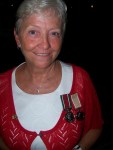

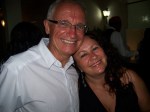
The lawn was decorated with screens showing Canadian scenes and we were treated to a wonderful (as usual) performance by the young and talented Alpha Boys. The High Commissioner, along with his wife and two children, greeted everyone personal. He also gave a speech about Canadian/Jamaican relations (there are 300,000 Jamaicans living in Canada!), as did the Justice Minister, Mark Golding. Ready also acknowledged his assistant, Barbara Thomas, for her service in Afghanistan with two medals of honour.
It was a great night, except for the fact that we had to say goodbye to fellow volunteer John, who will be greatly missed. Now, off to fly home for a week!
It is Canada’s 146th birthday today. Check this video from my favourite Canadian comedian, Rick Mercer, who explains everything you need to know about Canada. I will be there tomorrow to see my beloved family and friends! Enjoy your Monday!
Breadfruit is the new bread, baby (Check this link for a No-Maddz video and thanks to Kalala for great pics).
Last night we went to see No-Maddz perform their new show, “Breadfruit is the new bread, baby.” I do know I fully enjoyed the performance, but I don’t really know what was happening. Confusion seemed to reign amongst the audience, but that didn’t stop anyone from laughing hysterically and hooting and hollering. There seemed to be a general consensus that people were waiting for a play to start, but it never really did, rather it was a series of non-stop, very expressive musical pieces.
There is no doubt that this group of young performers is talented. They have sort of a reggae/bohemian vibe, with a little social activism going on. The performance last night was described by the Gleaner as a musical with some dub poetry thrown in. Award-winning actor and band leader (Sheldon Shepherd, who won Best Actor for Better Mus Come at American Black Film Festival Awards) described the concept of the show as originating from a Facebook post he wrote after winning the award.
“Breadfruit is good for your heart, it is good for your skin and your digestive system, and it tastes good too. Bread is the popular guy in the equation and even comes sliced. It’s easy,” he said.
“It is really a metaphor. We say, here we are breadfruit, take us in our skin, take us roasted, take us fried.”
Yes.


Yesterday, my colleague Suzanna, who works downtown, was privy to the circulation of this bus (photos courtesy of her). This bus is a mobile testing unit for HIV/STI and syphilis. It is run by the Ministry of Health and the idea is to go to where the people are who might have neither access nor information about getting tested and why they need to do so.
A couple of weeks ago, I was also witness to a free mobile testing clinic (about 35 people passed through), and it was efficient, effective, confidential and respectful. (Not unique to Jamaica, there still seems to be a stigma attached to AIDS/STIs here, so confidentiality is an essential component of reaching people and convincing them to get tested and treated if need be. Guaranteeing confidentiality in a small, remote community can also be a problem, one of the workers said).
Overall, the Ministry of Health has a comprehensive effort aimed at preventing HIV/STI, check it out here, but the Ministry’s National HIV/STI Programme is a $236 billion effort, funded by various agencies, including CIDA, USAID, the WHO and the UN. Much of the advertising seems to take a lighthearted tone and uses Patois, like on the bus.
Here are some facts about Jamaica’s rate of infection (taken from a 2011 Ministry report):
From 1982 to 2011, there have been 16,264 cases of HIV/AIDS in Jamaica.
Kingston & St. Andrew, St. James, and St. Catherine, with 50% of the Jamaican population, account for 56% of reported HIV cases. This distribution remains unchanged from 2010.
The most urbanized parishes have the highest cumulative number of reported HIV cases: Kingston & St.Andrew – 1570.1 cases per 100,000 persons, and St. James – 2094.6 HIV cases per 100,000 persons.
Parishes with significant Tourism based economies have the next highest level of cumulative number of reported HIV cases since the start of the epidemic: 1162.5 cases per 100,000 persons in St Ann, 1058.3 cases per 100,000 persons in Westmoreland, 1033.1 cases per person in Hanover, 994.8 cases per person in Trelawny.
All 4 parishes that comprise the Western Region are counted among those with the highest cumulative number of HIV cases.
Six parishes had an increase in HIV cases reported in 2011. The percentage increase in the number of reported cases range from 10% in Westmoreland to 116% in St Mary).
The Ministry’s strategy (and the introduction of a free antiretroviral treatment program and prophylactics in 2004) appears to be working, according to the figures:
In 2011, one thousand two hundred and fifty (1250) persons with advanced HIV (661 males and 589 females) were reported compared to 1503 in 2010.
The total number of reported AIDS deaths in Jamaica between January 1982 and December 2011 is eight thousand four hundred and ninety eight (8498).
Overall, the number of reported AIDS deaths has decreased since the introduction of public access to ARVs. Three hundred and thirty-three (393) AIDS deaths (234 males and 159 females) were reported in 2011 compared to 665 in 2004. This represents a 41% decrease in AIDS deaths since the inception of Universal Access to ARVs in 2004, and a 33% decrease when compared to 2001 (588 AIDS deaths).
The number of deaths reported in St Catherine (37 deaths) represents a 62% decline since the introduction of ARVs in the public sector. However, reported deaths in Manchester and St Elizabeth increased and represent the highest number of deaths for these parishes (16 and 20, respectively) since the introduction of ARVs.
The proportion of reported cases from the most urbanised parishes has decreased in recent years. Fifty-seven percent (57%) of reported AIDS cases in 2011 were from the most urbanized parishes (KSA, St. Catherine, and St. James). This proportion remains the same as 2010, but has decreased from 70% of cases in 2008 and 60% in 2009.
You must watch this video
The Children Inside: Abuse and Neglect in Jamaica’s Correctional System
It is related to the story I am working on about children in Jamaica’s correctional system. Stay tuned.
Since the official announcement that Canada’s Department of Foreign Affairs will merge with the Canadian International Development Agency, there has been little from ministers or even the Prime Minister in the way of illumination or even rhetoric about this topic.
There is, however, plenty in the way of opining from pundits and the aid industry. There appear to be two main schools of thought. The first is that with austerity in fashion, this merger is a smart strategy to bring efficiency and effectiveness to the process of delivering foreign aid. The second is a lament for Canada’s role in the international community and this opinion is often supplemented by Canada’s recent loss of its seat at the UN Security Council. Critics also cite Canada’s dismal failure to reach the call for “developed” countries to budget 0.7 per cent of GNI for Official Development Assistance. (It is now declining and sits at about 0.31 per cent, while the U.K. has managed to reach this goal.)
What we also know, because government always moves like a glacier, is that the merger is ongoing and it will be awhile before the dust settles and we can begin to assess the impact. However, this week, we received a small clue about the “Harper Government’s” foreign aid strategy. Foreign Affairs Minister Julian Fantino delivered a speech to the Canadian International Council on June 21. Most of the speech highlighted the changing global environment: many low income countries are transitioning to middle income countries and the population of youth globally is exploding- nearly half the world’s population is under 25 and the majority live in developing nations.
With this reality in mind, the Harper government sees both a need and opportunity for more jobs, so its foreign aid strategy is focusing on the economy. I give you an excerpt now from the speech, not so much for the information, but for the language:
The new Department of Foreign Affairs, Trade and Development will further strengthen the effectiveness of our assistance. We will do this by:
combining the expertise of the two departments;
increasing our policy coherence on key issues;
placing development issues on an equal footing with trade and diplomacy; and
enshrining in law for the first time the mandate for development assistance and the role and responsibilities of the minister of international development.These changes will make us more responsive to the new realities before us. And they will allow us to use the best set of tools available to address each country’s individual challenges and goals.
A by-product of this strategy is an increased focus on the private sector. The “Harper Government” (HG) has again attracted controversy for involving the private sector in its “extractive” efforts (mostly mining initiatives). But with its priority being “accountability and transparency,” the HG appears satisfied with involving the private sector.
The speech also focused, of course, on the HG’s successes, and by all accounts, it seems that its concentration on maternal and child health has paid off:
Our investments in health, nutrition, education, and child protection are making significant gains. In 2010, Prime Minister Harper led a G8 initiative to improve maternal, newborn, and child health in the developing world. The goal of the Muskoka Initiative is to prevent the deaths of as many as 64,000 mothers and 1.3 million children under the age of five.
Globally, Canada’s support has helped to enroll 23 million more children in primary schools, construct more than 37,000 classrooms, and train more than 400,000 teachers. Sadly, throughout their childhood, many children—particularly girls—face the risk of violence, abuse, and exploitation. As a former police officer, this is an issue particularly close to my heart.
What interested me most, in the speech, however, comes towards the end, when Minister Fantino refers to the question that apparently many people ask about Canada’s role in international foreign aid. Why should we care? Why should we give our hard-earned tax dollars to people in far-away countries? The HG’s answer? I give you the full answer now, because there is a lot to ponder:
It matters because, as the saying goes, no man is an island, and Canada is a compassionate neighbour.
Challenges in other countries affect our investments, our health, the price of our food and gas, our security, and our opportunities to trade with other countries.
Similarly, Canada’s investments abroad protect our interests here at home. When we help other countries advance their economies, we create the conditions for growth, trade, and development. When we help countries stabilize and secure their societies, we stop the aftershocks of violence, criminal activity, and terrorism from spilling onto our shores.
When we provide millions of people with access to health care and vaccinations, we all become more resilient to global pandemics. Development is an integral part of our government’s efforts to promote a more secure and prosperous world. It is my hope that in 50 years, there won’t be any need for development assistance.
It is my hope that we can collectively establish a world where every person is healthy and has enough nutritious food to eat and clean water to drink. A world where every child has the opportunity to go to school. And where every person can get a decent job, support their family, and contribute to their community and country. A world where every person can participate fully in society, free from violence, discrimination, exploitation, and abuse.
In other words, if I can ensure that my grandchildren’s children won’t need to live in a world where poverty is endemic, then we will have done our jobs.
A nice balance between altruism and self-interest perhaps?


