


By most accounts, Jamaica has some work to do in terms of providing an accommodating environment for people with physical and intellectual disabilities. This is despite the fact that the country is a signatory to the United Nations Convention on People with Disabilities.
The Ministry of Labour and Social Services has a dedicated department, as well as a National Policy on Persons With Disabilities, and the country’s Vision 2030 plan also addresses this sector of the population, which numbered around 163,000 in 2001, according to the 2001 Census.
Here is a clearer snapshot:
When the 2001 census data were disaggregated by demographic characteristics, the results were as follows. Just over a half of the population with disabilities (83,019) were females. Some 32,207 (20 per cent) were children in the 0-14 age group (52.5 per cent males) while youth (15- 24 years) accounted for 12.6 per cent (20,617). The elderly (60 years and over) represented 29.5 per cent of persons with disabilities (48 190), of which 56.3 per cent were female. Of the total population 62,529 persons (38.3 per cent) specified their disability types. These included visual, hearing and speech impairment, physical and learning disabilities, mental retardation and mental illness. The disability type most frequently reported was visual impairment, representing 35.9 per 6 cent (22,425) with 57.4 per cent of the distribution being. Visual impairment was most common among the elderly. The number of persons reported as having multiple disabilities was 2,416.
And from the Vision 2030 report again, here a characterization of the country’s general attitude towards this population:
Generally speaking, attitudes towards persons with disabilities remain negative though they have improved over the last 20 years because of more publicity being given to this subject. Several studies have been conducted on general attitudes, attitudes of parents, of health care workers and neighbours of children with disabilities.
The “Draft National Survey on Public Attitudes toward Persons with Intellectual Disability” revealed that while there are some positive attitudes towards these individuals, some negative perceptions remain. For example, of the sample of 650 persons, 88 per cent believed that persons with intellectual disabilities were somewhat capable of playing on a sports team for persons with intellectual disabilities only. Forty one per cent did not think that they were capable of playing on a team with persons who do not have an intellectual disability. There was a general opinion that a mixed team (with persons with intellectual disabilities and persons without intellectual disabilities) would be likely to result in “more injuries to the other players”, “decrease the team’ s ability to win” and “make the public regard the team as second rate.” Thus, based on the public’s response mixed teams should be avoided. A significant proportion of the sample also believed that persons with intellectual disabilities are incapable of raising children and only 2.2 per cent believe that adults with intellectual disability should live independently.
There is no shortage of people trying to address the negative perceptions, discrimination and lack of services and opportunities, from the Mustard Seed Foundation to the VOUCH program to the Genesis House. However, it is a tough environment. Another group trying to address these issues in Jamaica is Western Carolina University, which has a long history of bringing educators and caretakers here (as I wrote about yesterday.)
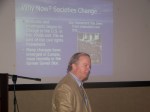
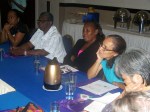
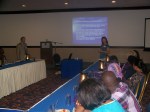
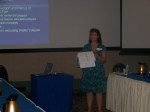
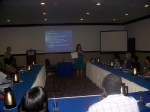
On Nov. 13, Dr. David Westling of WCU addressed a Forum on Improving Services for Persons with Disabilities and proposed a four-fold plan to ameliorate the situation, in partnership with Jamaican officials and workers in the sector. Dr. Westling would like to partner with the MICO University to create a two-year Master’s degree program (which could start as early as next September) in special education for up to 25 teachers. In addition, Dr. Westling’s plan (along with Dr. Karena Cooper-Duffy) would create a training centre for teachers that could also act as a demonstration facility, better prepare teachers to work with disabled students and embark on a public relations campaign to educate Jamaicans about people with disabilities.
“We’re committed to working with Jamaicans to improve educational services,” Dr. Westling told the audience. “Particularly interested in students with severe disabilities. Basically, we want to make the world a better place.”
If the reaction of Education Minister the Honourable Ronnie Thwaites, who met with Dr. Westling and Dr. Cooper-Duffy and YOU’s Executive Director Mrs. Georgia Lewis Scott at a private meeting early on the morning of Nov. 14, was any indication, the program may well get started next year. “Your presence is most appreciated,” the Minister said. “We would benefit with a link from your skill set. In principle this would be a Godsend for us,” he said, adding that the Ministry would in principle offer its support.
WCU’s proposal is timely for a few reasons: First, Jamaica’s teachers will soon be required to undergo professional development; second, the government is set to open three diagnostic centres across the island; and finally, the government is also about to embark on the expansion of a residential facility for disabled people with the VOUCH program.
According to Minister Thwaites, Jamaica has higher-than-average instances of early childhood intellectual and physical deficits, such as nutritional and physical deficiencies. Despite this, the government has historically allotted only three per cent of its education budget to address these challenges. (It has been increased to 11 per cent this year, Minister Thwaites said, adding that it will also provide funding for VOUCH’s facility).
Interestingly, this issue is personal for Minister Thwaites, who spoke of a young family member who is disabled. “He has a lively brain but can’t express himself, and the facilities don’t know how to deal with him,” Thwaites said.
But back to the proposal to which Minister Thwaites was reacting. Dr. Westling stressed the importance of building capacity rather than simply doing the work for Jamaicans, and acknowledged the financial realities the country is facing. “We have no magic wands or silver bullets but we do have some strategies. We’ve been there, we’ve seen, we’ve talked to people so we know the reality of it. We want to build capacity here. Want to identify key faculty members, want them to partner with us so that when our program ends in about four years that it will be able to take leadership and move society forward,” he said.
The proposal, however, does not solicit funds from the Jamaican government or NGO sector, rather Dr. Westling said he will approach corporations such as Sandals and Carnival Cruises. The funds are required for providing financial support for students and teachers and administrative costs.
Ultimately, the program will see a sustainable program created that will help disabled individuals integrate into the community and that will see an inclusive society. What this looks like in practice would be small-scale residential facilities that are not isolated from the community, or children with disabilities going to ‘regular’ schools with their peers. “I want to see these people back in the community,” Dr. Westling said. “We need to have more community based programs, we need to have more people going to school in the community. We have a lot of people in residential communities who could really benefit.”
 Jamaican Journal
Pingback: Faculty members explore partnership to improve special education in Jamaica | The Reporter
You are right, that is Senator Floyd Morris, I will look into this.
It’s is great to see that Jamaica is reaching out to assist all of its citizens in every aspect of life. This is very moving. I hope this makes a difference to all in the Jamaican society; it’s long over due. Isn’t there a blind Senator on the island? How is he helping the progression of others with disabilities?