Canadian Women’s Club Annual Bazaar


On Saturday, Nov. 17, the Canadian Women’s Club hosted its annual Bazaar, with proceeds going towards charities. There were about 20 vendors, who were selling everything from baked goods to jewelry to arts and crafts to used clothing. Some beautiful orchids were also on sale and seemed to go quite quickly. I had a chance to tour around before I took on my duty of selling Youth Opportunities Unlimited’s Christmas cards and there were some really beautiful things for sale. The handmade jewelry was stunning, as was the wood sculptures carved from cedar wood.

Turnout could have been better, possibly partly due to the location (in the back of the Police Officer’s Club on Hope Road). In addition, there were at least two other major events going on at the same time, including the Trench Town Entrepreneurial Trade Show at Emancipation Park, which a lot of Cuso volunteers attended. But it was a great day for the Canadian Women’s Club and we shall know soon how much we made, which will all be disbursed in small amounts to local charities.

CB Group/UWI 5K Race


Today was the second annual CB Group/UWI 5k Race up at the University of West Indies. The event, called the “Walk Good, Run Great for Education and Sports Development” was a fundraiser to help provide academic and sports scholarships for 20 exceptional first and second-year university students. Last year, 2,800 people participated and $18 million (Jamaican) was raised and judging by this year’s turnout, it looks like a similar amount may have been collected.

I participated with my running group, TrainFit Club. I was not sure how I would do as I am in the final days training for the full Reggae Marathon on Dec. 7. I decided to make this my last race and final bit of speed work. I’m not sure, however, how I did in relation to other races. This is because a marshal on the course directed people on the wrong route!!! So we ended up running 4.3 kilometres rather than the full five. I knew something was wrong when it seemed I was a full two or three minutes faster than usual. My time has still not been posted but I have a feeling my tired legs didn’t carry me as fast as usual. Time to what they call “taper” now; this means I decrease my mileage over the next couple of weeks in preparation for the full 42.2 kilometres.

The race also felt a little bit different because of the absence of Alfred Frano Francis, the main organizer for Running Events Jamaica, who is a familiar and hard-working presence at every race. He has been ill but is expected to make a full recovery.

Enjoy your Sunday!

@WCU partnership with Jamaica to address special needs education, support


By most accounts, Jamaica has some work to do in terms of providing an accommodating environment for people with physical and intellectual disabilities. This is despite the fact that the country is a signatory to the United Nations Convention on People with Disabilities.

The Ministry of Labour and Social Services has a dedicated department, as well as a National Policy on Persons With Disabilities, and the country’s Vision 2030 plan also addresses this sector of the population, which numbered around 163,000 in 2001, according to the 2001 Census.

Here is a clearer snapshot:

When the 2001 census data were disaggregated by demographic characteristics, the results were as follows. Just over a half of the population with disabilities (83,019) were females. Some 32,207 (20 per cent) were children in the 0-14 age group (52.5 per cent males) while youth (15- 24 years) accounted for 12.6 per cent (20,617). The elderly (60 years and over) represented 29.5 per cent of persons with disabilities (48 190), of which 56.3 per cent were female. Of the total population 62,529 persons (38.3 per cent) specified their disability types. These included visual, hearing and speech impairment, physical and learning disabilities, mental retardation and mental illness. The disability type most frequently reported was visual impairment, representing 35.9 per 6 cent (22,425) with 57.4 per cent of the distribution being. Visual impairment was most common among the elderly. The number of persons reported as having multiple disabilities was 2,416.

And from the Vision 2030 report again, here a characterization of the country’s general attitude towards this population:

Generally speaking, attitudes towards persons with disabilities remain negative though they have improved over the last 20 years because of more publicity being given to this subject. Several studies have been conducted on general attitudes, attitudes of parents, of health care workers and neighbours of children with disabilities.
The “Draft National Survey on Public Attitudes toward Persons with Intellectual Disability” revealed that while there are some positive attitudes towards these individuals, some negative perceptions remain. For example, of the sample of 650 persons, 88 per cent believed that persons with intellectual disabilities were somewhat capable of playing on a sports team for persons with intellectual disabilities only. Forty one per cent did not think that they were capable of playing on a team with persons who do not have an intellectual disability. There was a general opinion that a mixed team (with persons with intellectual disabilities and persons without intellectual disabilities) would be likely to result in “more injuries to the other players”, “decrease the team’ s ability to win” and “make the public regard the team as second rate.” Thus, based on the public’s response mixed teams should be avoided. A significant proportion of the sample also believed that persons with intellectual disabilities are incapable of raising children and only 2.2 per cent believe that adults with intellectual disability should live independently.

There is no shortage of people trying to address the negative perceptions, discrimination and lack of services and opportunities, from the Mustard Seed Foundation to the VOUCH program to the Genesis House. However, it is a tough environment. Another group trying to address these issues in Jamaica is Western Carolina University, which has a long history of bringing educators and caretakers here (as I wrote about yesterday.)

On Nov. 13, Dr. David Westling of WCU addressed a Forum on Improving Services for Persons with Disabilities and proposed a four-fold plan to ameliorate the situation, in partnership with Jamaican officials and workers in the sector. Dr. Westling would like to partner with the MICO University to create a two-year Master’s degree program (which could start as early as next September) in special education for up to 25 teachers. In addition, Dr. Westling’s plan (along with Dr. Karena Cooper-Duffy) would create a training centre for teachers that could also act as a demonstration facility, better prepare teachers to work with disabled students and embark on a public relations campaign to educate Jamaicans about people with disabilities.

“We’re committed to working with Jamaicans to improve educational services,” Dr. Westling told the audience. “Particularly interested in students with severe disabilities. Basically, we want to make the world a better place.”

If the reaction of Education Minister the Honourable Ronnie Thwaites, who met with Dr. Westling and Dr. Cooper-Duffy and YOU’s Executive Director Mrs. Georgia Lewis Scott at a private meeting early on the morning of Nov. 14, was any indication, the program may well get started next year. “Your presence is most appreciated,” the Minister said. “We would benefit with a link from your skill set. In principle this would be a Godsend for us,” he said, adding that the Ministry would in principle offer its support.

WCU’s proposal is timely for a few reasons: First, Jamaica’s teachers will soon be required to undergo professional development; second, the government is set to open three diagnostic centres across the island; and finally, the government is also about to embark on the expansion of a residential facility for disabled people with the VOUCH program.

According to Minister Thwaites, Jamaica has higher-than-average instances of early childhood intellectual and physical deficits, such as nutritional and physical deficiencies. Despite this, the government has historically allotted only three per cent of its education budget to address these challenges. (It has been increased to 11 per cent this year, Minister Thwaites said, adding that it will also provide funding for VOUCH’s facility).

Interestingly, this issue is personal for Minister Thwaites, who spoke of a young family member who is disabled. “He has a lively brain but can’t express himself, and the facilities don’t know how to deal with him,” Thwaites said.

But back to the proposal to which Minister Thwaites was reacting. Dr. Westling stressed the importance of building capacity rather than simply doing the work for Jamaicans, and acknowledged the financial realities the country is facing. “We have no magic wands or silver bullets but we do have some strategies. We’ve been there, we’ve seen, we’ve talked to people so we know the reality of it. We want to build capacity here. Want to identify key faculty members, want them to partner with us so that when our program ends in about four years that it will be able to take leadership and move society forward,” he said.

The proposal, however, does not solicit funds from the Jamaican government or NGO sector, rather Dr. Westling said he will approach corporations such as Sandals and Carnival Cruises. The funds are required for providing financial support for students and teachers and administrative costs.

Ultimately, the program will see a sustainable program created that will help disabled individuals integrate into the community and that will see an inclusive society. What this looks like in practice would be small-scale residential facilities that are not isolated from the community, or children with disabilities going to ‘regular’ schools with their peers. “I want to see these people back in the community,” Dr. Westling said. “We need to have more community based programs, we need to have more people going to school in the community. We have a lot of people in residential communities who could really benefit.”

WCU Nursing Alternative Spring Break could expand to Kingston, JA


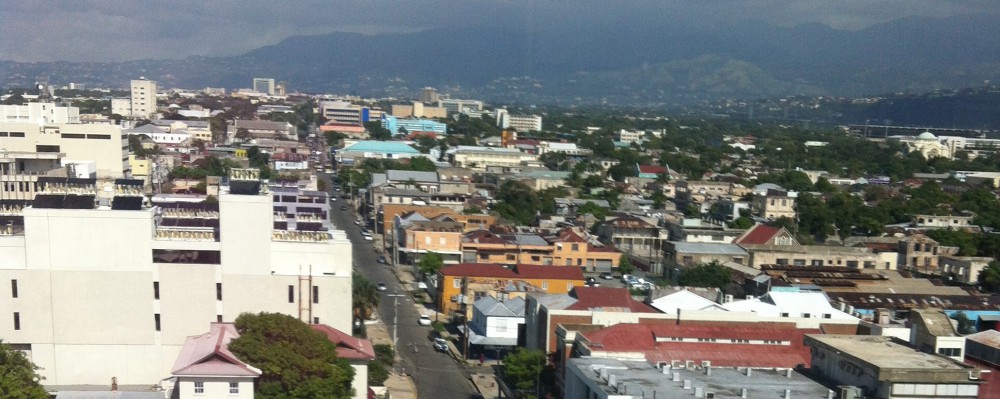
The ties between North Carolina and Jamaica continue to bind tighter. A delegation from the U.S. state’s Western Carolina University is in Jamaica this week to attempt to branch out their already strong relationship with the country’s caretakers and educators. WCU has already been deeply embedded in Jamaica since the 1970s, when it established a Bachelor of Science Education program. It is currently attempting to expand to create a Master’s program focusing on special education (I will write more about his later).

WCU also has a long history with Youth Opportunities Unlimited. YOU has been hosting professors and students from the school for many years. Check out a story about a visit earlier this year here. WCU students typically visit for their spring break week to participate in an “alternate spring break.” During this time, they visit disadvantaged communities and do some form of service work or learn more about Jamaica. Earlier this year, we went to Mountain View, where the students got a tour of the community and donated some sports equipment.

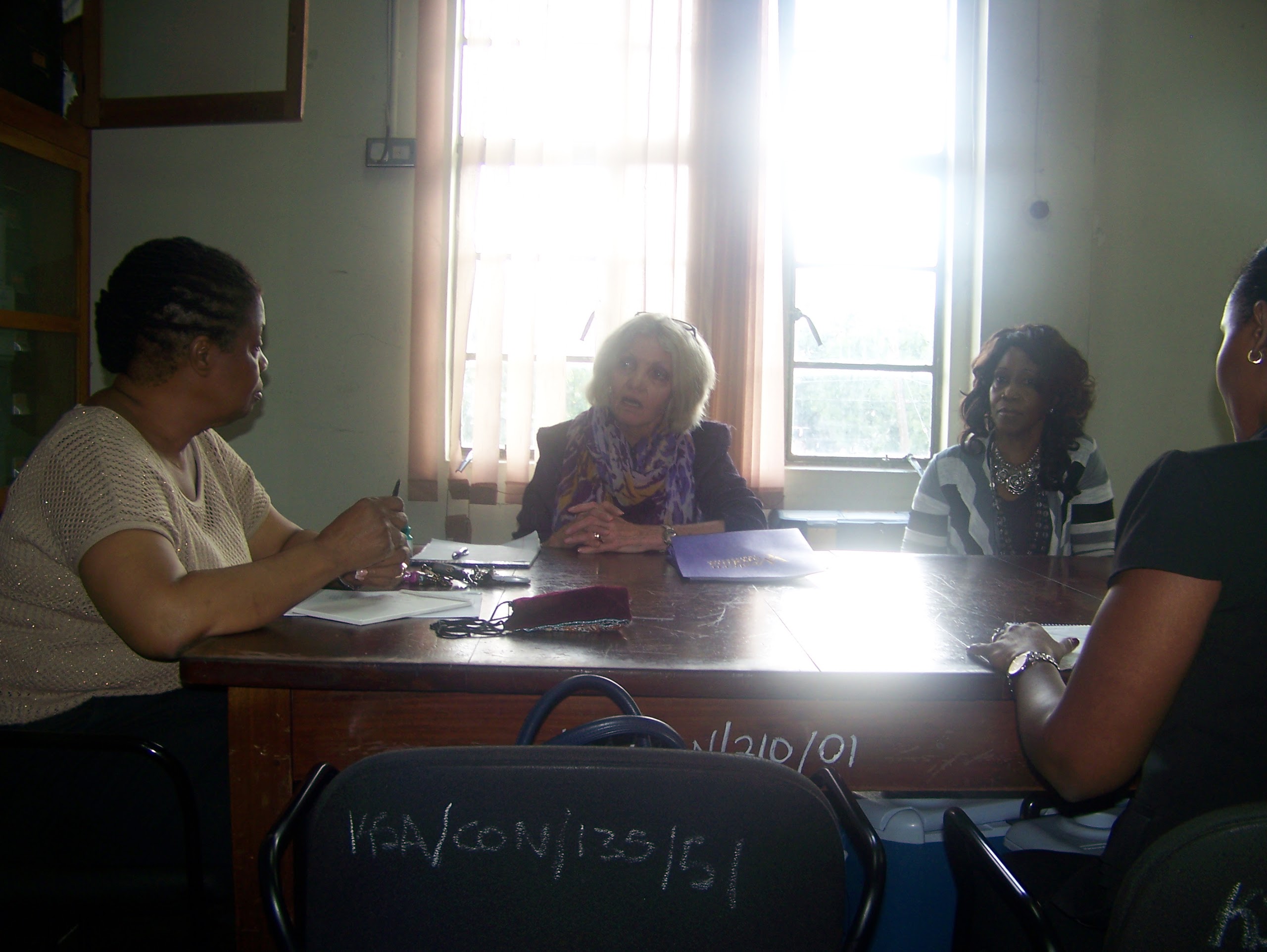
YOU is this week facilitating meetings with local officials so that WCU can expand its programs here. Yesterday, we met with Dr. Pauline Weir, senior medical officer of health for Kingston and St. Andrew, and three other representatives, to discuss the possibility of WCU’s nursing students visiting public health clinics in Kingston. The students would spend time observing operations and making a presentation to staff. This program is already ongoing up in the Montego Bay area, under the direction of Dr. Cheryl Clark, where for the past several years students and staff have visited, observed and brought donations of badly needed items like shoes and medical equipment. WCU also visited the Manning’s Hill Boy’s Home, where over 50 boys (up to age 18) have no family to care for them up to age 18 live.

Yesteday’s meeting went well and it looks like the visit to Kingston will occur next spring, which is great news.

Dr. Pauline Weir, Dr. Cheryl Clark and Mrs. Georgia Lewis Scott

Branson visits Jamaica


Richard Branson, one of the world’s richest men just left Jamaica after a visit that saw him celebrating the second anniversary of the Branson Centre of Entrepreneurship- Caribbean. During this visit, Branson (who as head of the Virgin group is worth an approximate $4.6 billion) awarded three entrepreneurs a $12,500 US loan to develop their businesses.

The winner of this contest was Josh Chamberlain, who is developing a business for the wonderful Alpha Boys called Alpha Wear Jamaica. In addition to the cash, Chamberlain will be endorsed by Virgin Unite (the philanthropic arm of the Virgin Group) and will have a blog spot created for his company.

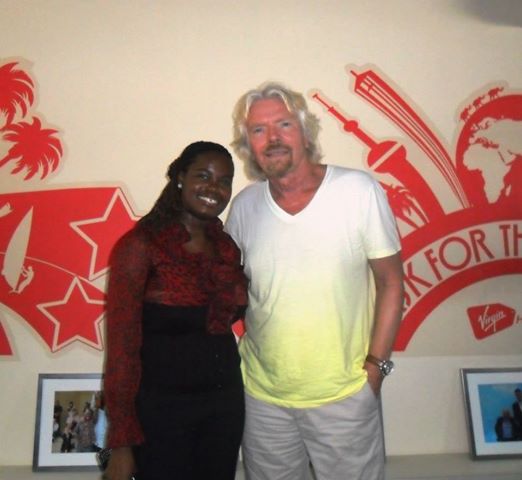
Branson’s Centre of Entrepreneurship is also affiliated with Cuso International; here is my lovely friend Onyka posing with Mr. Branson:
Onyka and Mr. Branson

Here is more on the Centre’s mandate, from its web site:

Our mission is to offer practical business skills, access to coaches to offer guidance, mentors to share their experiences, professional services to build strong businesses, exposure to networks, finance and investment opportunities. We believe these are essential components for entrepreneurs to grow strong and sustainable businesses.

The Branson Centre’s vision is to support the development of small and growing businesses to create jobs and contribute to the economy in the Caribbean region.

During his visit, Branson also encouraged the Jamaican government to provide small loans to young entrepreneurs:

“One thing we would love the Jamaican government join us to do is to make entrepreneurship loans to young people,” Branson said.

“The way that new jobs get created is not from big companies, it’s through the small companies and money go back into the economy. I would say that is the best investment the Jamaican government could make and that is something that I would like to encourage.”

Hopefully, officials will heed this call, especially since there is no shortage of ideas, passion and creativity from Jamaica’s young entrepreneurs.

An unprecedented portrait of Jamaica’s voluntary sector


Volunteering in Jamaica is shaped by the vestiges of colonialism. Sociologist Robert Buddan says that volunteerism became popular as people tried to encourage active citizenship and expressed dissatisfaction with the crown colony system, which was worsened by the Great Depression and the crash of the sugar and banana industries. This information is taken from a report by former Cuso International volunteer Brianna Strumm, who was here a year ago and conducted a landmark study on this sector.

The crash in the 1930s ultimately caused rioting and encouraged people to form the first labour unions and voluntary organizations. Some of the first groups to emerge in the 1930s were the Jamaica 4H Clubs, the Council of Voluntary Social Services and the Jamaica Welfare.

Brianna prepared this report (officially called The Contribution of the Council of Voluntary Social Services Members to the Development of Jamaica: Members’ views on their social impact) for the Council of Voluntary Social Services and it was presented to interested parties last week. I say the report is a landmark study since it is the first of its kind; in essence, prior to this, the country had little to no sense of the contributions of volunteers to the nation’s welfare.

Here are some highlights:

Focusing on four sectors, (youth, health, gender and development community and environment), the report surveyed 49 organizations over two months.

Major findings include the revelations that (not surprisingly) the majority of volunteers are female. Out of 49 organization, 1039 members were women and 309 were men at the time of the survey, while the vast majority are aged 25-49. These organizations focus mainly on social inclusion and inequalities.

In terms of beneficiaries, the majority are female (approximately 92,600 versus 61,518); and 36 per cent are youth aged 15-29 (34,236 people).

The most significant challenges indicated by beneficiaries are unemployment, high health care costs, preventative services for women and children and people (mainly women) turning to sex work to support themselves.

Beneficiaries indicated that the types of services they receive are education and training; mentoring; income generation; health care; disability support and religion or spiritual support.

Next steps could include further surveys, development of capacity to do monitoring and evaluation and the development of a plan to build the voluntary sector in line with the nation’s Vision 2030 plan, which aims to make Jamaica reach developed country status by 2030.

Ultimately, however, the report recommends increased investment in the sector by government and the private sector and more recognition overall of their contributions. This is a universal issue, I think.

Remembering


When I lived in Ottawa, every year I would attend Remembrance Day ceremonies downtown at the Cenotaph. It is a moving way to pay respects to people who made unimaginable sacrifices, regardless of your political leanings. Now that I have been away from Ottawa for many of the past few years, I miss bundling up and standing in silence with others on a usually grey and cold day. Three of my grandparents served in the Second World War (one on active duty in a submarine).

So I remember today in Jamaica. With this in mind, please check out this wonderful project by the Ottawa Citizen’s Glen McGregor. He has set up a Twitter account @WeAreTheDead that tweets the name of a dead soldier at 11 minutes after every hour. McGregor also crowd-sourced an obituary for the past couple of years. Check it out here.

Jamaican government relies on mega-projects at peril of losing wisdom of communities


During Jamaica’s pre-Emancipation period, the economic output by villages far exceeded the country’s GDP. This was the intriguing message from Dr. Michael Witter, a senior lecturer at the University of West Indies, who gave the keynote address at the Council of Voluntary Social Services’ Research day on Nov. 7, 2013. Dr. Witter explained that prior to 1962, when Jamaica declared independence, people living in small communities were self-sufficient and managed to create a tremendous amount of economic activity within their own boundaries.

It is with this data in mind that Dr. Witter mourns the loss of community development as the national government’s economic strategy, which instead relies on harmful “mega-projects” such as the technology/logistics hub proposed for the Goat Islands.

In addition to Dr. Witter’s lament for a loss of focus on the strength inherent in communities, he made an interesting pitch towards data collection as a means of securing buy-in for projects and funding from presumably international NGO investors. Dr. Witter’s urging is in line with the current reliance on scientific data to justify spending on any projects aimed at improvement.

Dr. Witter also called on communities to rely on technology to tap into the diaspora, as well as young professionals who want to volunteer but don’t have a lot of time. And perhaps most intriguing, Dr. Witter called for a return to something like bartering and reciprocity.

I give you now a condensed version of Dr. Witter’s speech, edited for clarity. Please give it a read, it is worth it.

All communities have survived because they have worked together. After Emancipation, people succeeded on their own, without the IMF or the World Bank. Creativity and entrepreneurship of villages have been overlooked given that they succeeded without any international assistance.

They created their own infrastructure, education, etc. This is critical in context of IMF agreement. The 13th IMF agreement is concentrating on mega-projects. For example, look at the bauxite project, which destroyed water resources and uprooted entire generation of people.

Tourism took plantation and coastal land that no one wanted, and used natural resources. Now there is insecure labour where people don’t even have contracts. Now Goat Islands, another mega-project, which will be harmful to environment and cheap labour. Environmental destruction and cheap labour is “endemic.”

How can we use community development to survive in this environment?

Climate change and poverty, crime, education and health are major challenges. Many of these communities live in fragile conditions and will bear the brunt of climate change. The government deal (IMF agreements) explains in large part why we are where we are today.

The difference now is the availability of information technology, which is very important to mobilize people. Data is important to be able to communicate what we are doing and raise support, move towards informed decision-making, and to replace instinct, feelings and prejudice.

Key decision makers are not doing anything different, instead operating on instinct and punches. We need to move towards informed decision-making. The challenges now are much moreso than post-Emancipation, because of more complex world. Data collection now is too expensive to do traditional survey work. We need a series over time, and hopefully research methods will be institutionalized.

Poverty: community development must address self-employment and income-generation. In the context of austerity at national level and mega projects, communities must look at self-employment.

Climate change: this is the most important issue- we know the sea level is rising, which means our grandchildren will live in a world where Cayman Islands will not exist, coastal areas inundated, where many poor people go to survive.

A similar situation will happen in Jamaica. We have to adapt by moving back from the coast. This also has implications for the water supply, which is among the highest quality in the world. As a result, Jamaica will become more attractive to people looking for water, so this creates a problem of water management.

Crime: we must address prevention equally with solution. Young people have attitudes of selfishness, tribalism, etc, that society exhibited 30, 40 years ago.

Education for employment and community development: We need to raise consciousness of young people.

Health: community and individual. Communities must deal with health, including mental.

Communities need information, demographic information, which communities are at high risk, on climates. There is no reason our school children can’t monitor these things.

Research tools- cell phones, we can take pictures, do interviews, record interviews of poor people in their community. Then have records which can make a case for projects. People need ways of bringing information together. Co-operation is also very important, especially in communities, which should have idea of what is their own skill bank.

Volunteerism: this sustains vibrant communities. We must look at new forms such as digital volunteerism. Many people in North America want something to do and technology allows them to help. Many young people get PHDs and leave Jamaica, but they are lonely. Tools allow them to contribute, for example, they can go to community meetings using Skype.

They can write reports about meetings and email it to the community.

We must pay also attention to the value of people’s time. Social bonding time, like dominoes, chatting over drinks are important, but communities must recognize that highly skilled people don’t have time.

These principles go all the way back. You do something for me and I do something back for you. We must find ways of reciprocating that don’t involve payment of money. We must tap into the success of various community organization in mobilizing communities, especially through young people.

Update on 18 Degrees North


Yesterday I reblogged a post from Emma Lewis, who had received an email from Common Good Productions. The email alerts people to the fact that TVJ decided not to air a segment from investigative television show 18 Degrees North. TVJ allegedly made this decision because it is currently involved in a lawsuit from activist Maurice Tomlinson.

Here is an update from Mr. Tomlinson on the court case, which challenges his right to self-expression after television stations would not air commercials promoting tolerance towards homosexuals:

The case was heard over a week at the end of May and the court has reserved judgment. We had expected the decision to be handed down in September, but that did not happen. As this was the first constitutional claim brought under the new Charter of Fundamental Rights and Freedoms 2011, and since several issues with regard to the tests to be used to interpret the new rights, especially when they are being claimed against private citizens, I suspect the Constitutional Court is making sure they adopt and prescribe the right principles to balance these rights. For example, in Canada the provincial Human Rights Tribunals hear complaints of human rights violations against citizens, while the courts hear constitutional claims against the government. In Jamaica, we now have a “one-stop shop” where all claims of human rights violations, whether against the government or an individual, must be heard by the constitutional court. Before there was nothing which constrained private citizens (like the TV stations who refused to air the tolerance ad) to observe the rights of other citizens.

The 18 Degrees North story features Micah Fink, the producer of The Abominable Crime, which looks at what it is like to be homosexual in Jamaica. Suffice it to say, it is neither a safe nor pleasant existence for many people. According to Burton, TVJ called her at 7 p.m. the evening the segment was supposed to air (18 Degrees North airs on TVJ at 8:30pm). Please watch the segment here.

18 Degrees North is a half-hour show comprised of three segments. So now Burton’s show is short of content through no fault of her own. And having reported on and produced one of these segments myself, I now know how much time and energy goes into these short pieces. Burton told me that the explanation TVJ executives gave her was that the station is “in a lawsuit with Maurice Tomlinson. It is still pending and by airing the tape of that film it would prejudice the case. It shortened my entire show and we got complaints from people about that.” For now, Burton will not pursue this with TVJ, which did not provide the public with any explanation.

I’m not sure if this qualifies as censorship or not. Certainly, the court case complicates the matter. Jamaica’s censorship regulations provide no more clarity, and it is of course in the purview of a private television station to determine what they air or not. In any case, I thought this issue should be explained.

Move beyond trade, small business owners urged


Small and micro business owners must move beyond trade and diversify to include manufacturing. This was the main message from Jamaica Business Development Council representative Garth Soares at a Nov. 6 workshop for Rockfort’s business community. “There are too many people trading, he said, adding that which sparked a lively discussion amongst attendees.

“Subsistence businesses simply don’t provide for the individual,” he said during a workshop hosted by Youth Opportunities Unlimited and the Rockfort Business Development Council. Attendees, who included a dress-maker, cornershop owner and hairdresser, also heard a presentation from the Jamaica International Insurance Company and discussed challenges facing small business owners.

The session was held at the Windward Road Reverence For Life Centre in Rockfort and hosted by Samuels Buchanan.

“We want to ensure that people have the necessary skills,” said YOU Deputy Executive Director Cush Lewis. YOU has been working in Rockfort for the past eight months as part of a project that is funded by the Environmental Foundation of Jamaica.

The project includes training in how to better equip the community in the event of a disaster like a hurricane or a flood. To date, the project has seen 130 young people being sensitized to these issues, and more than 30 received training in CPR.

The first presentation, from Rachel McKenley and Merkhan Johnson of JIIC, instructed people about what kind of insurance they require as small business owners. “Insurance is like a parachute, if you don’t have it when you need it, you may never need it again,” McKenley said. She made the point that insurance is legally required and gave the following examples of things that are impacted: cash on premises, moving money, employee dishonesty and employee safety.

Johnson also discussed micro-finance, which is a relatively new concept. It is especially useful for low-income business owners, said Johnson. “It is a mini way of insuring and can reach anybody, but it is not necessarily for middle or upper-class incomes,” he said.

In addition, this type of insurance doesn’t just protect “tangible” items. “You can insure not necessarily yourself but your livelihood,” he added. This type of micro insurance requires small premium payments proportionate to likelihood and cost of the risk involved.

The workshop will with certainty continue, as the business owners had many questions related to insurance and other issues. But what they lacked in knowledge, they do not lack in passion or ideas, and hopefully this will continue to serve them well in their bid for financial security.