It is now much easier to do business in Jamaica. At least, that is the finding from the World Bank in its latest report called Doing Business 2015. As a result of improvements in getting credit, it seems, Jamaica has jumped to 58th place from last year’s 85th place out of 189 countries. (Singapore, New Zealand and Hong Kong/SAR/China rank 1st, 2nd and third respectively, while Central African Republic, Libya and Eritrea rank at the three bottom spots, respectively. In the Caribbean Region, Jamaica is in first place.)
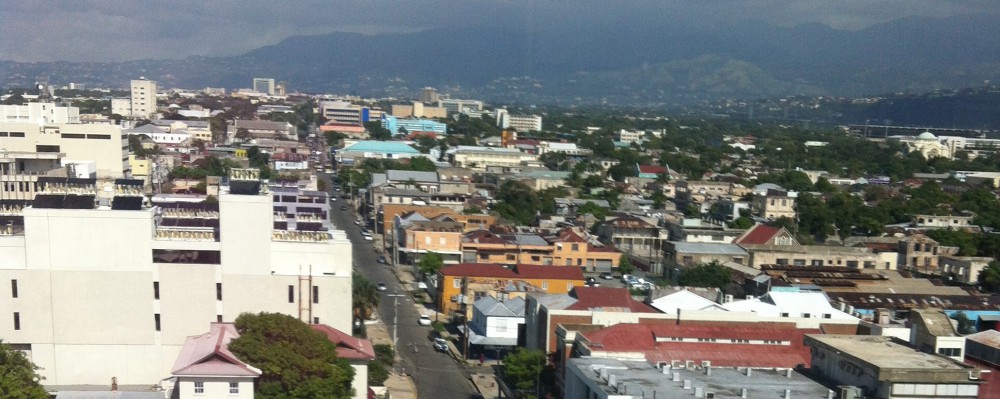
This apparently glowing report requires further investigation for several reasons, the first being that it only examined doing business in Kingston. What about the rest of the nation? How is it to do business in the rural areas? How is it for businesses associated with tourism? From what I have heard, it is not so easy.
The other reason I am skeptical about this much improved ranking is that the biggest jump is attributed to the ease of getting credit. The nation jumped 113 spots! Why is it suddenly so easy for businesspeople to obtain credit, in one year? Especially considering the nation’s financial situation and its association with the IMF and their conditional loans? Also, we all know how that worked out in the US. (If you are so inclined to check out the methodology, here it is. And here is the Gleaner’s take on the issue. It is also interesting to consider this report in light of another recent report that found that crime and violence are impeding the nation’s ability to conduct business.)
As a journalist, I admittedly tend towards seeking out the negative, which helps when reading press releases that restrict the spin to the positives. It is always instructive to dig a little deeper, and I don’t see a whole lot of improvement or reasons for the big jump if one looks at each individual ranking. The other rankings show moderate or negligible improvements: It is now easier to start a business in Jamaica (from 34th to 20th); starting a business is one thing, keeping it going is another, as we all know. I wonder if the report tracks how many of these new businesses are operating one year later.
In terms of getting construction permits and electricity, registering property, protecting minority investors, trading across borders, resolving insolvency and enforcing contracts, there is negligible change. In fact, there was a decline in the ease of registering property and getting electricity. Interestingly, it is now a little easier for the government to collect taxes. (This is also interesting given that there seem to be regular headlines regarding how much unpaid taxes the government needs to collect.) You can check out the Jamaica-specific data here and the full report here.
Here is an excerpt from the Gleaner story that explains further:
The Doing Business report says that Jamaica made starting a business easier by consolidating forms, but also made it more time-consuming as a result of delays in the implementation of the electronic interface with different agencies.
Jamaica received an improved frontier score of 62.2, an improvement of 5.6 over last year, and collected a distance to the frontier score of 67.8. As noted in the new report, the ease of doing business ranking is now based on the distance to frontier score.
“This measure shows how close each economy is to global best practices in business regulation. A higher score indicates a more efficient business environment and stronger legal institutions,” the World Bank said.
Also working in the island’s favour is what the report describes as a fall in electricity costs associated with reducing the cost of external connection works.
“In addition, it improved access to credit by establishing credit bureaus and by adopting a new secure transactions law that implements a functional approach to secured transactions, broadens the range of assets that can be used as collateral, allows a general description of assets granted as collateral, and establishes a modern, notice-based collateral registry,” the Doing Business fact sheet outlined.
Conversely, however, it was noted that Jamaica made paying taxes more costly for companies by introducing a new minimum business tax.
So this is really a mixed report. In fact, it notes that Jamaica was admonished for a delay in co-ordinating “electronic interfaces” between different government agencies. So a little progress here, a little set back there. And so it goes.


There’s a methodology applied and its results offer a certain view and consistency over time. Who complained that the picture for Jamaica was wrong when the country was classed lower? If it’s off now, it was off then. Big firms have different experiences to small ones. As you noted, rural companies have different experiences, so too across sectors.
Real-life examples can always contradict the survey/general data. Ideally, we could cover everywhere and everything, but that’s unrealistic.
Yes, it is unrealistic to get the entire picture over one year, especially since things fluctuate so much. At least they are looking to add another city.
There was a step change with new laws coming into effect, which have national effect. That’s now part of the ‘stock’ of facilities that help in doing business. Blockages still exist, and they may affect more than the improvements. That’s a matter that will come clear with time.