Coconut water from Vietnam


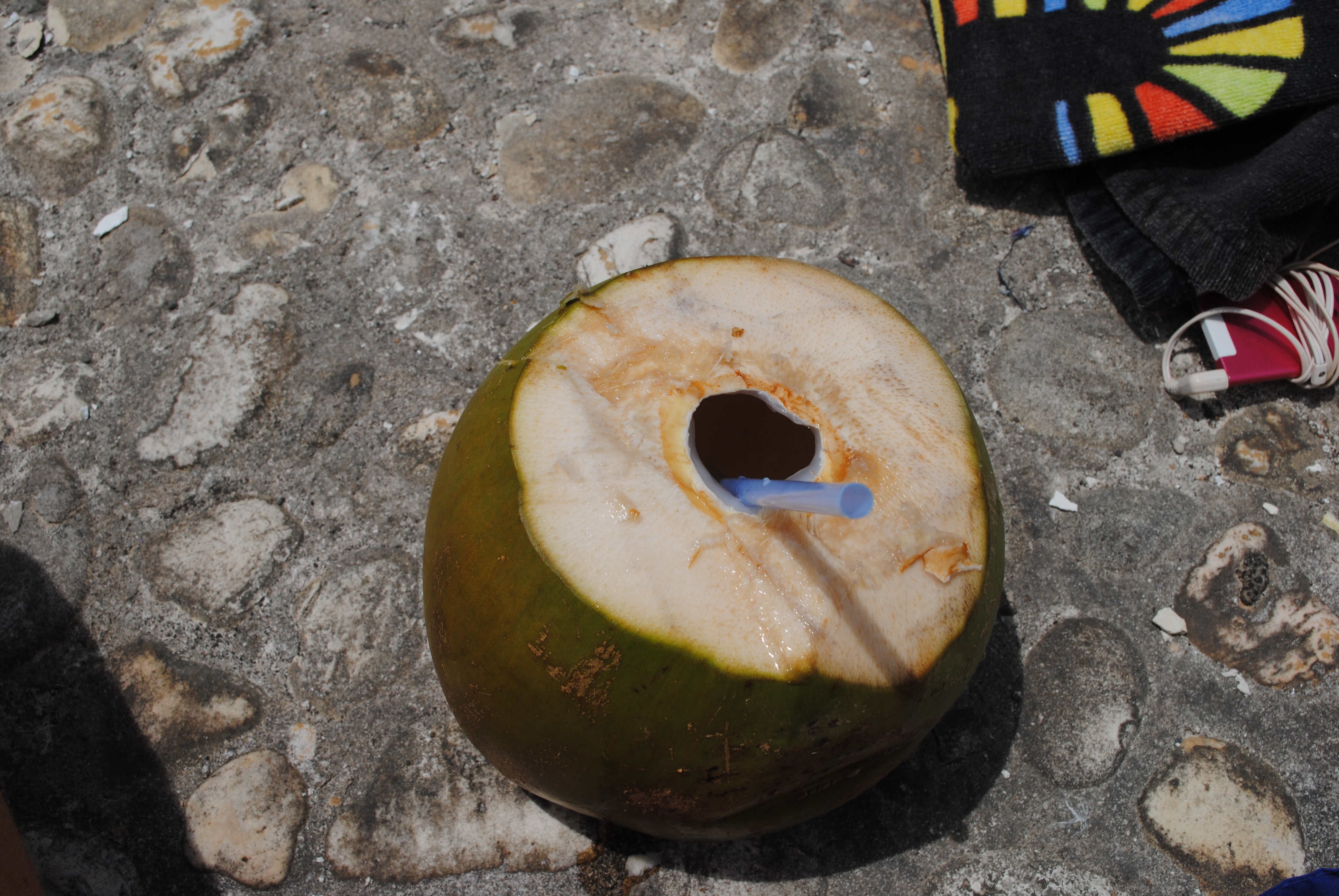
A few weeks ago, I was craving coconut water. Within an hour, my very sweet boyfriend had purchased a dozen coconuts from someone selling them on the road, had his cousin chop them open to drain the liquid, and I was drinking it literally fresh from the fruit. We had collected a gallon of coconut water. It was so delicious.

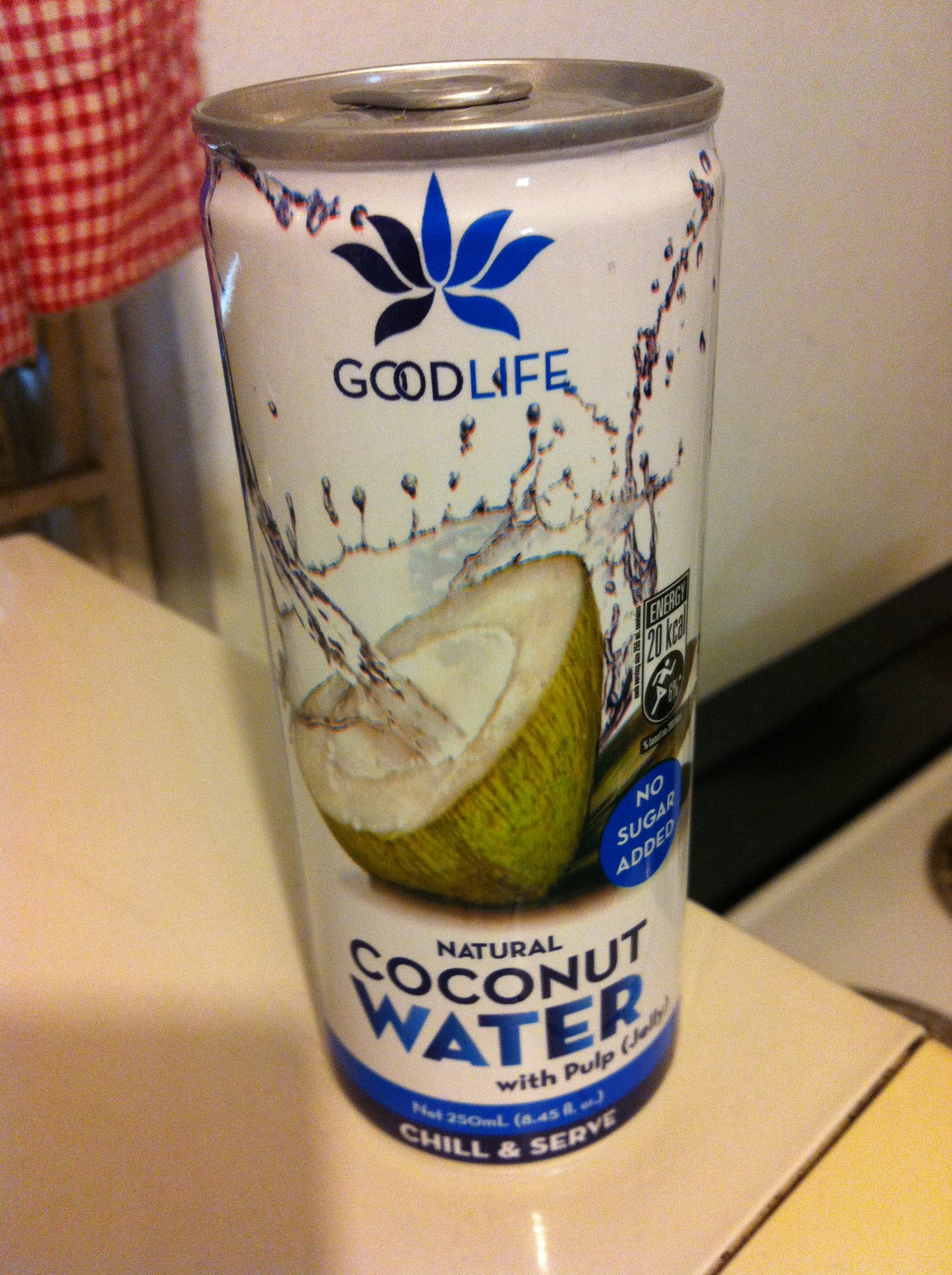
Earlier this week, I was again craving coconut water and I was in the supermarket, so I picked up a couple of cans. It was only when I got home that I noticed that it was from Vietnam. I could have bought local coconut water manufactured by Grace, but picked up the GoodLife brand, assuming it too was locally sourced. Why is Jamaica importing coconut water? Not only are there local vendors who package and sell it, but you can get it on most street corners, straight from its original package.

This is a question for an economist, of course, and requires further research. Just thought I would point it out. I have also noticed that there are several brands of imported banana chips for sale in most stores. Why? I will ponder this today.

“General!”


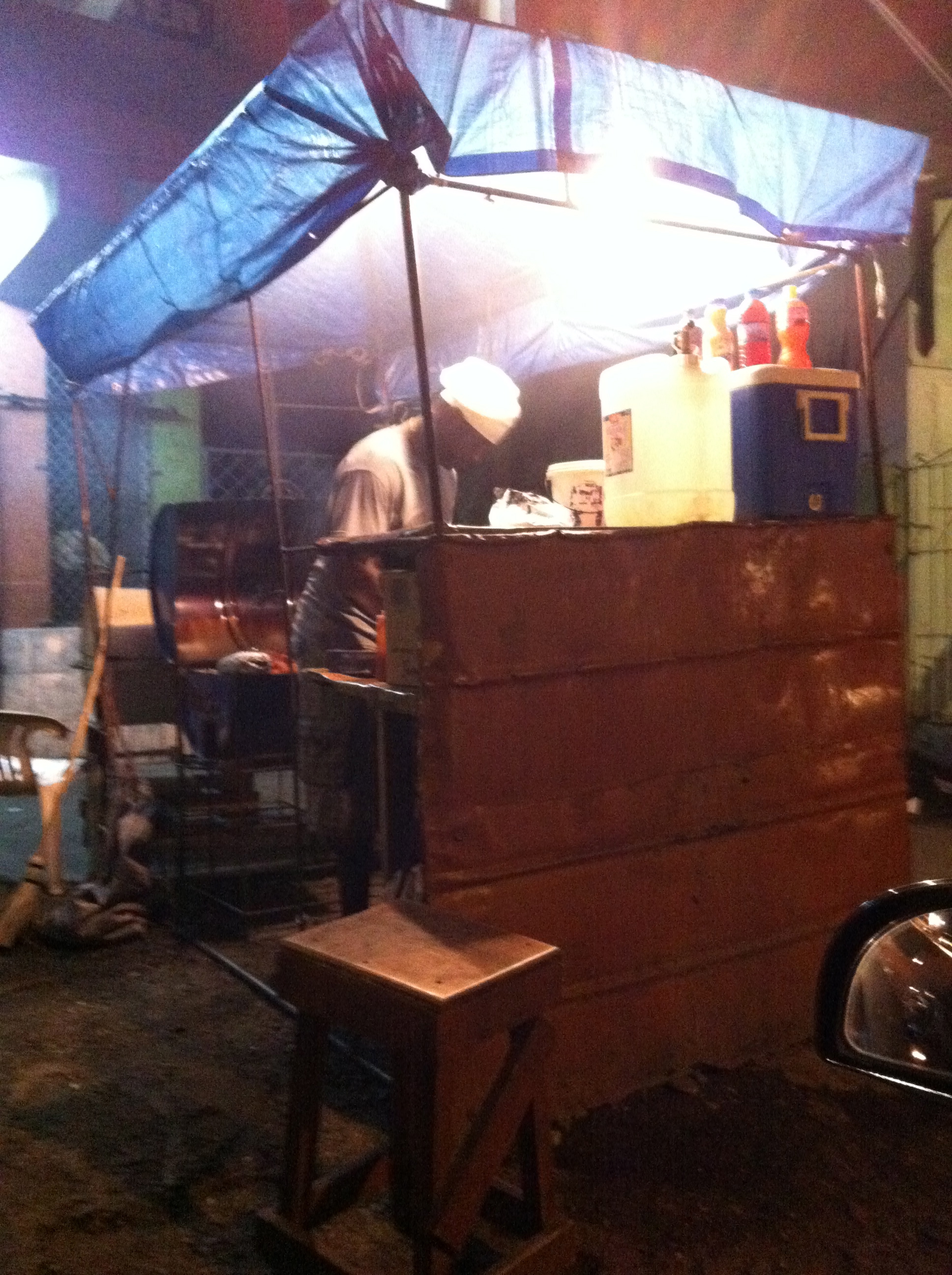
This man (I don’t know his name because men don’t seem to call each other by name here, they just use “General!” or “Don”) cooks jerk chicken every night in Yallahs, St. Thomas. The way these vendors work is that they somehow seem to establish seniority, which comes with the ability to maintain their spot on a main strip. The vendors don’t seem to change much over time and they seem to do a lot of business.

In this case, I can see why this guy has earned his spot. The jerk chicken might be the best I have tasted here. You can also get festival (sweet fried dough), but I cannot control myself around that so I take a bit and give it away. Enjoy your Thursday.

How will ChikV affect tourism?


As ChikV continues to ravage the nation, I continue to wonder how it will affect the tourism industry. As far as the local economy goes, we already know that an astounding 13 million hours of work have been lost, 60 per cent of staff at businesses have been affected and staff at 81 companies surveyed were absent for an average of four days each. In total, the government estimates that up to 60 per cent of the population will be affected. This is just within the nation’s borders.

What about how the tourism industry will be impacted once news of this outbreak reaches the tourist markets? It has already made the pages of a Canadian national newspaper: More than 200 Canadians infected by mosquito-borne chikungunya virus. What about the U.S.? Will people be scared off? (On Oct. 21, the Centre for Disease Control and Prevention put out a travel advisory for the Caribbean, as did Canada). There are murmurs around that the Jamaican government has suppressed communication about this virus in order to preserve the tourist season. Of course, we cannot confirm this, and a counterargument is that it is common knowledge that dengue is present in Jamaica and this doesn’t seem to affect the tourism industry. However, this is a relatively “new” and unknown virus, so the impact and the perception could be damaging.

Today we receive some good news about the cruise ship industry to date, from January to September, that does not show it has been harmed. According to the Port Authority of Jamaica in an interview with the Observer, there has been a 10 per cent increase in arrivals to reach 916,300 people.

Interestingly, on the same day (as Tweeted by fellow blogger Emma), CNN ranked the “Hottest Places to Visit This Winter” and Jamaica did not figure among them. However, three nearby islands did: Dominican Republic, St. Kitts and Nevis and Barbados (they all showed exponential increases in bookings.) I’m sure ChikV does not yet have anything to do with these figures, but it will be interesting to see the impact next year. Let’s hope it is not too detrimental.

Unexpected beauty


I caught this the other day in the Crossroads area, outside of an auto parts store. Razors on fences, and high fences, are a normality here. Of course, they are aimed at keeping intruders out. Sometimes, apparently, there is beauty in them. I like that the colour of this wall almost perfectly matched the colour of the sky. That will probably never happen again. Or maybe it will. And when you look more closely, you can see the sharp metal sticking up from the white wall.

Colour Pink Group talks to PATH


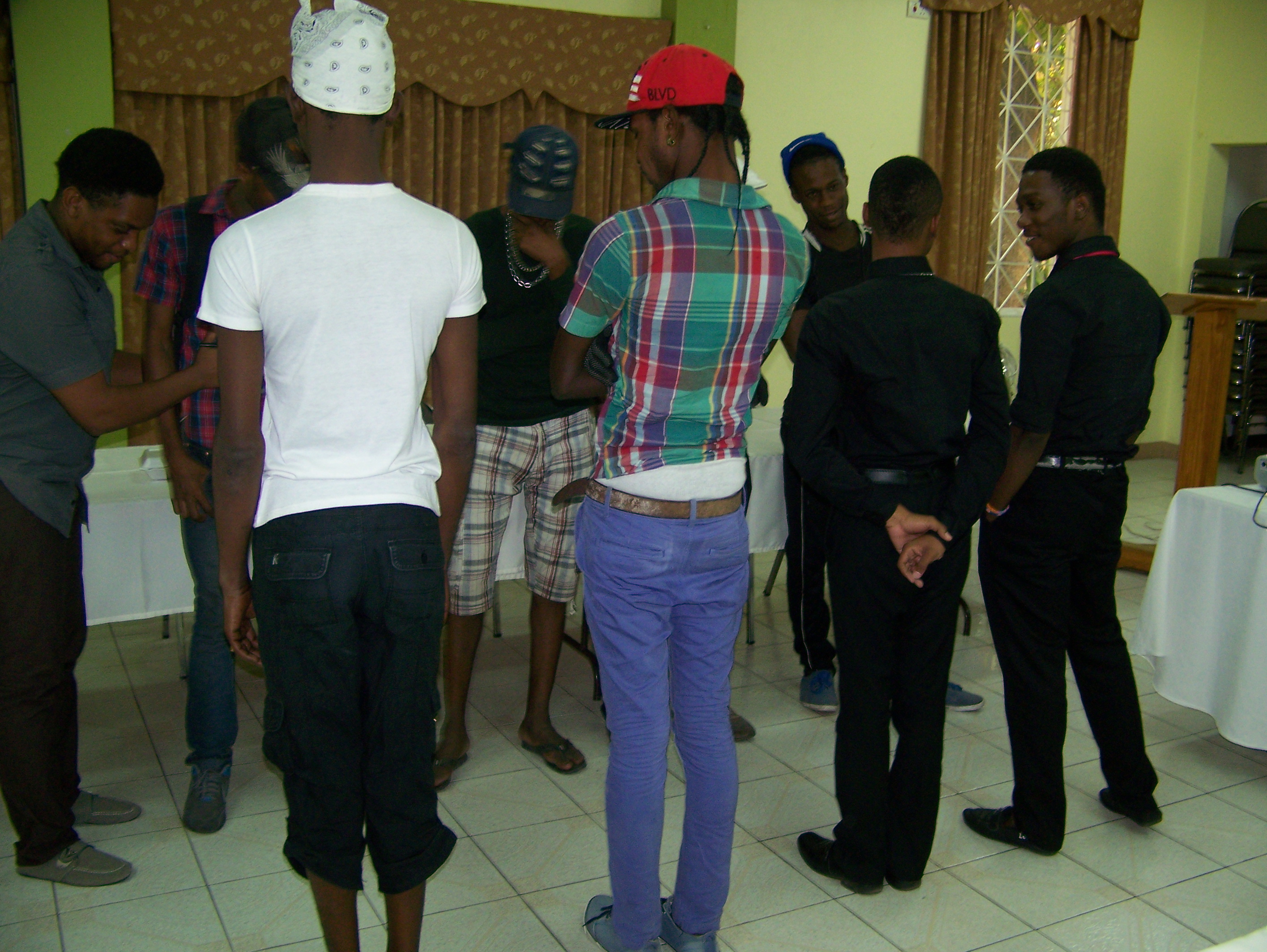
Last Friday, as rain began to fall, The Colour Pink Group held another training session for a group of young men, many homeless, who face regular discrimination and threats to their safety. The Colour Pink Group works with gay, bisexual, transgendered men and sex workers who have little skills or training, and thus, no way to support themselves.

Last week’s session was held at the Shirley Retreat, a small hotel just off Hope Road. Eight young men appeared around noon and a discussion was held with representatives from the government’s PATH program. Much of the discussion centred around receiving financial help and job training. Many of these young men have not finished high school, let alone pursued further education, so the Colour Pink is embarking on training and education (along with other forms of support such as counselling) for a second cohort of young men.

During last week’s session, the young men had many questions for Marlon Johnson and Sheila Kelly Morgan of PATH. They wanted to know how to access the programs available to Jamaica’s marginalized citizens, such as the Job Savvy program. It is not as easy for them as many other citizens, it became apparent, as many of them are unattached, meaning they don’t have the papers they would require, nor a legal guardian or permanent address. They seemed encouraged by the answers and several of them said they would pursue the programs. As one young man put it, “I’m going to try it out and see.”

After a hot meal of fish, vegetables, bammy, rice and peas and ice cream, the young men, led by CPG’s Jermaine Burton, embarked on some exercises meant to strengthen their confidence and ability to communicate. In remarks to me prior to this, some of them shared their thoughts on what it is like to live in Kingston as a gay (or other identities) man: “Kingston is the fastest (busiest) parish,” one said, indicating that many of them appreciate this pace, as they come from the country, where it is more homophobic. “Kingston is cool, but you have to know how to act.” Another said you have to put on a show to survive (meaning act with less stereotypically feminine traits).

CSR in Jamaica


The other day, I attended a presentation on Corporate Social Responsibility by fellow Cuso International volunteer Sean. CSR is essentially a fancy way of saying that a business takes an interest in people not just as consumers, but as citizens of a nation. Here is the United Nations’ official definition:

Corporate Social Responsibility is a management concept whereby companies integrate social and environmental concerns in their business operations and interactions with their stakeholders. CSR is generally understood as being the way through which a company achieves a balance of economic, environmental and social imperatives (“Triple-Bottom-Line- Approach”), while at the same time addressing the expectations of shareholders and stakeholders. In this sense it is important to draw a distinction between CSR, which can be a strategic business management concept, and charity, sponsorships or philanthropy. Even though the latter can also make a valuable contribution to poverty reduction, will directly enhance the reputation of a company and strengthen its brand, the concept of CSR clearly goes beyond that.

Sean’s excellent report seemed to be well-received and I plan on writing a more extensive post on it. For now, you can check out the Gleaner’s unfortunately less than comprehensive story on the presentation.

So fresh


Yesterday, I picked an orange off a tree and ate it. It was so uniquely tasty and even more pleasurable knowing that I had just harvested it. It was warm from the sun, fat and perfectly ripe. The other day, I wanted some coconut juice and within minutes was drinking it out of a glass, freshly drained from its green casing. In mango season, I ate this delectable fruit after someone plucked one for me, just after seeing “Yellow” coming out of the sea with a couple dozen fish he had just caught. We ate them a few hours later. I regularly eat bananas so sweet, I can no longer eat them when I go home, so tainted are they by days of transportation in a truck. I cook carrots, cauliflower and beans daily, barely dusting the dirt off. Just one of the reasons I love living here. Eating right from the ground, so cheap and healthy.

Baby turtles!


Photo courtesy Jamaica Gleaner

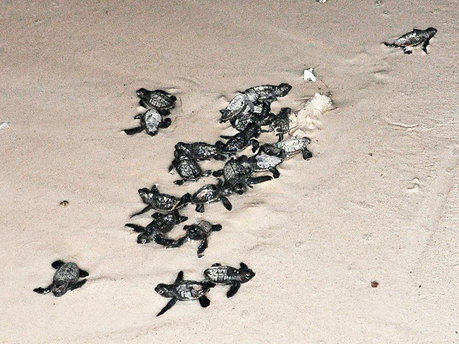
I love this story. Last weekend, 138 baby turtles were released into the ocean in an effort to increase the population. The released happened up on the north coast and was a collaboration between turtle expert Mel Tennant and local residents. In past years, the turtle population has declined, but Tennant (who I heard give an excellent TED Talk awhile ago) has been working hard to teach the community how to protect them. From a Gleaner story:

Deciding that they wanted to see their crawling neighbours out in big numbers once again, the residents decided to secure the services of St Mary-based turtle expert Mel Tennant to teach them the rudiments of turtle preservation.

“He (Tennant) taught us how to monitor the turtles and to find the nests on the beach where they lay their eggs,” said Earle. “Once we learnt how to find the nest, we began marking the spots … the eggs are usually hatched between 55 to 60 days.”

In the case of the baby turtles, which the community released, Tennant said the nest from which they came was found by following the instructions Tennant had given them.

“When we went to check on the nest recently, we discovered that the eggs had started to hatch,” said Earle. “The community was alerted and we began to make plans to release them into the sea.”

Last Saturday at 4 p.m., 60 residents gathered on the beach to view the release of the baby turtles, which were placed in a bucket prior to being released.

“Once they (the turtles) were released, they headed straight for the sea … it was a real pleasure watching them going off into the sea,” said Earle. “I think I can safely say that our sea-turtle preservation is off to a good start.”

Is it easier to do business in Jamaica?


It is now much easier to do business in Jamaica. At least, that is the finding from the World Bank in its latest report called Doing Business 2015. As a result of improvements in getting credit, it seems, Jamaica has jumped to 58th place from last year’s 85th place out of 189 countries. (Singapore, New Zealand and Hong Kong/SAR/China rank 1st, 2nd and third respectively, while Central African Republic, Libya and Eritrea rank at the three bottom spots, respectively. In the Caribbean Region, Jamaica is in first place.)

This apparently glowing report requires further investigation for several reasons, the first being that it only examined doing business in Kingston. What about the rest of the nation? How is it to do business in the rural areas? How is it for businesses associated with tourism? From what I have heard, it is not so easy.

The other reason I am skeptical about this much improved ranking is that the biggest jump is attributed to the ease of getting credit. The nation jumped 113 spots! Why is it suddenly so easy for businesspeople to obtain credit, in one year? Especially considering the nation’s financial situation and its association with the IMF and their conditional loans? Also, we all know how that worked out in the US. (If you are so inclined to check out the methodology, here it is. And here is the Gleaner’s take on the issue. It is also interesting to consider this report in light of another recent report that found that crime and violence are impeding the nation’s ability to conduct business.)

As a journalist, I admittedly tend towards seeking out the negative, which helps when reading press releases that restrict the spin to the positives. It is always instructive to dig a little deeper, and I don’t see a whole lot of improvement or reasons for the big jump if one looks at each individual ranking. The other rankings show moderate or negligible improvements: It is now easier to start a business in Jamaica (from 34th to 20th); starting a business is one thing, keeping it going is another, as we all know. I wonder if the report tracks how many of these new businesses are operating one year later.

In terms of getting construction permits and electricity, registering property, protecting minority investors, trading across borders, resolving insolvency and enforcing contracts, there is negligible change. In fact, there was a decline in the ease of registering property and getting electricity. Interestingly, it is now a little easier for the government to collect taxes. (This is also interesting given that there seem to be regular headlines regarding how much unpaid taxes the government needs to collect.) You can check out the Jamaica-specific data here and the full report here.

Here is an excerpt from the Gleaner story that explains further:

The Doing Business report says that Jamaica made starting a business easier by consolidating forms, but also made it more time-consuming as a result of delays in the implementation of the electronic interface with different agencies.

Jamaica received an improved frontier score of 62.2, an improvement of 5.6 over last year, and collected a distance to the frontier score of 67.8. As noted in the new report, the ease of doing business ranking is now based on the distance to frontier score.

“This measure shows how close each economy is to global best practices in business regulation. A higher score indicates a more efficient business environment and stronger legal institutions,” the World Bank said.

Also working in the island’s favour is what the report describes as a fall in electricity costs associated with reducing the cost of external connection works.

“In addition, it improved access to credit by establishing credit bureaus and by adopting a new secure transactions law that implements a functional approach to secured transactions, broadens the range of assets that can be used as collateral, allows a general description of assets granted as collateral, and establishes a modern, notice-based collateral registry,” the Doing Business fact sheet outlined.

Conversely, however, it was noted that Jamaica made paying taxes more costly for companies by introducing a new minimum business tax.

So this is really a mixed report. In fact, it notes that Jamaica was admonished for a delay in co-ordinating “electronic interfaces” between different government agencies. So a little progress here, a little set back there. And so it goes.
Chik V update


Ebola has taken a little of the focus away from Chikungunya, but people are still talking about it. Check out this column in the Gleaner yesterday from the wonderful Dr. Carolyn Cooper and this Youtube video. In addition, last week, a nightly talk show spent the entire hour discussing the virus, which is continuing to strike down much of JA’s population. The tone of the discussion is changing now, from bewilderment to suspicion. Conspiracy theories are abounding, mostly with people speculating that the government did not do enough to inform or prevent. I will remain silent on that issue, as my journalist brain tends towards conspiracy theories. All I know is that my joints still pain me in the morning, I am still suffering from fatigue and I have lost some flexibility. I must say I am grateful, however, to be getting back to normal. Hope you are having a good Monday.