Unknown's avatar

About Kate Chappell

"And all I offer here is the distilled poetry of my existence..." Claude McKay, Poet Laureate of Jamaica, 1890-1848 I have been a reporter since 1998, covering mainly business and politics. I have also capitalized on the many skills journalism requires to become an all-around communications specialist. In addition to being a professional curious person and communicator, I have a bad case of the travel bug and can't seem to stay put. Finally, I have put my skills to work as a volunteer in the community wherever I have lived. Now, follow me as I combine these compartments of my life in Kingston, Jamaica, where I am a writer, reporter, journalist and lecturer.

36 Hours in Jamaica


36 Hours in Jamaica

Here is a New York Times article (link above) on spending 36 Hours in Jamaica. The writer hit a good mix of places, from the main tourist areas to lesser-known places.

It is Champs right now, which is an island-wide track and field competition amongst all high schools. So the streets are filled with young people in their school uniforms carrying vuvuzaleas, adults are wearing their school ties and the phone networks are overloaded with people communicating about the event. For a few hours yesterday, I couldn’t send a text or get a call out or receive a call it was so jammed. Today is the last day, so I expect the streets will be mayhem. Enjoy your Saturday.

Happiest Man Alive


Happy Friday! Everybody is getting ready for Carnival and jumping on the road. This is one of the new anthems. Enjoy!

Is it correct to state that 1.1 million Jamaicans living in poverty?


Yesterday’s post went up quickly as I had a busy day. As a result, I did not have time to do the research I would normally do. I was dubious of the story- it was single-sourced and appeared to take at face value the results of a study that made a whole lot of qualitative judgment-based recommendations. (The study was conducted by Dr. Alanzo Smith of Adventist Family Life Ministries).

For example:

Smith highlighted that in order for intergenerational poverty to be alleviated, there must be strengthened cooperation with family systems, a reduction in teenage pregnancy, reduction in single female-headed households, reduction of family size, avoidance of withdrawing children from school, reduction of tolerance to criminal activity, reduction of learned helplessness, building stronger families, and a reduction in family regression.

Here is a bit more about the Adventist Family Ministries. the organization Dr. Alanzo Smith is associated with (the individual who conducted the study):

Many of you, for the very first time, are Family Ministries (FM) coordinators for your local church. Like any other experience that is new to us, we are often somewhat fearful – we don’t want to fall flat on our faces in front of a live audience; we want to succeed.

Truth be told, you have just accepted an awesome responsibility. And if you are fearful, you’ve got a right to be. Since families are the nucleus of society and the church, helping your congregation to engage in experiences to strengthen family life, regardless of how these families are configured, is a big task. But, it is a rewarding and blessed work.

So this is clearly research with an agenda. Nothing wrong with that if it is clearly stated and understood. However, there is no link to the report and not much information about Dr. Smith.

Also, the story did not define “poverty line”, which is problematic. According to the World Bank, poverty is a sweeping term that can be broken down, but in general is defined as

Poverty lines are cut-off points separating the poor from the non-poor. They can be monetary (e.g. a certain level of consumption) or non-monetary (e.g. a certain level of literacy). The use of multiple lines can help in distinguishing different levels of poverty.

A 2010 World Bank report found that 17.6 per cent of Jamaicans live below the poverty line. This would fall far short of the 1.1 million stated in the story.

Delving a little deeper, the World Bank found that in 2005, 8.5 per cent of people lived on less than $1.25 per day and 1.5 per cent lived on less than $2.00 per day. (Forgive me if I am reading the chart wrong, my political science stats days are behind me). (Of course, by this measure, this would amount to nowhere near to 1.1 million Jamaicans).

That poverty exists here in Jamaica is indisputable (read fellow blogger and economist Dennis Jones’ post on this topic here). It is in your face from the minute you step out the door up until your return home at night. But there are clearly wildly varying levels of poverty and I’m not sure the government has a handle on it all. In any case, hopefully this post fleshes out a headline that certainly grabbed some attention, but did not provide any clarity on an important issue. This post also hopes to highlight the responsibility of journalists and headline writers to provide a fulsome, accurate report with full disclosures, space and time permitting. If the latter two resources are not available, perhaps the story is best killed, as people used to say.

More than 1 million Jamaicans live below poverty line


Some not-so-good news today. According to a study by the American Counselling Association and the Association of Adventist Family Life Professional Dr Alanzo Smith, 1.1 million Jamaicans are living below the poverty line. The reasons given by Dr. Smith include the breakdown of the family unit, lack of education and “economics.”

The study, according to Dr. Smith, explains why the Human Development Index ranks Jamaica 86th out of 187 countries. It was 79th in 2011, so conditions are worsening. In order for this to change, Dr. Smith says, Jamaica needs

strengthened cooperation with family systems, a reduction in teenage pregnancy, reduction in single female-headed households, reduction of family size, avoidance of withdrawing children from school, reduction of tolerance to criminal activity, reduction of learned helplessness, building stronger families, and a reduction in family regression.

YOU beneficiary Khalia: “Here is home”


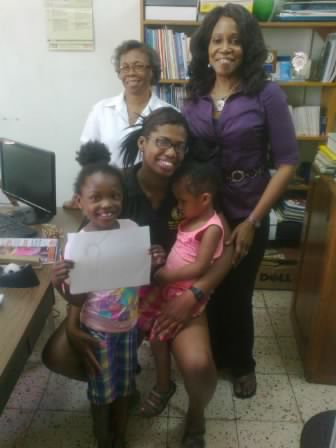
Mrs. Denton, Mrs. Scott and Khalia with her children Kimmy and Kelly

“Here is home.” With those three simple words, Khalia describes the impact Youth Opportunities has had on her life. Now 25, Khalia came to YOU at the age of 14, and while she now lives in Missouri, U.S.A., in some ways, she never left.

“YOU teaches you to be yourself,” she says. “The programs are designed for young people to express themselves, define themselves, and be themselves.”

For much of her childhood, however, Khalia was expressing herself in ways that were neither healthy nor positive. “Growing up, I was a very angry child,” she says, referring to her early years in Kingston with her hard-working mother. “It was hectic because my mother worked a lot to make ends meet.” Khalia, her mother and sister moved around a lot. All the turmoil and the lack of a father figure took its toll: in grade 7, she was suspended twice for fighting and barely escaped a third suspension for the same reason.

It was at that time that a supervisor took her aside and told her to read Proverbs 15. “That was my given opportunity to do better. I learned not to be the aggressor, to try to walk away, to try to say what I have to say verbally.” The same supervisor taught her another lesson when she was given a cup and some soap and water in order to rinse her mouth out from cussing a teacher.

Khalia then moved on to Excelsior High School, where she was introduced to YOU’s programming. She trained to become a peer counsellor and eventually became president of the peer counselling group. “I started channelling my energy into these activities. I wasn’t so aggressive anymore.” Khalia immersed herself in all that YOU had to offer, from summer camps to job training to weekend workshops. She was also matched with a mentor at the age of 14 and to this day, they are still in touch.

Khalia then took it upon herself to start volunteering at YOU’s offices, working as an administrative assistant to office manager Margarent Denton. After a month, she asked for a paycheque. She got it.

After finishing her studies, Khalia moved to the U.S., where her father lived. She faced some challenges but has recovered and now holds a position with the Army in which she is responsible for the Commander’s property. Her job consists of making sure there is adequate inventory for the base, where she lives with her mother and two children and husband. “I enjoy it,” she says of the job.

And while it took some adjustment, Khalia now enjoys the structured, routine lifestyle of the Army.

YOU prepared her for this, to be sure. “No matter how small YOU seems, it does a lot. It builds self-esteem and self-confidence and boosts you to want to be better.”

Another Friday night in the gully


On Friday evening I received a call from a friend named Jermaine who works with the Colour Pink Group. Jermaine was panicked and upset and it took several minutes for me to understand what had happened.

Jermaine works with youth who have been kicked out of their homes and disenfranchised by society because of who they are. So they live in a gully nearby Kingston’s main business district. He visits them every Friday to distribute condoms (some of them support themselves through sex work) and whatever else he has been able to collect for them.

This past Friday, he brought his lap top so he could show them a documentary video someone had made of these youth talking about their experiences. They showed their faces and discussed some very intimate things. Apparently, this filmmaker had given them the impression that they could seek asylum and go overseas if they showed their faces. (This is solely Jermaine’s account of events; I do not know who the filmmaker is and have not contacted police).

“The impression that they got is that if they showed their face, they were going to work up” to go overseas. It must be said that some of these young men display antisocial behaviour and are more familiar with defending themselves on the streets than moving through mainstream society’s institutions such as schools and jobs. So while they are smart, they are likely not familiar with how the media works in terms of consent. This matters because they are at-risk and vulnerable. “They didn’t sign a contract, they didn’t get paid and they didn’t know their face would be shown,” Jermaine says.

In any case, Jermaine was showing them this documentary and the police drove by. Some of the young men ran, but Jermaine did not as he had done nothing wrong. According to what police said, there had been some larcenies in the area. So they took Jermaine’s laptop (which was given to him by fellow volunteer Amy. Here is her account of events.) to the nearest police station on the suspicion that it was stolen.

Jermaine went to the police station and was joined by Amy and Yvonne McCalla Sobers of Dwayne’s House, a civil society organization that is trying to provide housing for these young men. They vouched for Jermaine, but before the laptop was released, Jermaine was subjected to a verbal assault. “…the officer started to shout and intimidate me. He said I need the receipt…He said if he had a gun he would shoot them up…He finally let me go with the laptop and attitude as well.” Jermaine also said that the police officer used the derogatory term “battyman” numerous times. It should be noted that Inspector Murdock behaved professionally and I spoke to him on the phone and this was the case.

On a more positive note, Jermaine is about to launch more training sessions for the young men through the Colour Pink Group. They will receive vocational training and opportunities for employment. “We believe in poverty reduction through empowerment and we want to get them into jobs as well and out of shelters. I don’t believe in shelters. They are not homes.”

Best Dressed Chicken 5K in Hope Gardens


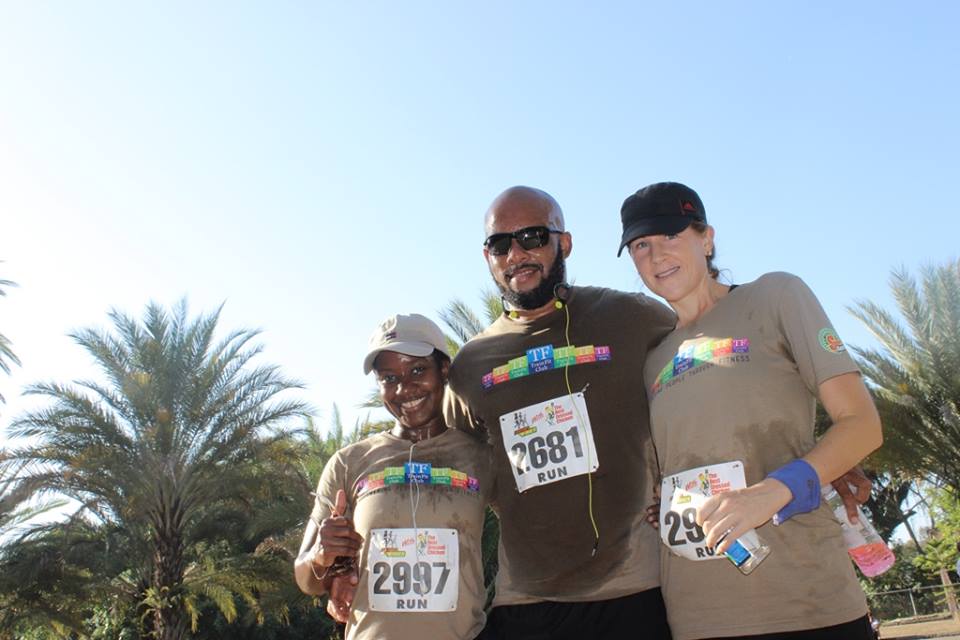
Another Sunday, another race. Today it was Best Dressed Chicken’s 5k in Hope Gardens. As always, it is a beautiful route through the gardens, although there are several inclines that are definitely challenging. I finished with a respectable time of 26:38, which is 15th out of 713 overall for females and fourth in my age group. Not too bad. This picture is with my TrainFit teammates Malene and Adrian. Enjoy your Sunday.

Coverage of “Songs of Redemption”


The Gleaner attended last week’s screening of “Songs of Redemption”. They sent a photographer and “social” reporter, who took plenty of photographs and interviewed me for background. The coverage appears today on the Gleaner’s web site, and perhaps the paper, but I haven’t seen that.

It is a solid story and includes one picture of me and Justice Minister Mark Golding, who is apparently “listening keenly” to me. We were talking about a new investigative report I am working on for 18 Degrees North. Check out the story here.

As I’ve discussed before, the media is very different here. I suggested to the reporter that I could arrange interviews with all the relevant parties, but she declined, opting instead to get quotes from people emailed to her this week. The Gleaner (and Observer I think) will also accept stories submitted to them by people (usually public relations people) and run them as their copy. In any case, we are happy for the coverage.

Photo courtesy of the Gleaner/Colin Hamilton

Spring in Kingston


It is the first day of spring. The winds have started to blow strong in Kingston, ushering in the heat of summer I suppose.
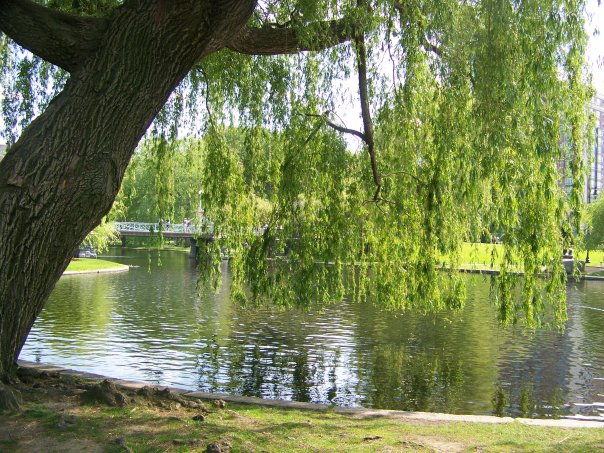
This picture was taken in spring in Boston Common several years ago. Spring in Boston is a magical time and although I never miss the winter, sometimes I do miss the obvious changes in seasons. You can’t help but notice the winds of late, however, in Kingston. Enjoy your day.

“I wouldn’t want them to grow up in a place like this”


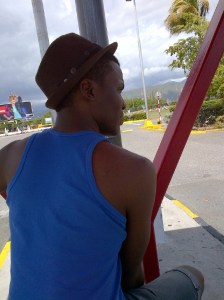
Neville is not his real name and he is not easily identifiable in this picture. This was not the way he wanted it, in fact, he wanted to be called by his full name and reveal his face in this blog post. However, I was concerned for his safety and after some discussion, we decided on a pseudonym and this picture.

Neville was eager to reveal everything because he has endured a tough journey to accept himself and live as he wishes. Neville is gay, and of course this is just one aspect of who he is, but because of the homophobia endemic to Jamaica, this characteristic endangers him.

“At this point I don’t care about what society says anymore. If I did, I would want to go away right now. What I care about is my happiness and my well being. If I can make it here I can make anywhere,” he says, referring to the challenges of living in Kingston. One of his best friends recently moved to the U.S., and Neville misses him terribly, but he is trying to make a life in Kingston.

Growing up, Neville knew he was different from other boys in that he was what is typically considered feminine. He like to play the games that the girls played in school. “I was very girly and feminine and I was the only guy behaving like that. I was considered abnormal.”

People started to give him trouble for his behaviour. He has three brothers and three sisters, including a twin, with whom he is close. The others, not so much. “If I talk to them once a year, I’m lucky,” he says of his parents. He lived mainly with his father, who clearly favoured his sisters. They were provided with everything they needed, and more, while Neville was neglected. “My father said I already gotten what I needed- food, clothing and shelter, while my twin sister and other sisters got things they asked for and I didn’t. I always had one pair of shoes.”

Neville grew up in Kingston and got into plenty of conflicts at school with classmates and teachers. He was loud and arrogant, he says, in an attempt to cope with feelings he could not understand. He used to steal from his classmates and even contemplated suicide in primary school. This was around the time that Neville’s older sister was stabbed at school.

As Neville started high school, he decided to buckle down and achieved good grades. He stopped acting out as much and began to date guys. He eventually told his father he was gay, at which point, he was kicked out of his home. Neville managed to finish high school, but he began a period of having nowhere to live and no income. He stayed on the streets for awhile and people’s verandas and picked up the odd job here and there. He finally secured a good job in Montego Bay but the temptation of seeing U.S. dollars proved too much and he took $100 from his employer to pay a fee to apply for a Visa. He was going to replace the money, but it was too late. He returned to Kingston, trying to ignore his mother’s urging in his ear to change and become a straight man.

“At that point, I vowed to make a change,” he says. Neville met up with a group of supportive friends, completed some vocational training and participated in some personal development sessions. “That changed me entirely in the sense that I viewed myself now differently as a gay guy AND not just a gay guy. It allowed me to centre myself and make goals. I have a brighter future and I know that my family doesn’t own me and I don’t depend on them.”

Neville has been attacked several times physically and verbal attacks are a daily occurrence. But he handles them with grace now, whereas before he would fight fire with fire. Today, he is just trying to live a peaceful life, one that all of us desire.

“Now I want to go on other side to see what it feels like to have good friends, money, a home and job.” And he wants to do it in Kingston, until he has children. If he has a family, he would want to raise his children overseas. “I wouldn’t want my child to grow up in a place like this,” he says.