Charges have been dropped against Karlyle Lee, the popular proprietor of the weekly Dub Club event otherwise known as Gabre Selassie, after he was charged with a noise infraction on Apr. 23.
All charges have been dropped, and Lee’s police permit was reinstated, as confirmed by Barbara Makeda Blake Hannah. Lee yesterday said that the event was in danger of shutting down after police refused to reinstate the permit.
Here is the backstory to this event:
It was a regular Sunday evening at “Dub Club,” a weekly event in the hills overlooking Kingston. Fragrant ganja smoke wafted, bass from reggae music throbbed, vegetarian food was consumed and patrons from around the world enjoyed the vibe. That is, until about 10:30 p.m., when police showed up as a result of a noise complaint. They demanded a permit for the event.
Karlyle Lee, the organizer for the event, which has been lauded by the Lonely Planet as a “gem” of Kingston, had the requisite permit, just not on his person. As a result, he was arrested for breaching the Noise Abatement Act. He was pepper-sprayed and his belongings were confiscated. “I feel violated, and honestly, if I could just get some kind of help to protect this kind of nation-building event,” Lee says.
Meanwhile, bass and music from “Carnival”, a colourful road march with Trinidad roots in which skimpy costumes are donned and soca music blasted, was raging until the wee hours of the morning. There were no major incidents or arrests, says Jamaica Constabulary Force spokeswoman Stephanie Lindsay.
This disparity in treatment by authorities has sparked a debate, with some claiming that there are “two Jamaicas” in which uneven application of laws target solely Jamaican cultural events. Entertainment and Culture Minister Babsy Grange called Lee’s arrest in a statement “unfortunate” and said it sends the wrong message.
“Gabre Selassie (Karlyle Lee) is an icon who has dedicated and promoted roots-reggae music for all these years, so he deserves recognition for his consistent support of our indigenous Jamaican culture,” Grange said.
“Some people do feel that there is a sense that there are two Jamaicas,” says Joan Webley, a lawyer and member of the Jamaica Reggae Industry Association. “Why was it a problem for them to be going until 10:30 p.m. and Carnival is going on all night?”
Jamaica’s existing legislation governs noise levels and cultural events, but critics say it is outdated and tied to colonial rule.
Dr. Sonjah Stanley Niaah, Director of the Institute of Cultural Studies at the University of the West Indies, says that indigenous music events are not given the same treatment as imported events. “For me, there is evidence to suggest that foreign imports such as Carnival have been given red carpet approval in terms of permits and sponsorship,” she says. “There is a history of adversarial encounters with police for events and types of music that are predominantly indigenous to Jamaica, like dancehall and reggae. In the last 15 years, there have been more ‘lock-offs’ of dancehall events and police intervening.” At the root of it, Dr. Niaah says, is a deep disregard for all things indigenous, and that is a sentiment that pervades from the wreckages of slavery.
Dancehall and reggae event promoters concur.
Earl “Chinna” Smith, a musician and Rastafarian who used to play with Bob Marley and the Wailers, hosted a weekly party and jam session until too many encounters with police as a result of noise complaints discouraged him. “It is worse now,” he says of police interference. “I just stopped,” he says, referring to the weekly events. “The government needs to figure out a plan for the Rastafarian culture, as it is the only culture here.”
For Jason Simpson, a booking agent at legendary sound system Stone Love, police visits are just a regular occurrence. “It’s just the usual,” he says. His permit allows the event to continue until three a.m., but police show up like clockwork to ensure the music will be shut off. “Sometimes it’s a bit discouraging,” Simpson says. “You see them come and they want to turn you off, and you know you’re not disturbing anything. I don’t know why they target us, even when you have your permit, they’re still pressuring you.”
Jamaica has long attempted to balance the need to celebrate culture and recreation with the need for regulations, but Dr. Niaah says the current laws have been adapted from Europe, which does not reflect Jamaica’s culture.
Kingston Mayor Delroy Willams says the incident that occurred at Dub Club is unfortunate and does not reflect the relationship that authorities want to encourage with cultural event promoters and patrons. “This sends the wrong signal. We are interested in imaging the city as a tourist destination, and an entertainment capital, but law and order is also important to us.”
Barbara Blake Hannah, who was in contact with both Minister Grange and Lee throughout the ordeal, was concerned about how this incident reflected on Jamaica. “It’s ironic that a city that has received the UNESCO commendation as a ‘City of Music’ may now become silent under the watchful eyes of the Jamaican police force. Some solutions will have to be found and all parties must sit down together and find those solutions. No more can we play Bob Marley’s famous song “I want to disturb my neighbour.”
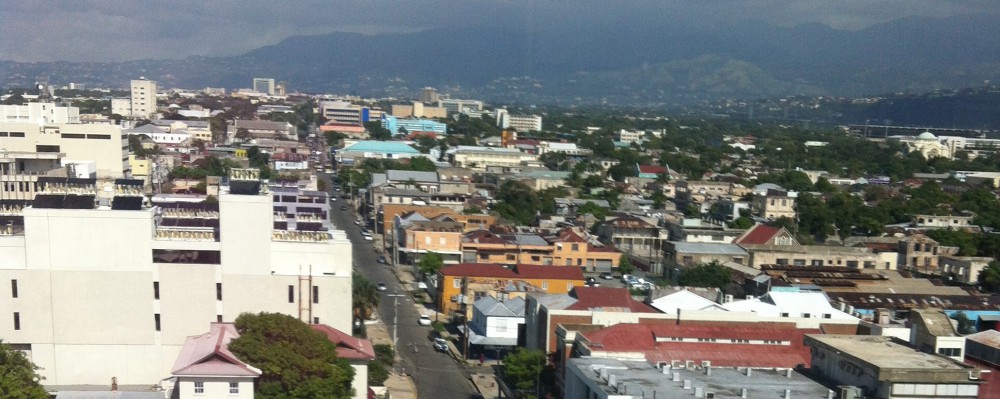


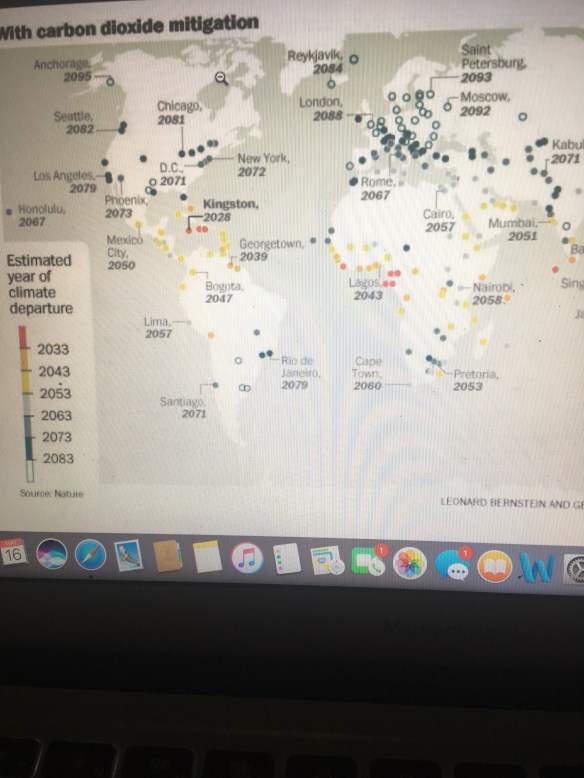 As the rain pours and we are under flood watches, this seems an ideal time to show this map from a Washington Post story. It illustrates the effect of climate change in cities around the world. Kingston, JA, does not fare well, even if we moderate our behavior to reduce carbon emissions. Check it out


 Jamaican Journal